

Best Tyre Warmers for Track Days

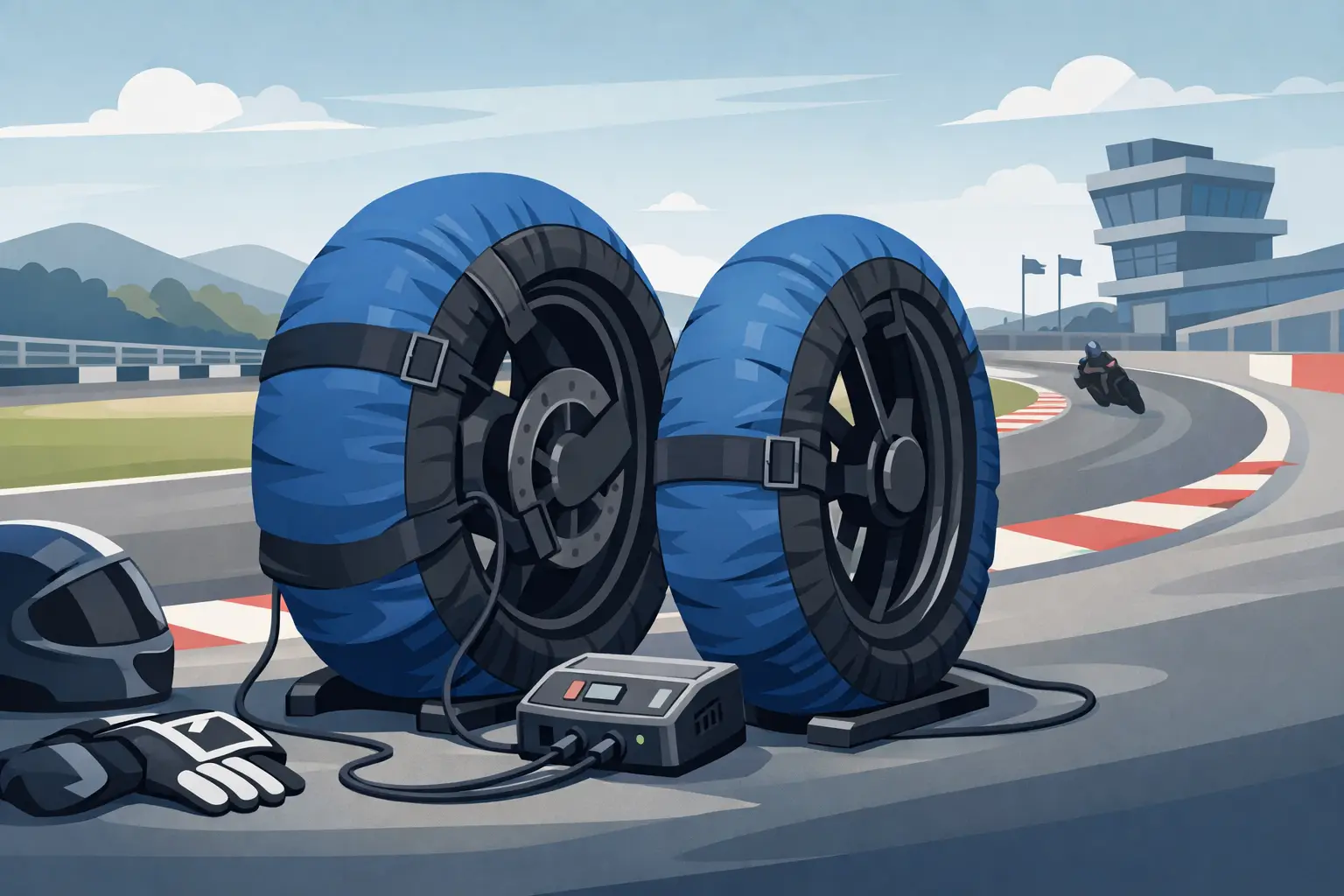
Cold tires waste sessions. Worse, they can put you on the ground before you have a chance to build pace. If you ride track days seriously, tyre warmers are not a cosmetic add-on. They are part of your setup, just like pressures, suspension, and brake feel.
The problem is that not all warmers do the same job. Some heat evenly and hold temperature with race-level consistency. Others look fine in the paddock but leave hot spots, cold shoulders, or weak retention that shows up the moment you push into Turn 1. If you are trying to choose the best tyre warmers for track days, the right answer depends on your pace, your tire type, your wheel sizes, and how much margin you want built into your equipment.
What actually makes a good tyre warmer?
A good warmer does three things well. It gets the tire up to target temperature fast enough to fit a real-world track-day schedule, it spreads heat evenly across the carcass and sidewall, and it keeps that heat stable without cooking the tire.
That sounds simple, but construction matters. The outer shell needs to hold shape and resist paddock abuse. The heating element needs consistent coverage, not gaps that create uneven surface temperatures. The inner liner matters too, because poor insulation means slower warm-up times and more energy loss when conditions are cold or windy.
Fit is just as important. A warmer that is too loose will shift and lose contact. One that is too tight can be difficult to install quickly, especially when you are rushing between sessions. For track-day riders using modern sportbike tire sizes, buying for the actual front and rear dimensions is smarter than assuming one universal size will work well enough.
Best tyre warmers for track days – what to look for
If you are shopping seriously, start with temperature control. Basic single-temp warmers can still work for many intermediate track-day riders, especially with DOT race tires or hypersport compounds that do not need highly specific prep. But adjustable temperature models give you more control when ambient conditions change or when you switch between tire constructions.
Digital controllers are not automatically better, but accurate control is valuable. A warmer that reliably reaches and maintains a set range is more useful than one with extra features and poor consistency. For many riders, the sweet spot is a proven warmer with straightforward controls, durable stitching, and a strong reputation for even heat.
You should also pay attention to coverage. Full sidewall heat matters. It helps bring the tire up more uniformly and reduces that early-lap mismatch between a warm center section and cooler shoulders. On a track day, where session lengths are limited and first-lap confidence matters, that difference is real.
Power draw and generator compatibility can matter too. If you run in paddocks where power access is limited, warmers that work well with common portable generator setups are easier to live with. This is one of those practical details riders often ignore until race morning or a crowded weekend event.
Entry-level vs premium warmers
There is a clear split in the market.
Entry-level tyre warmers are usually aimed at casual track-day use. They tend to have simpler temperature systems, lighter insulation, and materials that are good enough for occasional use. They can make sense if you ride a few events a year, keep a moderate pace, and mainly want to avoid rolling out on cold tires.
Premium warmers are built for repeat use, better consistency, and longer service life. This is where you see stronger elastic retention, more complete sidewall coverage, better heat distribution, and tougher outer construction. If you ride often, run advanced-group pace, or use race tires that respond best to stable preheat, premium warmers are worth the money.
The trade-off is obvious. Higher-end warmers cost more up front. But replacing a cheap set after a season, or dealing with inconsistent heat on expensive tires, is rarely a better value.
Thermal Technology and race-grade options
For riders who want serious equipment, race-proven brands stand out for a reason. Thermal Technology is one of the names that consistently belongs in the conversation. Their warmers are known for quality materials, dependable heat management, and construction that suits demanding track and racing use.
That kind of product makes sense for riders who are not interested in gambling on inconsistent prep. If your goal is predictable grip from pit-out, stable carcass temperature before the first hard braking zone, and equipment that can handle frequent use, premium warmers justify themselves quickly.
The same logic applies across top-tier options in general. The best products in this category are not selling style. They are selling repeatable performance. That is what matters in the paddock.
Matching warmers to your riding level
A novice track-day rider does not need the same warmer as a club racer chasing tenths. That does not mean novices should buy the cheapest option available. It means the best choice should match actual use.
If you are riding a few weekends a year on a 600 or 1000 with street-legal track rubber, a dependable single-temp or basic adjustable warmer may be enough. You want decent insulation, proper fit, and consistent operation without overspending on features you will not use.
If you are in advanced groups, running slicks or aggressive DOT race tires, or stacking many weekends per season, the standard goes up. Better heat retention, faster warm-up, and more precise control become practical advantages, not luxury features.
For coaches, teams, and heavy-use riders, durability becomes part of performance. Connectors, seams, controller quality, and resistance to repeated installation all matter. The equipment needs to work every time, not just when it is new.
Tire type changes the answer
This is where a lot of buying advice gets too generic.
Different tires respond differently to preheating. Some carcasses and compounds benefit from a more controlled, stable pre-session temperature. Others are more forgiving and easier to bring in over the first lap. If you mostly run premium race slicks, the case for higher-quality warmers is stronger. If you use track-focused street tires and ride at a moderate pace, you may not need the same level of thermal precision.
Ambient conditions also change the equation. Summer track days in the Southeast are one thing. Cool mornings in spring or fall are another. In lower temperatures, insulation quality and heat retention become much more noticeable. Weak warmers get exposed fast when the weather is not helping you.
Sizing and fitment are not minor details
A warmer can be well made and still be the wrong product for your bike and tire setup. Tire width, profile, and even brand can influence fit. A rear warmer that barely covers the shoulder on one 200-section tire may fit differently on another manufacturer’s carcass.
That is why fitment-driven shopping matters. Riders looking for model-specific performance parts already understand this with rearsets, fairings, and electronics. Tyre warmers deserve the same attention. Buying through a specialist source with a strong catalog structure makes the process cleaner, especially when you are matching warmers to current tire sizes rather than guessing from old setup notes. AXF Race Parts keeps that process focused at https://shop.axfraceparts.com.
Common mistakes when buying tyre warmers
The first mistake is buying by price alone. Cheap warmers can look like a win until they start heating unevenly, wear out quickly, or fit poorly.
The second mistake is ignoring how often you ride. If you do ten or more track weekends a year, you are not an occasional user. Buy for the workload.
The third mistake is treating all tires the same. Tire choice, pace, and climate should shape your decision. There is no single best answer for every rider.
The fourth mistake is overlooking ease of use. In the paddock, simple and reliable beats complicated. You want warmers that go on cleanly, stay in place, and do their job without drama.
So what are the best tyre warmers for track days?
For occasional riders, the best tyre warmers for track days are the ones that deliver dependable heat, proper coverage, and straightforward operation without wasting money on race-only features. For regular track-day riders and club racers, the best choice shifts toward premium warmers with stronger insulation, better consistency, and proven durability.
If you want the short version, prioritize build quality, even heat distribution, real sidewall coverage, and the right fit for your tire sizes. After that, decide how much temperature control you actually need. A premium warmer from a race-respected manufacturer is usually the safer long-term buy if you ride hard or ride often.
Track days are expensive. Tires, fuel, pads, travel, entry fees, and time all add up. Tyre warmers should reduce variables, not add them. Buy the set that matches your pace and your standards, and your first lap will feel a lot more like your fifth.