
Best Yamaha R1 Performance Upgrades

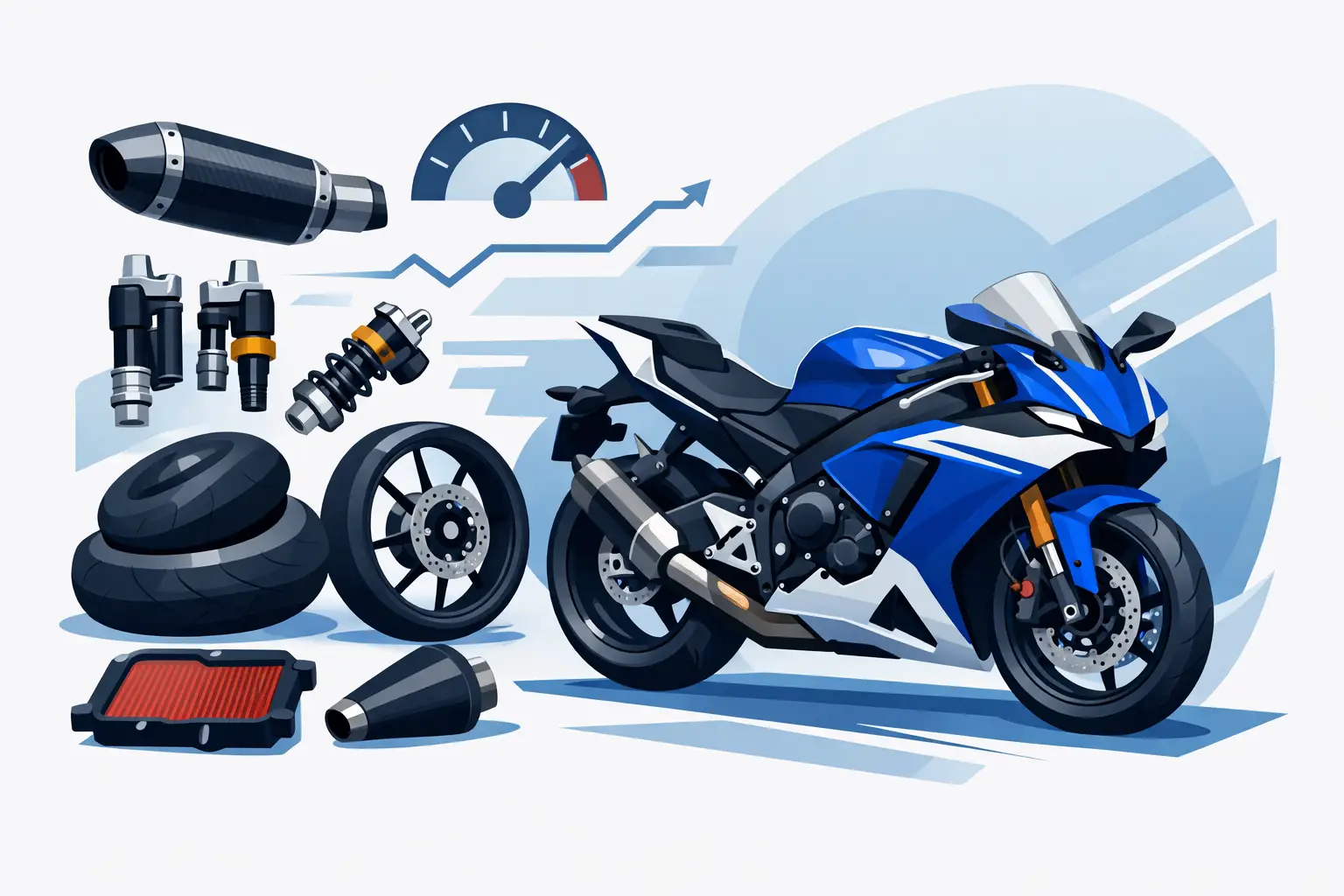
The gap between a fast Yamaha R1 and a properly sorted one usually shows up in the same places – corner entry, throttle pickup, brake feel, and rider confidence at pace. That is why yamaha r1 performance upgrades are rarely about chasing one peak dyno number. The best results come from building a package that makes the bike more precise, more stable, and easier to ride hard.
The R1 starts with a strong foundation. It has a capable chassis, advanced electronics, and an engine layout that rewards aggressive riding. But stock parts always reflect compromises for emissions, street use, noise limits, cost targets, and broad rider fit. If your goal is track-day consistency, race prep, or sharper street performance, those compromises become obvious quickly.
Where Yamaha R1 performance upgrades make the biggest difference
If you are spending money strategically, start with the areas that improve lap time and control first. On the R1, that usually means braking components, rider controls, intake efficiency, throttle response, and electronics interface. Exhaust and engine work matter too, but they should not come before the parts that let you brake later, turn cleaner, and drive harder.
A lot of riders go straight to horsepower because it is easy to measure and easy to market. In practice, an R1 with strong brakes, solid rearsets, a predictable throttle, and clean fueling will often feel much faster than a bike with a louder exhaust and no supporting setup. The right upgrade path depends on how you use the bike. A street rider will tolerate different trade-offs than a club racer.
Braking upgrades
Braking is one of the highest-value changes you can make to an R1. Stock systems are competent, but hard track use exposes limits in feel, heat management, and consistency. Upgrading to premium pads, race-oriented rotors, and a higher-spec master cylinder can transform lever feedback and reduce fade during long sessions.
This is where Brembo components stand out. A quality master cylinder gives you a firmer, more communicative lever, which helps on corner entry and trail braking. Pair that with race brake pads and properly matched lines, and the bike responds with less vagueness and more control. For riders pushing advanced pace, that confidence matters more than a small horsepower gain.
The trade-off is straightforward. More aggressive pad compounds can be noisier, harsher on rotors, and less friendly when cold. For a track-focused R1, that is usually acceptable. For a mainly street-driven bike, the best choice is often a performance street-track compound rather than a full race setup.
Rearsets, clip-ons, and rider contact points
The next major gain comes from rider interface. Rearsets are not just cosmetic hardware. They improve ground clearance, body position, and shift feel, and they give you a stronger connection to the chassis. On the R1, adjustable rearsets help riders dial in ergonomics for track use, especially if the stock peg location feels compromised under braking or at full lean.
Clip-ons, throttles, and race switches also matter here. A quick-turn throttle shortens wrist movement and gives a more direct connection at corner exit. High-quality switchgear cleans up the controls and reduces clutter, which is useful on race-prepped bikes where simplicity and access matter.
This category is a good example of upgrades that feel small in the garage and substantial on track. Better controls reduce rider workload. They also make the bike feel more intentional, which is exactly what performance riders want from the R1 platform.
Power upgrades for the Yamaha R1
If the chassis and controls are covered, then it makes sense to move deeper into power-focused Yamaha R1 performance upgrades. The usual starting points are exhaust, air filter, and ECU strategy. These work best as a matched set rather than standalone parts.
A freer-flowing exhaust can reduce weight and improve top-end pull, but the real benefit depends on fueling. Add a high-performance air filter, such as a Sprint Filter application built for race use, and the engine can breathe more efficiently at higher rpm. Without proper calibration, though, you may end up with uneven throttle response or a power curve that looks better on paper than it feels on track.
That is why ECU tuning and electronic optimization matter. On modern superbikes, the software side is a performance part. A well-sorted map can sharpen throttle response, improve drive, and make the engine more predictable when grip is marginal. It can also help support other changes such as exhaust systems and intake upgrades.
The caution here is reliability and purpose. If your R1 sees regular street mileage, weather, and pump gas, the smartest tune is not always the most aggressive one. For race bikes, the tolerance for maintenance and narrow operating windows is higher. For dual-purpose bikes, a conservative, clean calibration is usually the better long-term decision.
Slipper clutches and drivetrain refinement
The R1 already manages downshifts well, but riders who are pushing deep on corner entry can benefit from a premium slipper clutch. STM is a proven name here. A slipper clutch reduces rear wheel hop under aggressive deceleration and helps the chassis stay calmer during hard downshifts.
This is not the first upgrade every rider needs. If your pace is intermediate and your downshift technique is still developing, brake feel and body position upgrades will likely deliver more value first. But for experienced track riders and racers, a slipper clutch is one of those parts that pays off every lap.
Drivetrain changes also include gearing. A simple sprocket adjustment can wake up the R1 far more effectively than many riders expect. Shorter gearing can improve drive off slower corners and make the bike feel more urgent. The downside is reduced top speed and potentially more shifting depending on the circuit. Again, it depends on use case.
Electronics and race-ready function
Modern R1 performance is heavily tied to electronics, but rider usability still matters. Race switches, brake lever guards, keyless race conversion parts, and simplified controls all contribute to a cleaner, more purposeful setup. These are the details that make a bike easier to live with in the paddock and easier to trust at speed.
For track and race applications, reducing distractions matters. If you can reach the controls cleanly, trust the throttle action, and get consistent braking feedback, you are free to focus on markers and lines instead of managing hardware. That is where premium aftermarket parts justify their cost.
There is also a practical sourcing advantage in buying by exact fitment. The R1 has model-year differences that matter, especially when you get into controls, electronics, and chassis hardware. Using a fitment-based supplier like AXF Race Parts helps eliminate compatibility guesswork and keeps the build moving in the right order.
Build the bike for your actual use
The best Yamaha R1 performance upgrades depend on whether the bike is a street machine, a track-day bike, or a race bike. For a performance street rider, the ideal package often includes brake upgrades, rearsets, a high-quality filter, better throttle control, and selective electronics refinement. That setup keeps the bike sharp without making it annoying in daily use.
For dedicated track riders, the priority shifts toward consistency under heat and stress. Stronger braking hardware, rearsets, race bodywork, premium controls, a tuned intake and exhaust package, and paddock support equipment all start to make sense. Reliability becomes part of performance.
For racers, every component needs to support repeatability. The goal is not just speed. It is speed you can access every lap, under pressure, without surprises. That usually means proven brands, tested fitment, and a build path with fewer compromises.
What to upgrade first
If you want the shortest path to a better R1, start with brake feel and rider controls. Then address intake, exhaust, and ECU tuning as a complete package. After that, look at slipper clutches, chassis details, and race-specific refinements.
That order keeps money focused on the changes you can actually use. It also avoids the common mistake of adding power before fixing the areas that let you carry more speed safely.
A fast R1 gets attention. A sorted R1 wins confidence. Build around control first, then add power where it serves the rider, not just the spec sheet.