

Motorcycle Slipper Clutch Guide

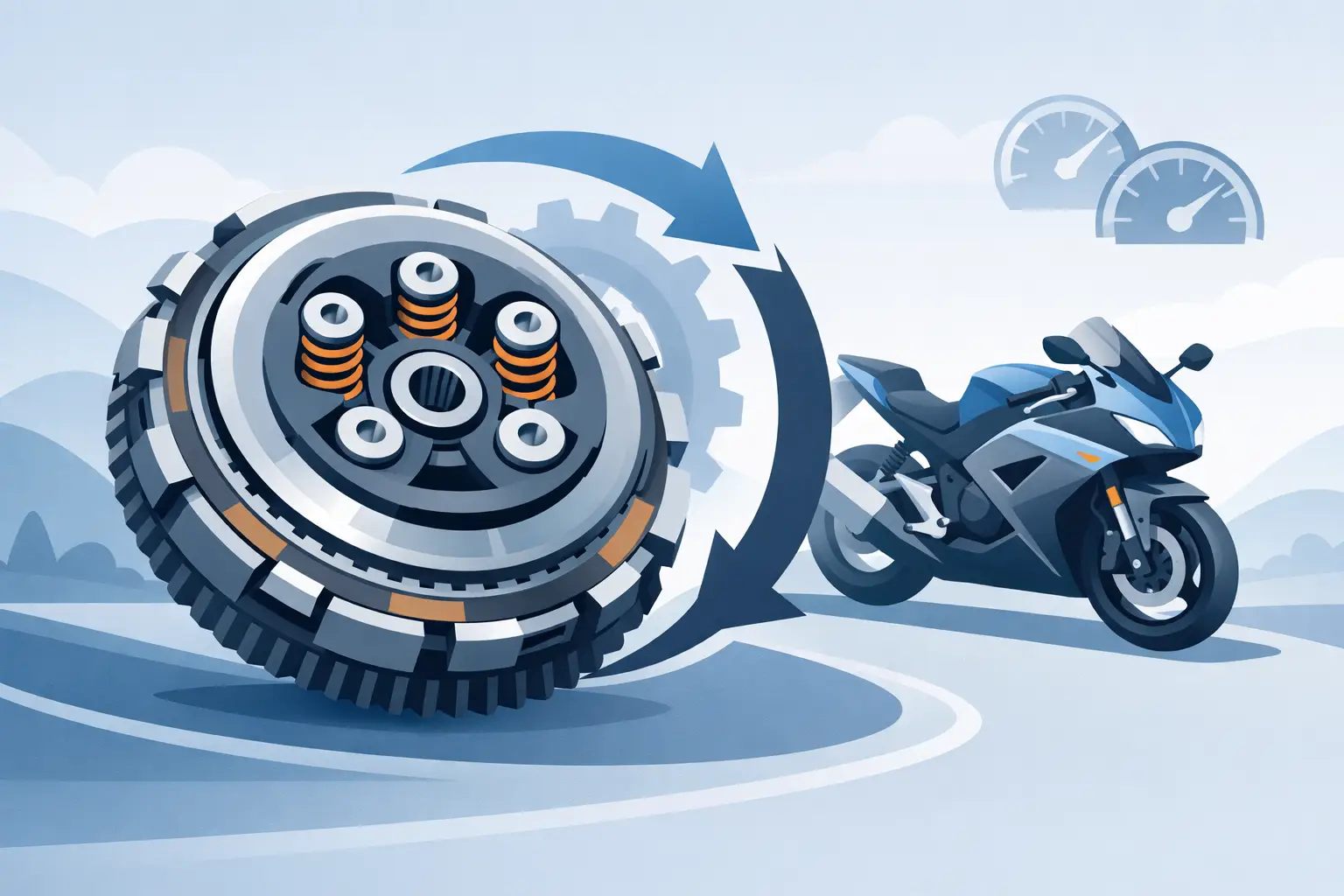
You feel it hardest at the end of a fast straight – two or three aggressive downshifts, the rear tire starts talking, and the bike gets nervous right when you need stability. A good motorcycle slipper clutch guide should answer one question first: does this upgrade actually improve control for your bike, your riding, and your pace? For most sport bike riders who brake late and downshift hard, the answer is yes. But the details matter.
What a slipper clutch actually does
A slipper clutch is designed to reduce engine braking effect during aggressive deceleration and downshifting. When rear wheel speed tries to drive the engine faster than the engine wants to turn, the clutch allows a controlled amount of slip. That slip helps prevent rear wheel hop, chatter, and instability on corner entry.
On a standard clutch, a rushed downshift can load the drivetrain hard enough to unsettle the chassis. On a bike with a properly set slipper clutch, that same sequence is calmer. The rear stays more planted, the bike tracks better into the corner, and the rider can stay focused on line, brake release, and turn-in instead of managing a skittish rear tire.
That does not mean a slipper clutch covers bad technique. It improves the margin. It does not replace rev matching, good brake control, or smart gearing choices. It simply makes the bike more forgiving and more consistent when the pace increases.
Motorcycle slipper clutch guide: who actually needs one?
If your bike spends real time on track, a slipper clutch is one of the most meaningful control upgrades you can make. It matters most for riders who carry speed deep into braking zones, especially on liter bikes and high-compression twins with strong engine braking. Ducati, Aprilia, KTM, and other V-twin or V4 platforms often show the benefit clearly, but inline-four riders can gain plenty too.
For track-day riders, the value is confidence. The bike stays more settled when you go down the box entering a tighter section. That makes learning easier and mistakes less dramatic. For club racers, the benefit is repeatability. A stable corner entry gives you more freedom to brake hard and release cleanly without upsetting the chassis every lap.
Street riders are a more mixed case. If you ride aggressively in the canyons or own a modern superbike with abrupt engine braking, a slipper clutch can make the bike smoother. But if the bike is mostly used for commuting, cruising, or occasional spirited riding, it may not deliver the same return as better tires, brake components, or suspension setup.
How the mechanism works
Most slipper clutches use ramped surfaces or a similar cam-style design inside the clutch assembly. Under acceleration, the clutch behaves normally and locks up with spring pressure. Under deceleration, reverse torque from the rear wheel causes the ramps to separate slightly, reducing clamping force on the clutch pack and allowing controlled slip.
That controlled slip is the whole point. Too little slip and the rear wheel can still chatter under hard downshifts. Too much slip and the bike may feel vague on entry, with less engine braking than the rider expects. Higher-end units often allow tuning through spring rates, ramp angles, preload, or clutch pack setup. That is where race-focused riders can tailor feel to bike, tire, gearing, and riding style.
Not every slipper clutch behaves the same way. Some are very transparent and only step in under more extreme back-torque conditions. Others are more active and noticeably reduce engine braking. Neither is automatically better. It depends on the platform and what kind of feedback the rider wants.
What changes on track
The biggest change is not just less chatter. It is how much calmer the bike feels when you are busy. Hard braking, body movement, multiple downshifts, and turn-in all happen in a short window. A slipper clutch removes one source of disruption.
That usually translates into a cleaner corner entry. You can release the brake with less drama from the rear. The bike is less likely to step sideways when the downshift timing is not perfect. Riders often find they can be more assertive on entry because the chassis is no longer fighting drivetrain shock.
There is also a fatigue benefit. Over a full session or race distance, managing an unstable rear tire every heavy braking zone adds mental and physical load. A slipper clutch reduces that workload. The result is not flashy, but it is fast.
The trade-offs riders should know
A slipper clutch is not a universal upgrade in the same way tires or pads are. It changes feel, and some riders need time to adapt. If you rely heavily on engine braking to help rotate the bike, a slipper clutch can initially feel like it takes something away. In reality, it changes how that braking force reaches the rear tire.
Installation and setup matter too. A premium unit fitted incorrectly, or with the wrong stack height or spring setup, will not deliver the result you expect. Some bikes may also need attention to clutch wear parts, basket condition, or hydraulic actuation to perform correctly.
Cost is another real consideration. Slipper clutches sit in the premium-performance category. For riders on a limited budget, the smarter sequence may be tires, brake upgrades, suspension setup, then clutch. But once the bike is already sorted, a slipper clutch becomes a serious next step.
Motorcycle slipper clutch guide: what to check before buying
Fitment is the first filter. Brand, model, year, and engine variant all matter. Even within the same manufacturer, clutch compatibility can change across generations. Race-prepped bikes with engine work or aftermarket covers may need closer attention.
Then look at intended use. A street-focused rider may want smoother operation and low maintenance. A racer may want adjustability, rebuildability, and stronger support for repeated hard use. Those are not the same buying priorities.
Clutch type also matters. Some kits are complete assemblies, while others may be more specific in what they replace. You should confirm whether the kit includes the basket, hub, pressure plate, springs, and related hardware, or whether some OEM parts are retained. That affects both price and installation scope.
Manufacturer reputation matters in this category because consistency matters. A race-proven clutch from a respected brand typically brings better machining, more predictable engagement, and stronger long-term parts support. For serious track and race applications, that is worth paying for.
Setup is where performance is won or lost
The best slipper clutch on the market can still feel wrong if the setup does not match the bike. Stack height, spring preload, plate condition, and oil choice can all influence behavior. If the bike already has quickshifter and autoblipper systems, the overall package needs to work together rather than as separate upgrades.
This is also why rider feedback matters. One rider may want more support from engine braking. Another may want maximum rear stability under very late braking. The ideal setup is not fixed. It should fit the bike, tire grip, gearing, and rider preference.
If the bike is used mainly for track days, a balanced setup is usually the target. If it is a race bike, more aggressive tuning may make sense. The faster the pace, the more these small differences show up.
Is a slipper clutch worth it?
For a modern sport bike that sees track use, yes – often more than riders expect. It is one of those upgrades that pays off in control rather than headline horsepower. You may not feel it on corner exit. You will feel it when everything happens at once on corner entry and the bike stays composed.
That is the real value. Better stability under downshifts. Less rear wheel drama. More confidence when braking deep and turning in. For riders chasing cleaner laps and more predictable behavior, that is not a luxury part. It is a performance part.
If you are shopping seriously, take fitment, riding use, and adjustability seriously. AXF Race Parts serves exactly that buyer – riders and teams looking for race-proven components without wasting time on vague compatibility. Pick the right unit, set it up correctly, and your next hard braking zone will feel a lot more controlled.
The smartest upgrades are the ones you notice when the bike is under pressure, and a slipper clutch earns its place there.