

What Does Slipper Clutch Do on a Sportbike?

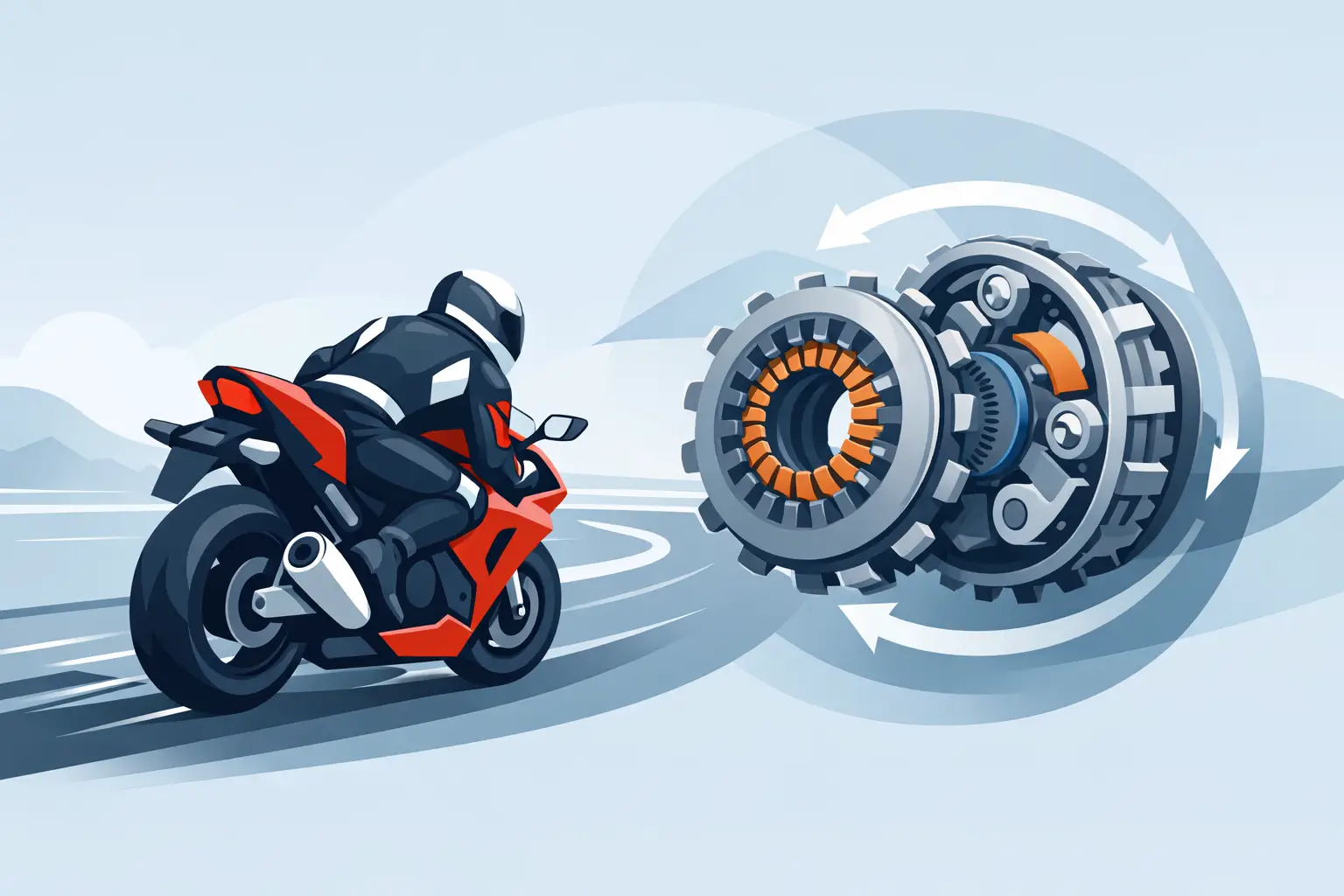
Hard downshifts into a fast corner can upset even a well-set-up bike. If you have ever felt the rear tire chatter, hop, or step out under aggressive deceleration, the question is straightforward: what does slipper clutch do, and is it worth fitting to your sportbike? The short answer is that it helps control back-torque during downshifts, keeping the chassis calmer and the rear tire more settled when you are entering a corner hard.
For track riders and performance-focused street riders, that matters. A slipper clutch is not just a race-bike buzzword. It is a functional drivetrain upgrade that can improve control, reduce rider workload, and make a bike more forgiving when braking deep and dropping gears quickly.
What does slipper clutch do in real riding?
A slipper clutch limits how much engine braking gets sent back through the transmission to the rear wheel during aggressive deceleration. Under normal acceleration, the clutch behaves like a standard clutch and transmits power to the rear wheel. But when you downshift too quickly, or when engine speed and wheel speed do not match cleanly, the slipper mechanism allows partial clutch slip.
That partial slip is the key. Instead of forcing the rear wheel to instantly match a lower gear ratio, the clutch absorbs some of that mismatch. The result is less rear wheel hop, less chatter, and less chance of the bike becoming unstable as you tip into the corner.
On a modern sportbike, especially one with strong engine braking or a high-compression engine, that can make a noticeable difference. It gives the rider a wider margin when corner entry is aggressive, braking markers get pushed deeper, or the downshift timing is less than perfect.
How a slipper clutch works
Most slipper clutches use ramps, cams, or ball-and-ramp mechanisms built into the clutch hub and pressure plate. Under acceleration, the clutch pack is fully engaged as expected. Under back-torque – meaning the rear wheel is trying to drive the engine faster than the engine wants to turn – the mechanism reacts and relieves some clutch pressure.
As clutch pressure is reduced, the plates can slip in a controlled way. That slip prevents the rear wheel from locking or skittering across the pavement when the engine braking load spikes during a downshift.
This is why a slipper clutch is so useful on corner entry. It does not eliminate engine braking entirely. It manages the excess. A properly set up unit still lets the rider use deceleration from the engine, but without the same harsh transfer of load that can unsettle the rear tire.
Some systems are more aggressive than others. Ramp angles, spring preload, clutch pack setup, and the design of the unit all affect how much slip occurs and how quickly it engages. That is one reason racers and tuners care about brand, model fitment, and setup details instead of treating every slipper clutch as interchangeable.
Why racers and track riders want one
The biggest benefit is corner-entry stability. When the rear tire stays planted, the bike tracks more predictably under braking and turn-in. That gives the rider more confidence to downshift later, carry speed deeper, and focus on line choice instead of correcting chassis drama.
It also reduces rider workload. Without a slipper clutch, smooth corner entry often depends more heavily on perfect rev-matching and very clean clutch release. Skilled riders can do that consistently, but the bike still has less tolerance for mistakes. A slipper clutch adds a mechanical safety margin.
That matters in racing, where fatigue and pressure expose every weakness. It also matters at track days, where riders are improving pace and experimenting with braking points. A bike that stays composed under hard downshifts is easier to ride near the limit.
For some riders, the benefit is also speed. Not because the clutch adds horsepower, but because it supports later braking, cleaner entries, and better consistency lap after lap.
What does slipper clutch do compared to rev-matching?
A good rev-match and a slipper clutch are not the same thing. Rev-matching is a rider technique. A slipper clutch is a mechanical system designed to manage back-torque.
If you are excellent at blipping the throttle and releasing the clutch smoothly, you can reduce rear wheel instability without a slipper clutch. Plenty of skilled riders have done exactly that. But the clutch still offers a layer of control when timing is off, when braking is especially aggressive, or when conditions are changing quickly.
In practice, the two work well together. Riders still benefit from proper downshift technique, and the slipper clutch cleans up the rest. That is why serious performance setups do not treat it as a replacement for skill. They treat it as a performance tool.
Street riding vs track riding
A slipper clutch is most valuable on the track, where hard braking and rapid downshifts happen repeatedly at high speed. That is where the stability gain is easiest to feel and easiest to justify.
On the street, the value depends on the bike and the rider. If you ride aggressively in the canyons, own a bike with strong engine braking, or simply want smoother downshifts, you may notice a real benefit. On the other hand, if your riding is mostly moderate and your bike already has a forgiving drivetrain, the performance gain may feel less dramatic.
That does not mean it is wasted on the street. It means the return depends on how close your riding gets to the conditions where back-torque causes problems. For many performance street riders, smoother corner entry and a calmer rear end are still worthwhile.
Bikes that benefit the most
High-performance twins, triples, and inline-fours can all benefit, but the effect tends to stand out more on bikes with strong engine braking, aggressive gearing, or race-oriented use. Ducati and KTM twins, for example, often make the benefit very obvious. But Japanese inline-four sportbikes and modern superbikes also respond well, especially once pace increases.
Race-prepped motorcycles benefit even more because suspension, tires, brakes, and riding style all amplify what happens at corner entry. The more aggressively the bike is used, the easier it is to feel what the slipper clutch is doing.
If a rider is pushing braking zones, using quick downshifts, and asking a lot from the rear tire on entry, a slipper clutch becomes less of a luxury and more of a control upgrade.
Not all slipper clutches feel the same
This is where the buying decision gets more technical. Different manufacturers tune their units differently. Some prioritize a smooth, street-friendly feel. Others are designed with race use in mind and deliver more precise back-torque control under hard conditions.
Setup also matters. Plate stack height, spring rates, wear, oil choice, and installation accuracy all affect clutch behavior. A premium unit installed and set up correctly will usually feel predictable and controlled. A poor setup can make engagement vague or inconsistent.
That is why fitment-based purchasing matters. Model, year, engine platform, and intended use should all drive the choice. When you are buying a performance clutch, close enough is not good enough.
Are there downsides?
There are trade-offs. Cost is the obvious one. A quality slipper clutch is a serious component, not a cosmetic add-on. Installation can also be more involved than basic bolt-on parts, depending on the bike and the clutch design.
There is also the question of feel. Some riders prefer the direct engine braking of a standard clutch, especially on the street. Others need time to adjust because the bike behaves differently on downshifts and entry. If your technique relies heavily on using engine braking to help rotate the bike, setup choice becomes important.
Maintenance is another factor. Like any high-performance clutch system, wear items and service intervals matter. If the bike sees regular track use, inspection and proper setup are part of ownership.
None of that makes a slipper clutch a bad upgrade. It just means the right answer depends on how the bike is used and how much the rider values corner-entry stability.
Is a slipper clutch worth it?
If your bike sees track time, fast canyon riding, or race use, the answer is often yes. The gain is not theoretical. A good slipper clutch reduces rear wheel disturbance during downshifts, helps the chassis stay settled, and gives the rider more confidence on corner entry.
If your riding is mostly casual street use, it may be more of a refinement than a must-have. You can still benefit from smoother deceleration and a more forgiving drivetrain, but the difference may not justify the cost for every rider.
For performance riders, though, this is one of those upgrades that supports speed by improving control. That is why it continues to show up on serious sportbike builds from club racing to advanced track-day setups.
At AXF Race Parts, that is exactly how a slipper clutch should be viewed – not as hype, but as a race-proven component that helps the bike stay composed when the pace goes up. If your rear tire is talking back on corner entry, the clutch may already be telling you what the next upgrade should be.