

BMW S1000RR Race Electronics Explained

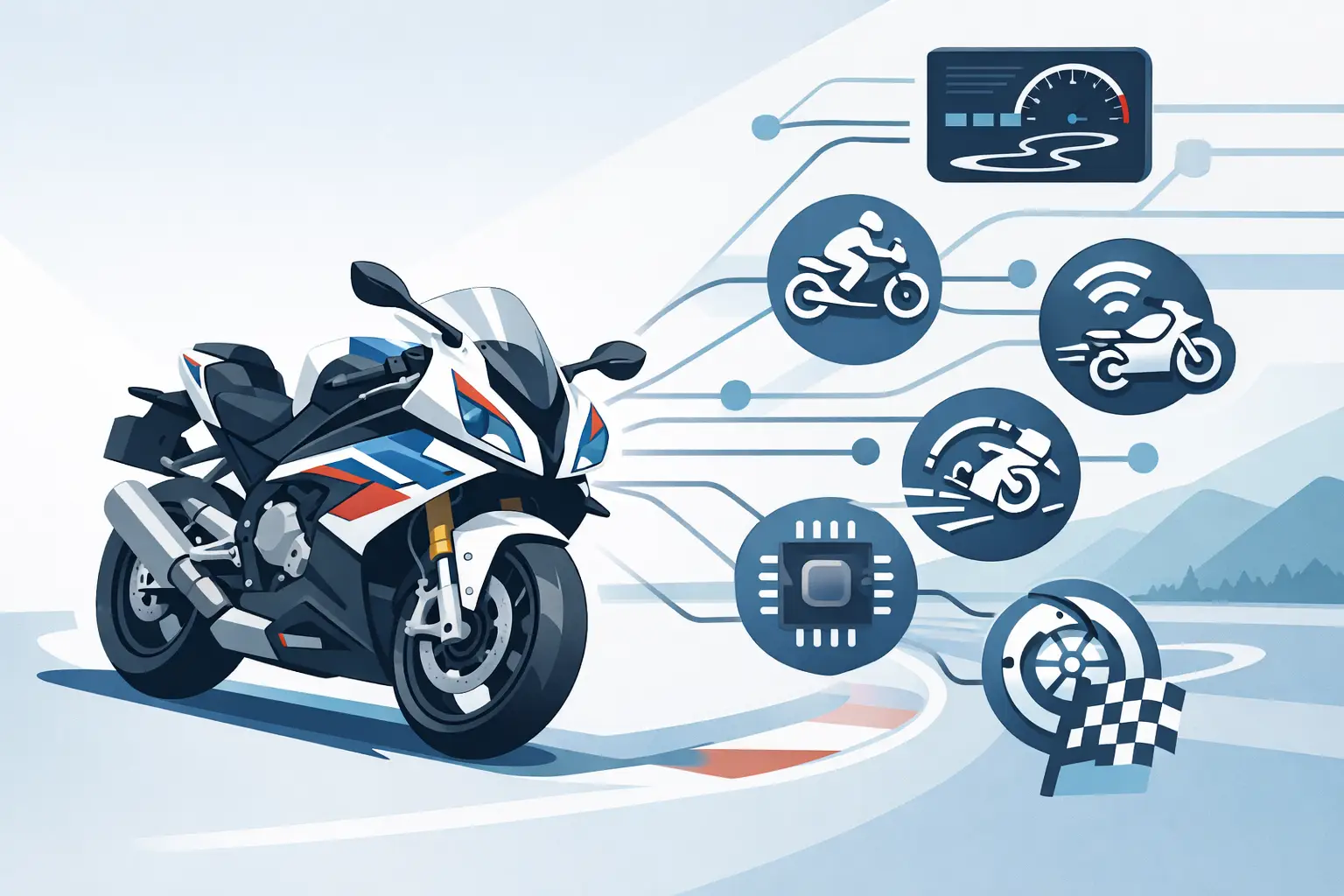
The BMW S1000RR race electronics package can make a fast bike easier to ride, easier to tune, and easier to trust at the limit. But this is also one of the easiest places to waste money if you buy parts out of sequence or mix street-focused electronics with a true track build. On the S1000RR, electronics are not just about adding features. They shape throttle control, rider input, reliability, and how cleanly the bike communicates on corner entry and exit.
What BMW S1000RR race electronics really include
Most riders hear “race electronics” and think ECU flash, traction control, and maybe launch control. That is only part of the picture. On a current S1000RR track or race build, electronics usually include the ECU strategy, rider control inputs, switchgear, quick-turn throttle, quickshifter setup, data logging access, and the wiring choices that remove unnecessary street functions.
That broader view matters because the bike only works as a system. A premium throttle tube with poor mapping can still feel vague. A race ECU strategy with bulky OEM switchgear can slow rider inputs. A clean harness setup with inconsistent sensor behavior can create tuning problems that look mechanical but start in the electronics.
For serious track use, the goal is simple – reduce delay, reduce confusion, and give the rider repeatable control. That is what makes a race electronics package valuable.
Start with the job the bike has to do
Before buying anything, define the build. A track-day S1000RR, a club race bike, and a professional-level sprint bike do not need the same electronics package.
A performance street rider who does a few track days may benefit most from cleaner controls, improved lever feel, and a better throttle relationship. A dedicated track rider usually wants less street clutter, faster rider input, and more confidence under hard acceleration. A racer needs that same control, but with a stronger bias toward consistency, serviceability, and fast pit-lane troubleshooting.
This is where overspending starts. Riders often chase the most advanced control module first, when the bigger gain would come from race switchgear, a proper throttle conversion, or a cleaner cockpit setup. Electronics should follow the build purpose, not the product catalog.
The best upgrades are often the ones you feel immediately
Race switchgear and control simplification
One of the most useful S1000RR upgrades is race switchgear. It sounds minor until you ride with it. Compact race controls clean up the bars, reduce accidental inputs, and make critical functions faster to reach with gloves on. On a race-prepped BMW, that usually means replacing bulky OEM switch assemblies with dedicated motorsport controls for functions like engine run, starter, pit limiter, mode selection, or lap trigger depending on the setup.
This is not just about aesthetics. It improves rider workflow. When the bike is loaded into Turn 1 and every input matters, simpler controls are easier to trust.
Quick-turn throttle systems
The S1000RR responds well to throttle upgrades because they change how the rider interfaces with the electronics every lap. A quick-turn throttle can shorten the rotation required to reach full opening, which helps on corner exit and during transitions. That does not automatically make it better for every rider. Too aggressive a cam profile can make the bike feel abrupt, especially on a high-horsepower setup or in low-grip conditions.
The right answer depends on rider style and mapping. A strong rider on slicks may want a more direct connection. A track-day rider on DOT tires may prefer a slightly softer feel with more range at partial throttle. The upgrade works best when matched to the bike’s fueling and traction strategy.
ECU strategy matters more than spec-sheet hype
The ECU is the center of the conversation, but it is also where riders get lost in marketing language. The real question is not whether a product has more features. The question is whether it gives useful control over how the S1000RR delivers power and manages rider aids.
On a race build, ECU changes are usually aimed at sharper throttle response, optimized fueling, better use of intake and exhaust changes, and control logic that suits track conditions instead of road compliance. Depending on the year of the bike, the path may involve flash tuning, race calibration support, or model-specific solutions that retain or adapt factory strategies.
There is no universal answer here because S1000RR generations differ, and rider expectations differ even more. Some riders want to preserve key OEM functionality while improving throttle behavior. Others want a more dedicated racing setup with fewer compromises. What matters is compatibility, support, and whether the setup can be tuned around the rest of the bike.
BMW S1000RR race electronics and rider aids
BMW gave the S1000RR a strong electronic foundation from the factory, which is why many builds start with selective upgrades instead of a full replacement approach. The stock platform already offers sophisticated intervention strategies. For some riders, that means the smartest move is refining what is there rather than replacing everything.
Traction control, wheelie control, engine braking behavior, and quickshifter performance all affect lap time, but not in the same way for every rider. A fast amateur may gain more from predictable intervention than from the most aggressive power delivery. A racer chasing tenths may want less intrusion and a sharper connection at the grip. Both approaches can be correct.
That is why setup matters more than buzzwords. Electronics should support confidence, not distract from it. If the rider is thinking about what the system might do instead of trusting it, the setup is wrong.
Wiring and reliability are part of performance
Race harness choices and street delete logic
A proper race electronics setup is not only about adding components. It is also about removing what the race bike no longer needs. That can include lighting circuits, horn functions, and other street hardware that adds clutter, weight, and troubleshooting points.
A cleaner wiring layout improves service access and reduces confusion when diagnosing issues at the track. It also makes future changes easier, especially when adding accessories like tire temperature displays, lap timing triggers, or auxiliary controls. For dealers, tuners, and race teams, clean wiring saves labor. For privateers, it saves weekends.
Sensor quality and signal consistency
Electronics only work as well as the signals they receive. That is why sensor health, connector quality, and installation standard matter. A bike with intermittent input signals can show symptoms that look like fueling problems, traction control irregularity, or throttle inconsistency. Riders often blame the tuning first. Sometimes the fault is simpler.
On the S1000RR, reliability under heat, vibration, and repeated service is not optional. Race electronics should make the bike easier to manage, not create new failure points.
Don’t build the electronics package backward
A common mistake is buying high-end electronics before the core race setup is sorted. If the rider position is wrong, the throttle hand is overloaded, or the bike still carries awkward street controls, the electronic upgrades will not show their full value.
A smarter order usually starts with the rider contact points and control hardware, then moves into mapping and system refinement. Rearsets, clip-ons, braking feel, throttle action, and switchgear often shape rider confidence faster than adding another layer of software control. Once that foundation is right, ECU and rider-aid tuning become more effective because the rider can actually feel the changes.
This is also where fitment-specific sourcing matters. The S1000RR is not a generic superbike platform, and electronics components should not be treated like universal accessories. Model year, harness compatibility, and intended use all need to line up.
How to choose BMW S1000RR race electronics without wasting money
Start by asking what problem you are trying to solve. If the bike feels cluttered, improve controls. If throttle pickup is vague, address the throttle and mapping relationship. If the bike is hard to tune around other performance parts, look at ECU strategy and integration. If reliability is the issue, inspect the wiring path before adding complexity.
The best electronics upgrades usually solve a specific riding or service problem. They do not just add capability on paper. That is why experienced buyers focus on fitment, proven brands, and race-use practicality. AXF Race Parts serves that kind of buyer – riders and teams who want premium components, correct application, and a faster path to a cleaner build.
For the S1000RR, race electronics are at their best when they disappear into the ride. The controls feel natural. The intervention feels predictable. The bike responds the same way every lap. That is the target, and it is worth building toward carefully rather than all at once.
If you are upgrading the electronics on a BMW S1000RR, buy with the next session in mind, not just the spec sheet. Fast parts matter, but the right parts in the right order matter more.