

Brembo vs Stock Brakes on Sport Bikes

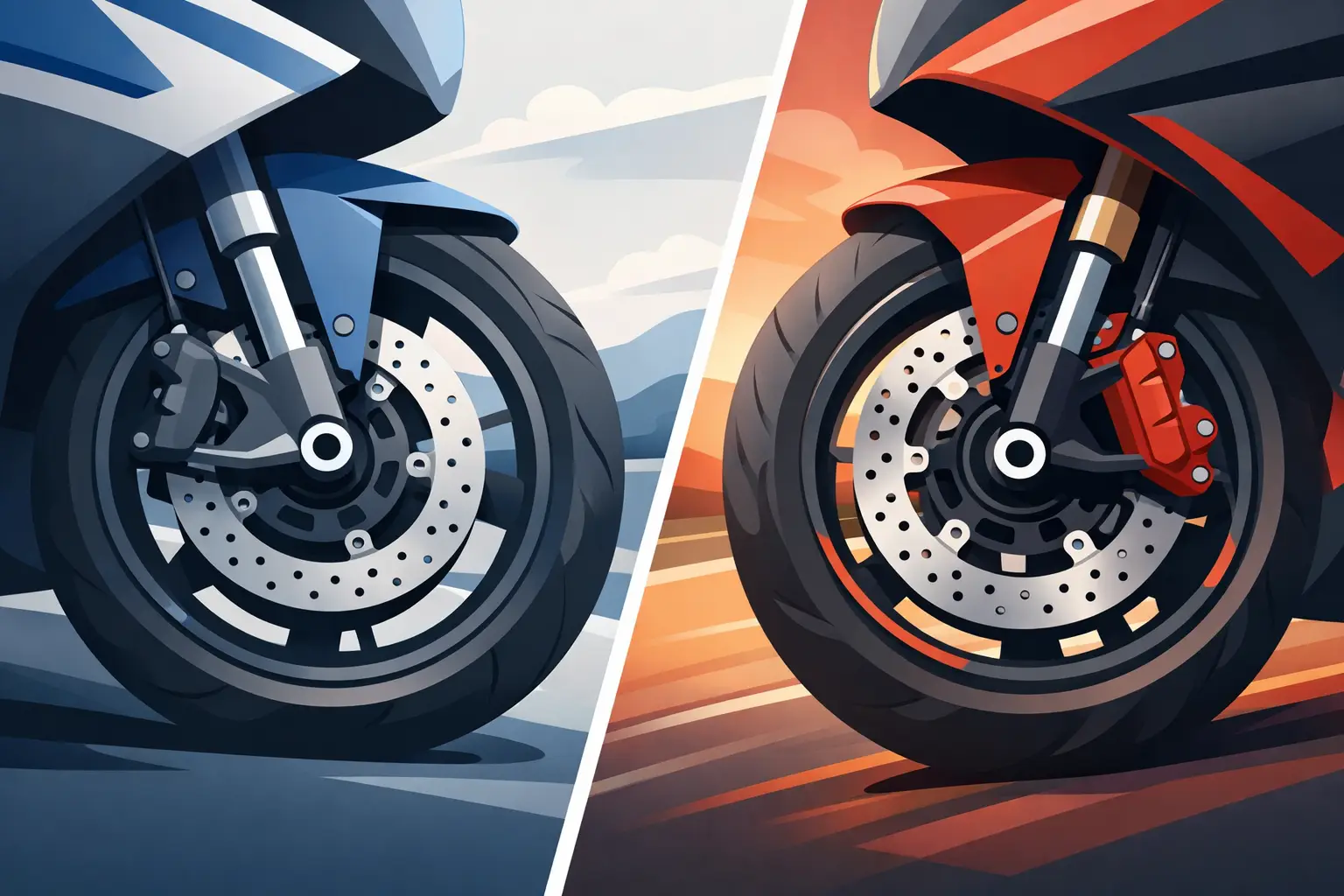
A hard stop at the end of a fast straight tells the truth fast. That is where the real Brembo vs stock brakes debate starts – not in spec sheets, but in lever feel, repeatability, and confidence when the pace goes up.
On a modern sport bike, stock brakes are often better than riders give them credit for. OEM systems have improved a lot, especially on premium superbikes and high-spec naked bikes. Strong radial masters, decent calipers, and ABS calibration that works on the street make many factory setups completely usable for aggressive canyon riding and occasional track days.
But usable is not the same as race-ready. That is where Brembo enters the conversation.
Brembo vs stock brakes: what actually changes?
The biggest difference is not always raw stopping distance. In perfect conditions, a well-maintained stock setup with quality pads and fluid can stop a bike very hard. The bigger gap shows up in control. Brembo systems are built to deliver more precise lever feel, stronger bite, better consistency under heat, and more predictable modulation when braking deep and often.
That matters because braking performance is not just about maximum force. It is about how accurately you can ask for 40 percent, 70 percent, or 100 percent braking without upsetting the chassis. On track, that precision translates into later braking markers, cleaner corner entry, and less fatigue over a session.
Stock brakes are designed around broader priorities. Manufacturers have to balance cost, durability, comfort, emissions-related drag targets, service intervals, ABS integration, and the expectations of a wide rider base. Brembo performance upgrades are not built with the same compromises. They are aimed at riders who care about lever consistency, heat management, and front-end feedback when speeds rise.
Where stock brakes still make sense
If your bike spends most of its life on the street, stock brakes may already be enough. For normal road speeds, spirited weekend rides, and even occasional hard use, the limiting factor is often tire grip, road surface, or rider technique rather than caliper brand.
A stock system in good condition can feel excellent when it has fresh high-temp fluid, braided lines, and the right pad compound. That is an important point because many riders compare a worn OEM setup against a fresh premium aftermarket system and assume the gap is entirely about hardware. Sometimes the real issue is old fluid, glazed pads, soft rubber lines, or neglected rotors.
There is also a value case for keeping stock components. OEM replacement parts are often easier to source, ABS function stays exactly as designed, and the bike retains a braking character the manufacturer tuned for broad use. If you are not pushing repeated high-speed stops, the extra spend on a full Brembo upgrade may not move the needle enough to justify it.
Where Brembo pulls ahead
The faster and harder you ride, the clearer the advantage becomes. Track days expose brake systems in a way street riding rarely can. Repeated heavy deceleration creates heat, and heat is where average systems start to feel vague, long, or inconsistent.
A quality Brembo setup typically offers firmer initial bite and a cleaner pressure curve through the lever. Instead of the lever feeling slightly elastic or changing as temperatures climb, the response stays more stable lap after lap. That consistency gives riders confidence to brake later without second-guessing the front end.
Caliper stiffness is part of that. So is master cylinder design. A premium Brembo master can sharpen feel dramatically, even when paired with stock calipers in some applications. That is why many experienced riders upgrade in stages rather than replacing everything at once. The master cylinder often changes the character of the system more than people expect.
Pad compounds also matter. Brembo braking components are usually selected as part of a matched performance setup, not as a random bolt-on. When the master, calipers, lines, fluid, rotors, and pads are working in the same direction, the system feels cleaner, stronger, and easier to trust.
Brembo vs stock brakes for street riders
For a performance street rider, the best answer depends on what problem you are trying to solve. If your complaint is weak initial bite, a pad upgrade and fresh fluid may be enough. If the lever feels mushy, braided lines and proper bleeding can transform the bike. If the brakes feel fine for road use but fade on mountain descents or fast group rides, then stepping up to higher-grade components starts to make more sense.
A full Brembo conversion on a street bike can absolutely improve feel and control, but it can also be more brake than some riders need. Aggressive components may be less forgiving when cold, noisier in daily use, or harder on rotors depending on the setup. That does not make them a bad choice. It means the best setup is the one matched to how the bike is actually used.
There is also the issue of ABS and electronics. On many newer sport bikes, the braking package is tightly integrated with rider aids. Upgrades need to be chosen carefully, especially if you want to preserve consistent ABS behavior and correct fitment. Precision matters here.
Brembo vs stock brakes for track days and racing
This is where aftermarket Brembo hardware earns its reputation. On track, braking zones are longer, harder, and repeated over and over. The demands are simple: strong initial response, clean modulation, resistance to fade, and the same lever feel at lap one and lap ten.
Stock systems can survive track use, but survival is not the benchmark. Competitive riders want repeatability. A brake system that changes as heat builds forces you to leave margin on the table. That costs time and confidence.
For club racers and advanced track riders, Brembo upgrades are often less about bragging rights and more about reducing variables. A better master cylinder gives more exact pressure control. Higher-quality calipers resist flex. Better thermal stability supports harder braking deeper into a session. If you are chasing consistency and lap time, those gains are real.
That said, not every rider needs a flagship race caliper. There is a big range within the Brembo catalog, from street-performance parts to serious race components. Overbuilding a setup can waste money and complicate maintenance without creating meaningful gains for your pace level.
Cost, maintenance, and fitment
Price is the obvious hurdle. Stock brakes are already paid for when you buy the bike. Brembo upgrades add cost fast, especially if you go beyond pads and lines into master cylinders, calipers, and rotors.
Maintenance expectations can also change. Performance systems reward proper setup. That means regular fluid service, correct pad selection, proper bedding, and attention to rotor condition. Riders who stay on top of that will get the benefit. Riders who do not may never feel the full value of the upgrade.
Fitment matters just as much as parts quality. A premium component is only premium if it fits the bike correctly and works as a system. That is why platform-specific selection matters for sport bikes from Ducati, Yamaha, BMW, Kawasaki, Honda, KTM, Aprilia, Suzuki, Triumph, and MV Agusta. The right bore size, mounting style, and rotor compatibility are not details to guess at.
The smartest upgrade path
If you are undecided between Brembo and stock, start by being honest about pace and use. Street riders should fix the basics first. Fresh fluid, quality pads, braided lines, and a full service can wake up a stock system dramatically. That is often the best value-per-dollar improvement.
If your bike sees regular track time, the smartest next step is usually a master cylinder upgrade. It delivers a big change in feel and precision without forcing a full system replacement. From there, calipers and rotors make sense if you are outriding the rest of the package.
For racers, build the system around consistency, not hype. Choose components that match your class, speed, tire, and maintenance routine. A balanced setup beats an expensive mismatched one every time.
AXF Race Parts serves riders who already understand that difference. The goal is not to bolt on the most expensive name possible. The goal is to run braking components that match the bike, the pace, and the job.
So which one is better?
If the question is pure performance, Brembo wins. Better feel, better heat control, better consistency, and more confidence under hard use are exactly why riders upgrade.
If the question is value for a street bike ridden mostly on public roads, stock brakes can still be the right answer, especially with smart supporting upgrades and proper maintenance. Plenty of riders spend money chasing a problem they could have solved with fluid, pads, and setup.
The real answer is simple. Stock brakes are built to cover a wide range of riders. Brembo is built for riders who want more precision when the pace stops being casual. Buy accordingly, set the system up correctly, and let your braking zones make the decision.