
Motorcycle Braking Systems Explained

The difference between a bike that feels planted on corner entry and one that feels nervous often comes down to motorcycle braking systems. On a high-performance sport bike, braking is not just about stopping distance. It shapes stability, lever feel, tire load, confidence, and how hard you can attack each lap.
For track riders and racers, that means the brake package has to do more than work. It has to stay consistent under heat, communicate what the front tire is doing, and match the pace of the bike. A setup that feels acceptable on the street can show its limits fast once speeds rise and braking zones get shorter.
What motorcycle braking systems actually do
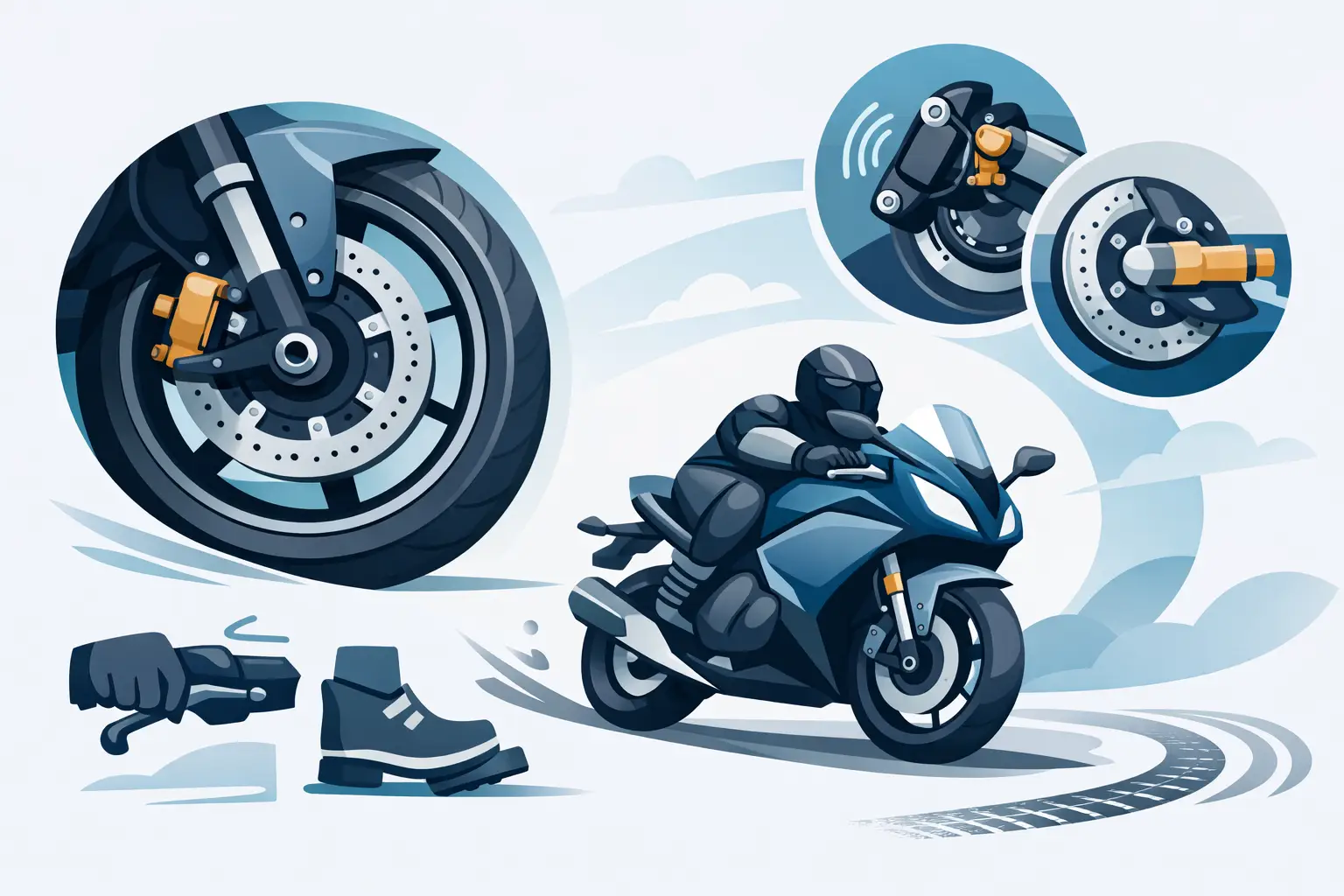
At a basic level, motorcycle braking systems convert speed into heat through friction. The rider applies force at the lever or pedal, hydraulic pressure builds in the master cylinder, that pressure moves through the brake lines, and the calipers clamp the pads against the rotors.
That sounds simple, but the quality of each component changes the result. Lever ratio affects feel and effort. Brake line expansion affects consistency. Pad compound changes bite and heat behavior. Rotor size and construction influence power, cooling, and weight. Caliper stiffness affects feedback. Even fluid choice matters once temperatures climb.
On a race-prepared bike, the goal is controlled deceleration with repeatable feel. You want strong initial bite without making the chassis abrupt. You want power at the end of the straight, but also precision while trail braking to the apex. More braking force is not always better if modulation suffers.
The main parts of motorcycle braking systems
The master cylinder sets the tone for the entire system. It controls hydraulic pressure and lever feel, which is why serious riders pay close attention to piston size, leverage, and adjustment range. A quality radial master cylinder typically delivers firmer feedback, cleaner pressure build, and better control under heavy use than a basic OEM setup.
Brake calipers turn hydraulic pressure into clamping force. Fixed multi-piston calipers are standard on modern sport bikes because they improve stiffness and distribute pad pressure more evenly. For racing use, caliper rigidity matters because flex reduces feel and makes braking less predictable when temperatures spike.
Rotors have a direct effect on braking character. Larger rotors increase leverage and can improve stopping power, but they also add rotating mass. Floating rotors help manage heat and allow controlled movement between the braking surface and carrier, which can improve consistency during repeated hard stops.
Pads are one of the fastest ways to change brake behavior. Some compounds offer aggressive initial bite. Others favor progression and feel. A track-focused pad generally needs heat to perform at its best, while a street pad is tuned for colder operation and lower noise. Riders who mix street use with track days need to choose carefully because the ideal compound for one environment may be a compromise in the other.
Brake lines and fluid are less visible, but they are critical. Braided stainless lines reduce expansion compared with rubber hoses, which helps preserve lever firmness. High-performance brake fluid raises the boiling point, reducing the risk of fade when the system is under repeated heavy load.
Why braking feel matters as much as power
Most experienced riders can tell the difference between strong brakes and usable brakes. Strong brakes can generate serious stopping force. Usable brakes let you apply that force with precision.
That distinction matters when you are approaching a fast corner at race speed. If the lever comes on too suddenly, the bike can pitch too hard and unsettle the chassis. If the system feels vague, you end up leaving margin on the table because you cannot trust what the front end is telling you. Good feel makes it easier to brake later, release pressure smoothly, and carry speed with confidence.
This is why premium components earn their place on performance builds. They are not just buying more force. They are buying predictability.
Motorcycle braking systems for street, track day, and race use
Not every rider needs a full race-spec setup. The right answer depends on how the bike is used.
For aggressive street riding, the priority is usually a clean, dependable system with quality fluid, braided lines, and pads that work from cold. Full race pads can feel disappointing on the street because they often need heat before they deliver their intended bite.
For track-day riders, consistency becomes more important. Repeated high-speed braking exposes weak fluid, soft lines, and average pad compounds quickly. In many cases, upgrading fluid, lines, and pads transforms the bike before calipers or rotors need to be changed.
For club racers and advanced riders, the focus shifts to fine control and heat stability. That is where premium master cylinders, race calipers, high-spec rotors, and carefully matched pad compounds start to justify the cost. At that level, the system has to deliver the same response in lap one and lap ten.
Common brake problems and what they usually mean
A soft or spongy lever often points to air in the system, aging fluid, or line expansion. If the lever gets worse as temperatures rise, fluid condition is one of the first things to check.
Brake fade under hard use can come from overheated pads, boiling fluid, or rotors that cannot manage the thermal load. Fade is not a single problem with a single cause. Sometimes the fix is a pad change. Sometimes it is better fluid. Sometimes the entire package is undersized for the rider’s pace.
Pulsing at the lever may suggest rotor issues, uneven pad material transfer, or mounting hardware problems. It is easy to blame a warped rotor, but the real cause is not always that simple.
Poor initial bite can be caused by the wrong pad compound, glazed pads, contaminated friction surfaces, or a master cylinder that does not suit the caliper setup. Weak bite and poor feel are often treated like the same problem, but they are not. One is about force. The other is about communication.
Choosing upgrades that make sense
The smartest brake upgrades are usually staged, not random. Riders often get the best value by improving the weakest link first.
If the bike still has stock rubber lines and old fluid, start there. Add a proven pad compound that matches how the bike is ridden. If the lever feel still lacks precision, move to a higher-spec master cylinder. If the pace and thermal demand continue to climb, then calipers and rotors become easier to justify.
Fitment matters at every step. Sport bikes vary by generation, ABS configuration, caliper spacing, rotor dimensions, and wheel setup. Buying by brand alone is not enough. The right part has to match the bike’s make, model, year, and intended use.
That is where a specialist motorsport supplier matters. AXF Race Parts focuses on fitment-driven shopping for performance bikes, which makes it easier to source braking components that actually match the platform instead of piecing together a setup through trial and error.
What advanced riders look for in motorcycle braking systems
Experienced riders tend to evaluate brakes in a more specific way than casual buyers. They care about how quickly pressure builds, how easy it is to trail brake, whether the lever stays consistent after repeated hard laps, and how the system responds when grip drops.
They also understand trade-offs. A more aggressive pad can improve bite, but may increase rotor wear and require more heat. Larger rotors can add power, but may alter steering response through added rotating mass. A race-focused master cylinder can sharpen feel, but if it is mismatched to the calipers, the result may be too abrupt or too heavy at the lever.
That is why the best setups are balanced. Every part should support the same target: stronger braking, cleaner modulation, and repeatable performance under the actual conditions the bike sees.
When stock brakes are enough and when they are not
Modern sport bikes often leave the factory with capable braking hardware. For many riders, stock calipers and rotors are not the first limitation. Maintenance is.
Fresh fluid, properly bled lines, correctly bedded pads, and rotors in good condition can restore a surprising amount of performance. But once speed increases and braking zones get more demanding, the weaknesses show. Heat becomes the separator. Feel becomes the issue. That is the point where upgrades stop being cosmetic and start being functional.
If your lever changes session to session, if braking markers keep moving earlier because confidence is fading, or if the front end feels vague when you are trying to carry brake pressure into the corner, the system is telling you something. Listen to it, match the parts to the pace, and build a setup that gives back the same answer every time you squeeze the lever.