

Ducati Panigale Rearsets Example and Fitment

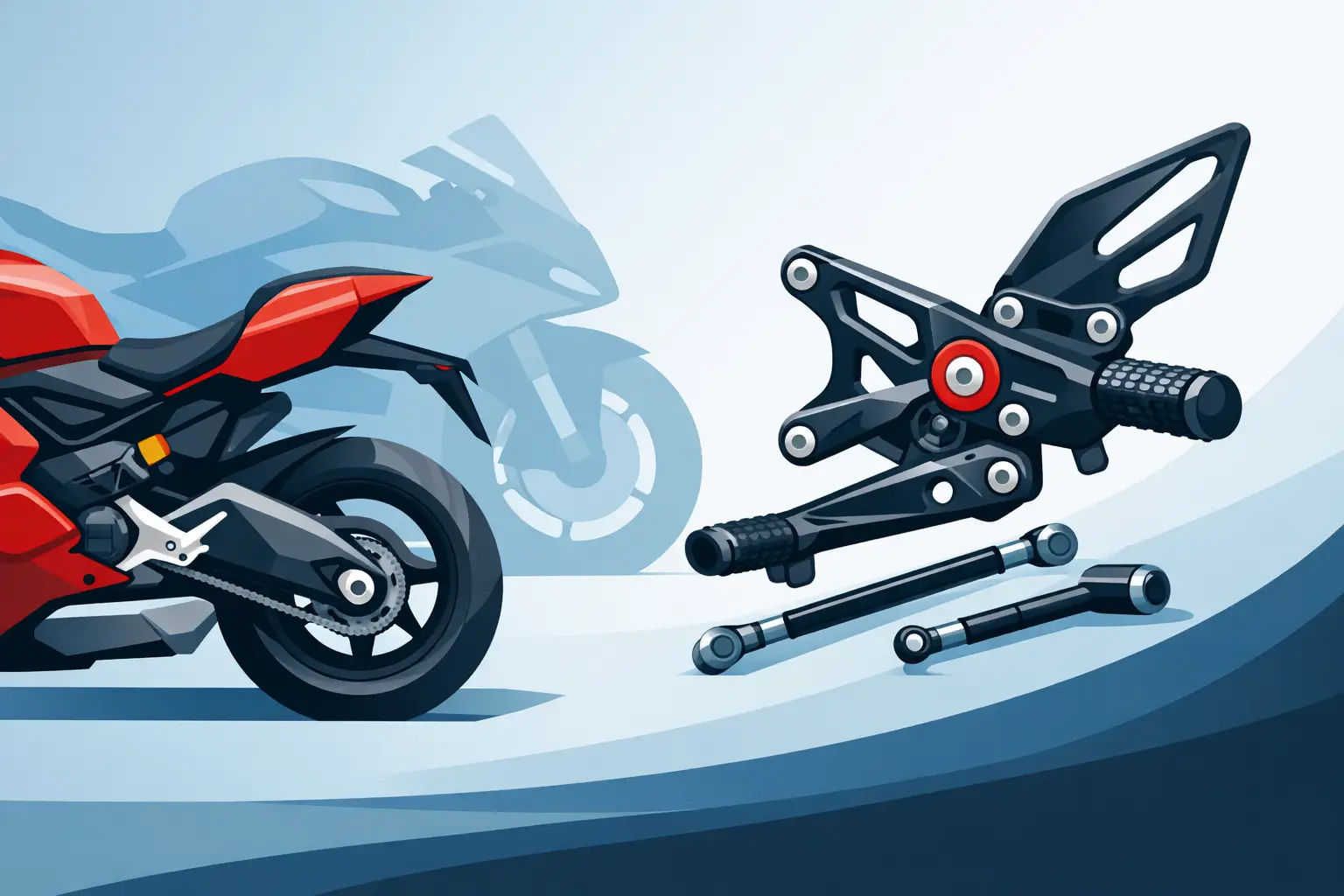
If you are searching for a Ducati Panigale rearsets example, you are usually not looking for theory. You want to know what changes, what fits, and whether the upgrade is worth it for your bike, your riding position, and your pace. On a Panigale, rearsets are not a cosmetic add-on. They are one of the most direct control upgrades you can make.
A quality rearset changes how your lower body connects to the motorcycle. That affects braking support, corner entry stability, body position at lean, and how cleanly you can operate the shift and rear brake under load. On a Ducati Panigale, where chassis feedback is already sharp and rider input matters, the difference is easy to feel.
What a Ducati Panigale rearsets example actually shows
The best Ducati Panigale rearsets example is not just a picture of machined aluminum with folding pegs. It should show three things clearly – model-specific fitment, range of adjustment, and control layout. If any of those are vague, you are guessing instead of buying with confidence.
Fitment comes first because Panigale generations are not interchangeable by default. A V2, 959, 899, V4, V4 S, and V4 R may look close from a distance, but mounting points, brake side geometry, heel guard design, and shift linkage details can differ. A serious rearset listing should be tied to the exact model and year range.
Adjustment is what separates a basic replacement from a real performance part. Most riders upgrading a Panigale want more rearward and slightly higher peg placement for cornering clearance and better support during aggressive braking. Others want only a mild change for street and occasional track use. The value of a proper rearset is that it gives you options instead of forcing a single riding position.
Control layout matters because every Panigale owner has a different use case. Some riders need standard shift. Others want GP shift for track riding. Some care most about brake pedal feel. Others want the shortest, most precise throw at the shifter. A good example makes clear whether the rearset supports those configurations cleanly.
Why Panigale riders upgrade rearsets
The stock Panigale setup is capable, but it is built around a compromise. Ducati has to balance street comfort, production requirements, and broad rider fit. That is fine for mixed use. It is rarely ideal once the bike sees regular track miles or more committed canyon riding.
Rearsets solve several common complaints. First is ground clearance. Riders who carry more corner speed or use more body lean can touch stock pegs earlier than they want. Raising the foot position helps create space before hard parts meet the pavement.
Second is rider support. Under heavy braking, especially on a Panigale with strong front-end load transfer, your legs do a lot of work. A peg position that locks your lower body in place reduces strain on your hands and lets you stay lighter on the bars. That usually improves feel rather than just comfort.
Third is control precision. Track-oriented rearsets often use tighter tolerances, firmer pedal action, and better linkage design than stock parts. The result is a cleaner shift and a more defined rear brake input. You are not adding horsepower, but you are making the bike easier to operate at speed.
Ducati Panigale rearsets example: what to look for in the hardware
A real Ducati Panigale rearsets example should start with material and machining quality. CNC-machined aluminum is standard in this category, but not all aluminum parts are equal. What matters is rigidity, finish quality, and how well the assembly holds alignment after repeated use. Cheap rearsets can develop play at pivot points or lose crispness after a season of hard riding.
Peg design is another detail worth attention. Aggressive knurling improves boot grip in wet sessions and under hard movement on the bike. Replaceable peg sections are even better because crashes and tip-overs happen. Being able to service a damaged component instead of replacing the full assembly saves money over time.
Then there is the pedal system. Brake and shift pedals should move freely without excess slop. Bearing-supported movement generally feels more accurate than a loose bushing setup, though the exact design depends on manufacturer. The point is simple – your foot controls should feel direct, not vague.
Heel guards, toe pegs, and linkage hardware may sound secondary, but they influence day-to-day usability. On a Panigale, where packaging is tight and boots are often bulky race boots, these details can decide whether a rearset feels race-ready or annoying.
Fitment differences across Panigale models
This is where buyers make mistakes. Ducati Panigale rearsets are not a universal category. They are fitment-specific performance parts, and the wrong purchase creates avoidable headaches.
The 899 and 959 family often attracts riders building lightweight middleweight-style track bikes, and rearset selection usually focuses on clearance, reliable shift action, and practical crash serviceability. The Panigale V2 crowd often wants a similar result but may care more about preserving refined street usability alongside track function.
The V4 platform changes the conversation slightly. Riders on a Panigale V4, V4 S, or V4 R often want maximum adjustability and a more aggressive riding triangle, especially if the bike is used for advanced track days, coaching, or racing. Heat management, fairing clearance, and compatibility with race bodywork can matter more here than on a lightly modified street bike.
That is why fitment-based shopping matters. A rearset that works perfectly on one Panigale generation may require different brake light solutions, different linkage routing, or different mounting assumptions on another.
Street use versus track use
Rearsets are one of those upgrades where the right answer depends on how the bike is used. For a dedicated track Panigale, the ideal setup is usually more aggressive. Higher and more rearward positioning improves clearance and can make transitions feel sharper. GP shift support is often a priority.
For a street-driven Panigale, going too aggressive can backfire. Knee angle gets tighter, low-speed comfort drops, and long rides become harder on hips and ankles. That does not mean rearsets are a bad idea for the street. It means the best choice is often a system with moderate adjustment and excellent pedal feel rather than maximum race positioning.
Some riders also overlook brake light and switch considerations. On a race bike, that may not matter. On a street bike, it can. The same goes for side stand compatibility and whether the kit is clearly intended for road use, race use, or both.
How to choose the right rearset for your Panigale
Start with the bike, not the brand name. Confirm exact model and year, then match the rearset to how the bike is actually ridden. If the Panigale sees mostly track days, prioritize adjustability, replacement parts availability, and precise control feel. If it is a performance street bike with occasional track use, balance ergonomics with function.
Next, look at the adjustment range. More adjustment is not automatically better if the mechanism becomes complicated or introduces weakness. The goal is useful range with repeatable mounting positions.
After that, consider serviceability. Rearsets live in a crash-prone area. Replaceable pegs, pedals, toe pieces, and guards matter. A premium setup should not turn a simple tip-over into a full replacement bill.
Finally, think about the rest of the cockpit. Rearsets work best when they complement clip-ons, seat choice, and the rider’s preferred body position. On a Panigale, small ergonomic changes stack up quickly.
Why premium rearsets cost more
Price differences in this category are usually tied to machining quality, design development, hardware quality, and support for replacement parts. Race-oriented brands invest in cleaner tolerances, stronger finishes, and layouts tested in real high-load use. That is why premium rearsets feel more precise and tend to stay that way longer.
There is still a trade-off. Not every rider needs the most adjustable or most expensive setup. If your Panigale is ridden mostly on the street, a simpler rearset from a reputable manufacturer may deliver everything you need. If the bike is pushed hard on track, cheaper hardware often becomes a false economy.
For buyers who want speed, control, and fitment clarity in one place, AXF Race Parts makes the search easier by organizing performance parts around the exact bike rather than forcing guesswork across generic categories.
Common buying mistakes
The biggest mistake is treating all Panigale rearsets as visually interchangeable. The second is buying based on appearance alone. Rearsets are rider contact points, not display parts. If the geometry, fitment, or pedal design is wrong, the finish quality will not save them.
Another common mistake is ignoring your own riding dimensions. Taller riders may need a different adjustment range than shorter riders. Riders who hang off aggressively may want different peg placement than riders who stay more centered. The right rearset should match rider technique, not just bike model.
A strong rearset upgrade gives your Panigale a sharper, more deliberate feel every time your boots touch the controls. Buy for fitment, adjustability, and real use, and the improvement will show up where it matters most – in confidence at speed.