

How to Pick the Right Race Rearsets

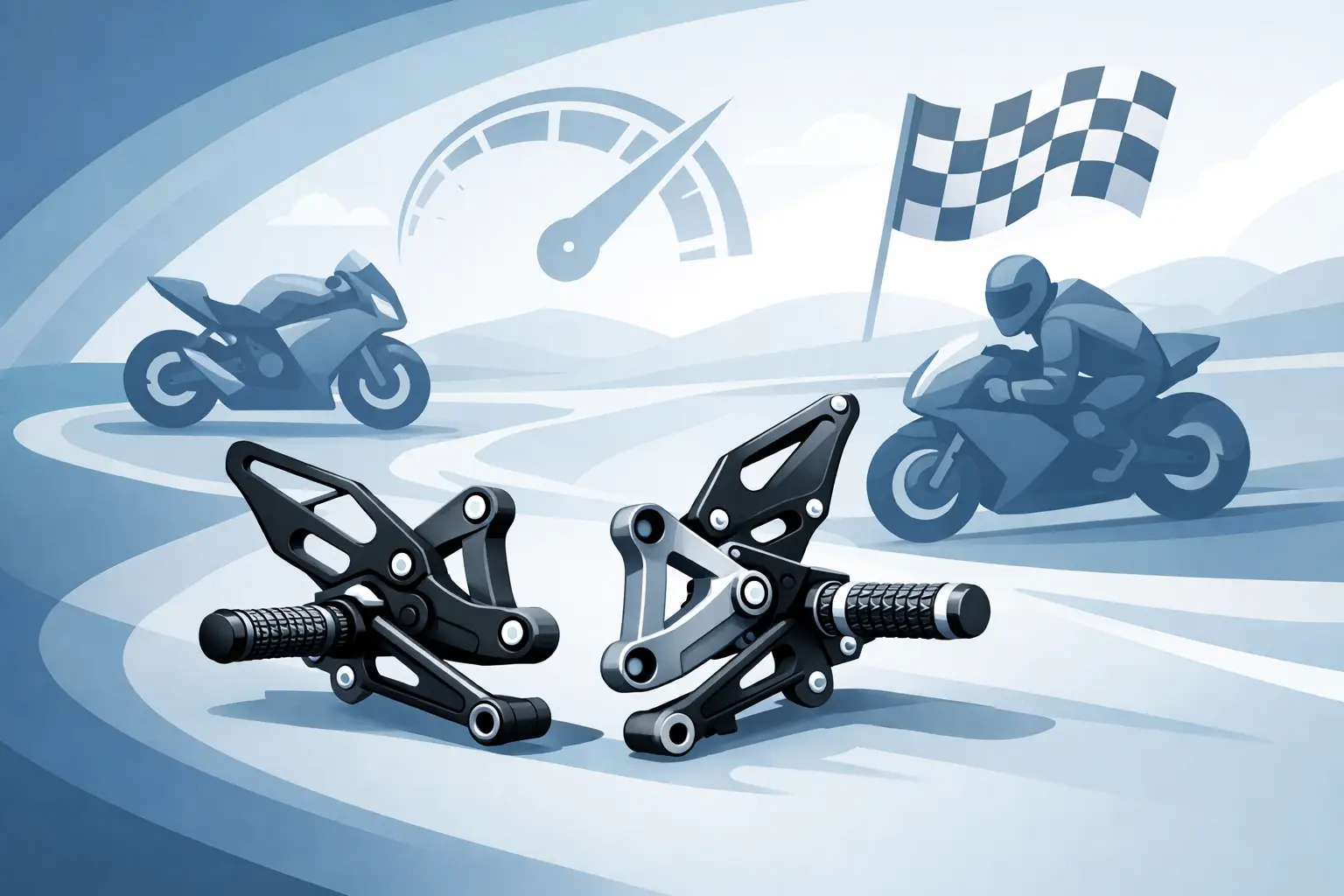
Rearsets can make a fast bike feel sharper, calmer, and easier to place – or cramped, vague, and awkward under braking. That is why riders who spend real time on track stop treating rearsets like a cosmetic upgrade.
If you are figuring out how to choose race rearsets, start with function, not finish. The right set changes body position, boot support, ground clearance, and control feel. The wrong set can create missed shifts, poor leverage at the brake, and a riding position that fights you every lap.
How to Choose Race Rearsets for Your Riding
The first question is simple: what problem are you trying to solve? Some riders need more cornering clearance because the stock pegs touch down too early. Others want more precise shift feel, stronger folding pegs, or a setup that survives a low side without destroying the mounting plates.
Your answer matters because not every race rearset is built around the same priority. One design may offer a wide range of adjustment but use smaller hardware and lighter construction. Another may give you fewer position choices but better rigidity and crash resistance. Neither is automatically better. It depends on whether your bike is a dedicated track build, a club race machine, or a performance street bike that sees occasional track days.
A good rearset should improve control without forcing you into an extreme position you cannot use for a full session. Aggressive geometry sounds good on paper. On the bike, too much rearward or upward movement can overload your knees and make transitions slower instead of faster.
Start With Fitment, Not Features
Fitment is the first filter. Rearsets are bike-specific, and small differences between generations, ABS configurations, and race versus street trim can matter. A set built for one model year may interfere with bodywork, exhaust routing, or brake light hardware on another.
That is especially true if your bike has already been modified. Case covers, aftermarket exhausts, race bodywork, quickshifters, and GP shift conversions can all affect clearance and linkage layout. Before comparing peg positions or machining style, confirm the rearsets are designed for your exact make, model, and year.
This is where a fitment-based catalog saves time. On a specialist site like AXF Race Parts, you can narrow by brand, model, year, and category instead of guessing across universal-looking part numbers. For technical parts like rearsets, that matters more than a polished product photo.
Peg Position Is the Real Product
Most riders shop rearsets by brand first. The smarter move is to shop by usable peg position. The core job of a rearset is to place your feet where they support braking, corner entry, lean angle, and drive off the turn.
For track riding, you usually want the pegs slightly higher and slightly farther back than stock. That helps ground clearance and supports a more aggressive lower-body position. But there is a limit. If the pegs go too high, you lose comfort and can make it harder to weight the outside peg smoothly. If they go too far back, the bike may feel tight through transitions and awkward on corner exit.
Rider size changes the answer. A taller rider often needs a different compromise than a shorter rider on the same motorcycle. So does riding style. A rider who moves around the bike aggressively may prefer more room and a bit less extreme placement. A rider focused on maximum clearance may accept a tighter setup.
Look for rearsets with meaningful adjustability, not adjustment for its own sake. Five positions that are all close together are less useful than three positions that genuinely change rider geometry.
How much adjustability do you really need?
If you are still learning your ideal setup, more adjustability is valuable. It lets you test what your body and bike respond to. If you already know your preferred peg location from previous race bikes, a simpler and more rigid rearset can be the better choice.
More moving parts and more slots in the plates can introduce extra complexity. On a race bike, simple is often good if it delivers the position you need.
Prioritize Grip and Boot Feel
Rearset grip gets overlooked until your boots start sliding around mid-corner. Peg texture matters. On track, you want positive grip that keeps your foot planted under braking and during body movement, especially when the bike is hot, your boots are damp, or the session is getting messy.
Sharp knurling usually gives the most secure feel, but there is a trade-off. Very aggressive peg teeth can chew through boot soles faster. Smoother pegs are easier on gear but may feel vague when you are hanging off and trying to reset your foot quickly before corner exit.
Boot feel also includes peg length and the shape of the toe controls. Some riders want more support under the arch. Others prefer a shorter peg that gives cleaner movement when shifting body position. If your current setup causes missed upshifts or makes it hard to find the rear brake consistently, pay attention to the lever shape and the distance between peg and toe piece, not just the peg location.
Shift Quality and Brake Feel Matter More Than Looks
A race rearset should deliver crisp mechanical feedback. That means minimal play in the shift linkage, smooth lever action, and a brake pedal that gives predictable pressure without excessive flex.
This is where construction quality separates premium rearsets from cheaper alternatives. Tight tolerances, quality bearings or bushings, and rigid mounting plates improve feel immediately. A flashy anodized finish does not.
Standard shift or GP shift?
If you run GP shift, make sure the rearset is built to support it cleanly. Some designs handle both patterns easily. Others require extra parts, awkward linkage angles, or compromises in shift quality. The same goes for quickshifter compatibility. A clean linkage path generally gives better consistency and fewer adjustment headaches.
On the brake side, think about modulation. You want a pedal shape and ratio that let you apply pressure precisely, especially in fast sections where a small input matters. Too soft and the pedal feels vague. Too stiff or poorly placed and it becomes difficult to use without upsetting the bike.
Crashability Is Part of the Value
Track bikes fall over. Sometimes it is a harmless tip in the paddock. Sometimes it is a low side that tests every exposed part on the bike. Rearsets take abuse, so crashability should be part of your buying decision.
Look at replaceable parts. Pegs, toe pieces, lever ends, and hardware that can be swapped individually are a major advantage. If a small crash destroys an entire assembly because one part bent, that is not race-focused design. It is expensive inconvenience.
Material and plate thickness matter too. Ultra-light parts can be attractive, but on rearsets there is usually a balance to strike between low weight and durability. For most track-day riders and club racers, a slightly more substantial setup is the smarter investment.
Don’t Ignore Installation Reality
The best rearset on paper can still be a bad buy if installation becomes a fight. Check whether the set is designed to work with your current brake switch setup, ABS hardware if applicable, and aftermarket exhaust. If the bike still sees street miles, you may need brake light compatibility. If it is a dedicated race bike, that is less relevant.
You should also think ahead to maintenance. Can you access fasteners easily? Can you adjust peg position without removing half the setup? Will a normal crash repair in the paddock be simple, or does the whole assembly need to come apart?
Racers and serious track riders benefit from parts that are easy to service between sessions. Convenience is not a luxury when time is limited and the next call to grid is coming.
Price Should Follow Use Case
Not every rider needs the most expensive rearset available. But going too cheap on a control part usually costs more later. Sloppy tolerances, weak hardware, and limited replacement-part support show up fast on track.
A smart way to buy is to match the rearset to the bike’s role. If you ride six casual track days a year, you may not need the same setup as a rider racing a full club season. But both riders need solid construction, dependable lever feel, and confirmed fitment.
That is why brand reputation matters in this category. Established race-part manufacturers tend to understand things that generic parts miss – proper leverage, stronger wear points, cleaner adjustment, and replacement support after a crash.
The Best Choice Is the One You Can Actually Use
The right rearset is not the one with the most settings or the brightest finish. It is the one that fits your motorcycle correctly, puts your feet where they need to be, gives you clean control input, and survives track use without constant compromise.
When you are deciding how to choose race rearsets, think like a racer even if you are a track-day rider. Fitment first. Position second. Control feel third. Durability always. Get those right, and the bike will feel more natural underneath you from pit out to checkered flag.
Choose the rearset that helps you ride harder with less effort. That is where lap time usually starts.

 Canada
 USA
USA Japan
Japan