

Motorcycle Rain Light Requirements Explained

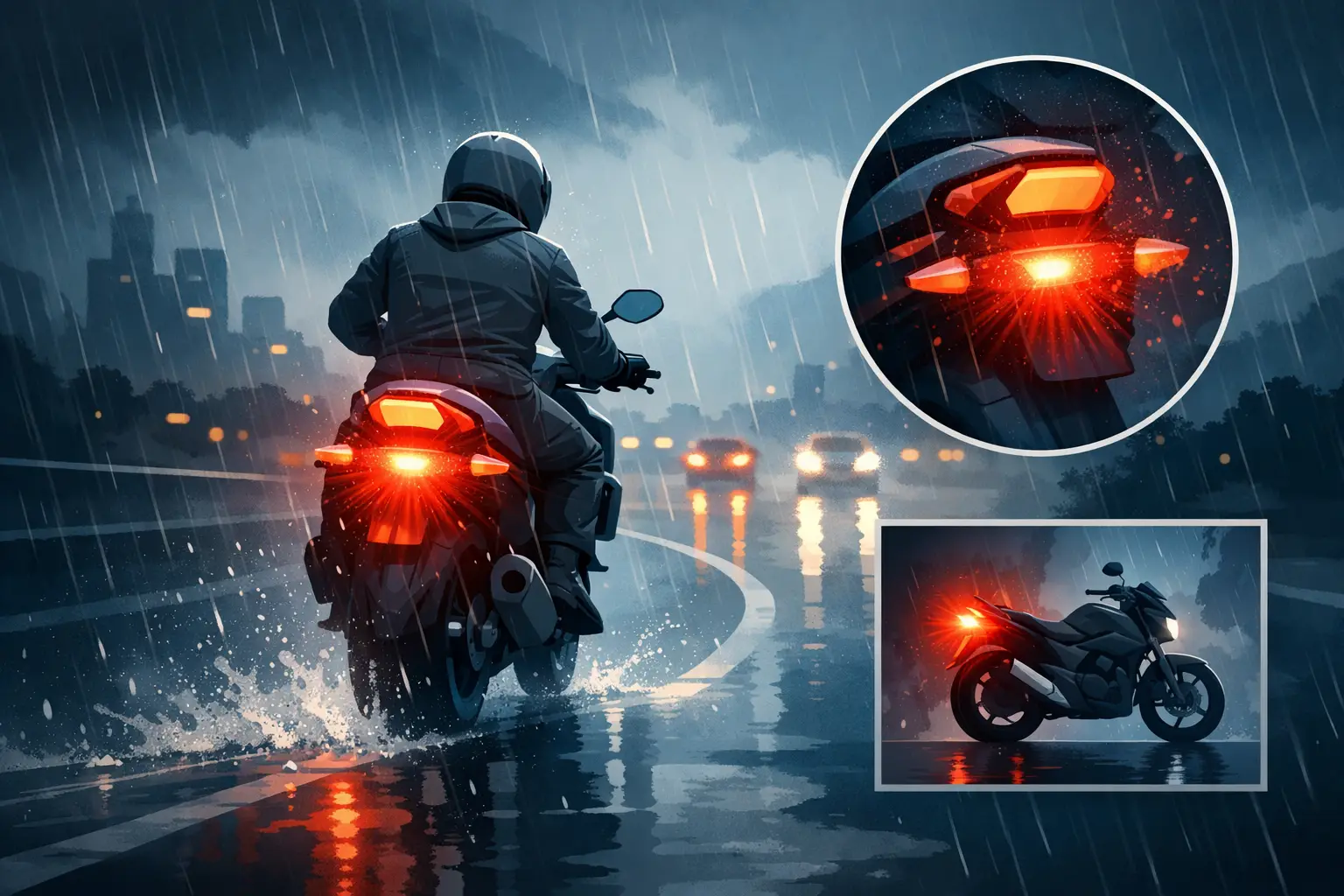
A flashing rear light can get you through tech in one paddock and get you pulled over on the street in another. That is the real issue with motorcycle rain light requirements – they are not one universal standard. They change based on whether you are riding on public roads, at a track day, or under a race organization’s rulebook.
For performance riders, that distinction matters. A rain light is not just another add-on for the tail section. It is a visibility component with a specific job: help riders behind you judge distance in low-visibility conditions. Install the wrong type, wire it incorrectly, or use it in the wrong environment, and you create confusion instead of safety.
What motorcycle rain light requirements actually mean
In practical terms, motorcycle rain light requirements usually refer to three things: when a rain light is required, how it must function, and where it must be mounted. On race-prepped bikes, those details are often spelled out by the sanctioning body or track-day organizer. On street bikes, the legal framework usually centers on brake lights, tail lights, color, intensity, and whether flashing patterns are allowed.
That is why riders run into conflicting advice. A club racer may say a flashing red rain light is mandatory, while a street rider in the next garage says flashing rear lights are illegal. Both can be right.
A dedicated rain light is most common in road racing and track use, especially when bikes run in wet sessions or reduced visibility. It is typically a bright red LED mounted at the rear of the bike, often with a flash pattern designed to stand out through spray. On the street, the rear lighting rules are broader and usually less forgiving about nonstandard flashing behavior.
Track use vs street use
This is the split that matters most.
Track and race requirements
On track bikes, motorcycle rain light requirements are generally set by the organizer, not by federal street equipment standards. Some groups require a rain light only in wet races. Others require the light to be installed and functional at all times, even if it is only activated when race control declares wet conditions. Many race organizations also specify flash rate, minimum brightness, rear-facing position, and visibility from a certain distance.
In that environment, the light is a safety tool for riders approaching at high closing speeds. Spray, standing water, and low contrast make a normal tail section hard to read. A bright, dedicated rain light gives the rider behind you a reference point sooner.
The trade-off is that track-legal does not automatically mean street-legal. A race bike built around paddock and pit-lane use can carry hardware that would not pass state inspection or equipment laws for public roads.
Street requirements
For street motorcycles in the US, rear lighting is governed by a mix of federal standards and state vehicle laws. In many cases, your motorcycle must have a red tail light and a red brake light visible from a specified distance. Whether that light can flash is where things get complicated.
Some states allow modulating or flashing brake light behavior under narrow conditions. Others restrict flashing red lights because they are associated with emergency vehicles or prohibited signaling. A dedicated rear rain light that blinks continuously may not be legal on public roads even if it is excellent on track.
If your bike sees both street and track duty, do not assume one setup covers both. It often does not.
The key specs riders should check
A good rain light setup is less about marketing language and more about matching the rule set. Before you buy or wire anything, check the actual requirements in five areas.
Light color
Red is the standard at the rear. That sounds obvious, but it still matters because some universal LED units offer multiple modes or lens colors. For any serious track or street application, stick with a clearly red rear-facing output.
Flash pattern
This is one of the biggest compliance issues. Some organizations want a constant flash. Others require a specific pulse rate. Some prohibit strobe-like patterns because they can be distracting or make it harder to judge distance. On the street, an aggressive flash pattern may be the exact feature that creates legal problems.
Brightness
Too dim and the light disappears in spray. Too bright and it can become a distraction in dark conditions. Race rules may call for a minimum visible intensity, while street laws often focus more generally on visibility and approved lighting function. A quality LED unit with consistent output is worth more than a cheap light with a dozen gimmick modes.
Mounting location
Most motorcycle rain light requirements expect the light to sit on the centerline or close to it, mounted at the rear and aimed straight back. If the light is buried under the tail, blocked by bodywork, or mounted off-axis, visibility drops fast. That is especially true on race fairings with compact tail sections.
Wiring and switching
A rain light should work predictably. Riders get into trouble when they tap into the wrong circuit, create electrical noise, or combine tail, brake, and rain functions in a way that produces inconsistent output. On a dual-purpose bike, a separate switch or track-only harness can make the setup cleaner and easier to manage.
Why race bikes need a purpose-built solution
A high-performance bike is not the place for generic lighting shortcuts. Vibration, heat, water exposure, and tight packaging all work against weak connectors and low-grade housings. A rain light on a race-prepped motorcycle has to survive repeated use, not just look bright in the garage.
That is where fitment and layout matter. Tail sections on modern sport bikes leave limited room for clean mounting. Add a race ECU, keyless controls, aftermarket subframes, or a full fairing conversion, and universal solutions become less universal. Clean routing, secure connectors, and a light that remains visible with your body position and tail geometry are what separate a proper install from a tech headache.
If you are already selecting components by bike, model, and intended use, treat the rain light the same way you treat controls or rearsets. Compatibility is not a small detail. It is the whole job.
Common mistakes with motorcycle rain light requirements
The most common mistake is assuming all flashing rear lights qualify as rain lights. They do not. A brake light flasher, an integrated tail tidy, and a race rain light may all blink, but they serve different purposes and fall under different rules.
Another mistake is mounting the light too low or too far under the tail. It may look clean from the side, but if the rider behind you cannot pick it up through spray, the install has failed.
Wiring is another weak point. Riders often piggyback off existing rear lighting circuits without considering voltage stability, switch logic, or failure modes. If activating the brake changes the flash pattern, or if the light cuts out intermittently, you are not compliant and you are not safer.
There is also the inspection issue. Some organizations are strict about operation before the bike ever rolls out. If your rain light has multiple modes, tech may reject it unless the approved pattern is locked in and obvious.
How to choose the right setup
Start with where the bike actually runs. If it is a dedicated track or race machine, read the current rulebook for your organization and buy to that specification. If it is a street bike that occasionally sees wet commuting, focus first on legal tail and brake light compliance in your state.
If the bike does both, you may need a dual-mode approach. That can mean a removable or switchable rain light system for track days, while keeping the standard road-legal rear lighting setup for street use. It is less convenient than a one-size-fits-all answer, but it avoids the usual compromise where the bike is technically wrong in both environments.
For riders sourcing serious components, this is the same logic used across the rest of the machine. You would not choose a brake master cylinder or rearset assembly without checking fitment, function, and rule compliance. A rain light deserves the same discipline. At https://shop.axfraceparts.com, that fitment-first mindset is already how performance parts should be bought.
The bottom line for US riders
There is no single national checkbox for motorcycle rain light requirements that covers every bike and every use case. On track, the governing body decides what is required. On the street, your state laws and equipment standards control what is legal. The overlap is smaller than many riders think.
The smart move is simple. Match the light to the environment, mount it where it can actually be seen, and wire it like a serious component instead of an afterthought. If your bike is built for speed, every safety part should be held to the same standard.

 Canada
 USA
USA Japan
Japan