

Spider Racing Rearsets Review

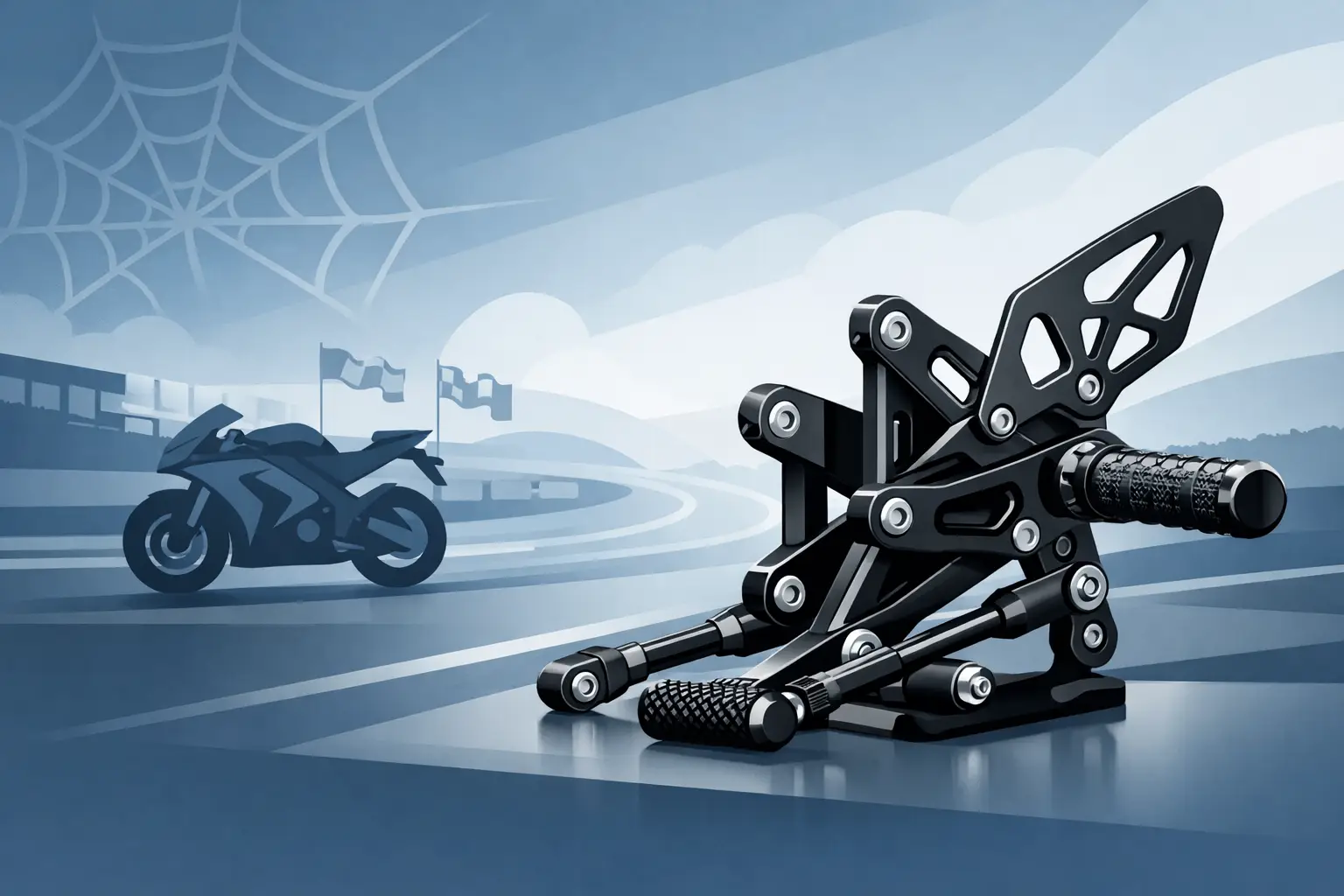
If your stock rearsets are the first thing touching down at lean, or the first thing bending in a simple tip-over, this Spider Racing rearsets review gets right to the point. For serious track riders and racers, rearsets are not a cosmetic add-on. They change rider position, boot grip, crash survivability, and the precision of every shift and brake input.
What Spider Racing rearsets are trying to solve
A quality rearset has one job: give the rider a stronger, more precise connection to the motorcycle. That means better peg placement, firmer feel under load, and components that hold up to race use better than many OEM assemblies. Spider Racing targets exactly that space – race-oriented rearsets built for riders who care more about control and adjustability than comfort or styling trends.
On most modern sport bikes, stock rearsets are designed around broad usability. They need to work for commuting, road riding, and occasional aggressive use. That usually means conservative peg placement, more compromise in materials, and less crash resistance. Spider Racing rearsets push in the opposite direction. The design focus is track function first.
Spider Racing rearsets review: build quality and finish
The first thing experienced buyers usually check is machining quality. On that front, Spider Racing rearsets make a strong impression. The components are typically CNC-machined from billet aluminum, and the overall fit and finish lands where you want it for a premium race part – clean edges, accurate tolerances, and hardware that feels selected for actual use instead of price-point packaging.
The finish matters for more than appearance. Rearsets live in a harsh area of the bike. They deal with constant boot abrasion, heat, moisture, chain lube contamination, and the occasional impact. Spider Racing units generally present as purpose-built hardware, not soft anodized dress-up parts. That distinction matters if the bike sees repeated trackdays, race weekends, or regular paddock maintenance.
Another positive is that the assemblies usually look mechanically straightforward. That is a good thing. Rearsets do not need unnecessary complexity. A clean design is easier to install, easier to inspect, and usually easier to repair with individual replacement parts if the bike goes down.
Adjustment range and rider positioning
Adjustment is where rearsets either justify the spend or fall short. Spider Racing rearsets typically offer multiple mounting positions that let riders move the pegs up, back, or in a balanced combination of both. For track riders chasing cornering clearance, that is the main selling point.
Moving the pegs higher and farther rearward can create more room at lean and help riders lock in better under braking. It can also improve body position transitions, especially for riders who spend a lot of time hanging off on fast corner entries. On bikes with limited stock clearance, this change is immediately noticeable.
That said, there is always a trade-off. More aggressive positioning is not automatically better for every rider. Taller riders may welcome the change, while some riders on shorter inseams can find an extreme setup too cramped. For mixed street and track use, the most rearward or highest position may become tiring on longer rides. Spider Racing scores well because the adjustability gives you room to tune around that rather than forcing one fixed geometry.
Peg grip, feel, and control input
Peg grip is one of the most underrated parts of rearset performance. A rearset can be beautifully machined and still disappoint if the pegs feel vague under the boot. Spider Racing generally gets this right with aggressive peg knurling that provides strong boot traction when riders are weighting the outside peg or stabilizing under heavy braking.
That increased grip is especially useful in wet sessions, hot pit conditions, or long race weekends when boots and pegs are not perfectly clean. You want a platform that feels planted every lap, not just in ideal conditions.
The feel through the controls is also a key part of this Spider Racing rearsets review. Good rearsets should make both brake and shift inputs feel direct, with minimal slop in the linkage and consistent action through the lever travel. Spider Racing setups are generally appreciated for that tighter, more mechanical feel compared with softer or more flexible OEM assemblies.
Shift quality and race usability
For racers and aggressive track riders, shift performance matters as much as peg position. Any looseness in the rearset assembly or linkage shows up fast during high-rpm upshifts and hurried corner-entry downshifts. A properly designed rearset should reduce free play and maintain consistent lever action over time.
Spider Racing rearsets typically support the kind of crisp shift feel riders want from a race-focused cockpit. Depending on bike model and setup, they can work well with standard shift or GP shift configurations, which is a major plus for track use. If you are building a dedicated track bike, that flexibility adds value.
The caveat is installation quality. Even premium rearsets can feel average if the linkage is rushed during setup or if lever height is not dialed to the rider’s boot and ankle position. These parts reward careful setup. Riders expecting a bolt-on miracle without adjustment time may miss part of the benefit.
Crash survivability and serviceability
Rearsets live in the impact zone. That means crash survivability is not optional. Spider Racing has a strong reputation among performance riders because the parts are built with racing use in mind, and that usually includes a better chance of surviving minor incidents than many stock assemblies.
No rearset is crash-proof. If the bike hits hard enough, something is going to bend, scrape, or break. The question is whether the design limits the damage and whether replacement pieces are available without replacing the full assembly. That is where race-oriented brands stand apart. Spider Racing rearsets tend to make more sense for riders who want hardware they can maintain instead of treating as disposable.
This is also where buying through a fitment-focused source matters. When you are ordering a complete rearset or replacement components, you want exact model compatibility and clear part support. A specialized retailer such as AXF Race Parts gives that process more structure than a generic marketplace listing.
Installation and fitment expectations
Installation is usually straightforward for anyone comfortable working on a sport bike, but it is not a casual universal part swap. Brake light switches, return springs, shift rod orientation, master cylinder mounting, and brake pedal free play all need attention depending on the bike and intended use.
Fitment is the make-or-break factor. A rearset can be excellent on one application and irrelevant on another if the geometry does not match the rider’s needs. Spider Racing offers model-specific designs, which is exactly what this market requires. That reduces guesswork, but buyers should still confirm year, trim, ABS variation, and any race-bodywork or aftermarket exhaust clearance issues before ordering.
If the bike is a street machine that sees occasional trackdays, think carefully about how aggressive you want the final position. If it is a dedicated track or race bike, prioritize clearance, shift feel, and durability over comfort.
Who should buy them and who should probably skip them
Spider Racing rearsets make the most sense for riders who are already outriding stock ergonomics or stock durability. If you are scraping pegs, want a firmer shift and brake interface, or need a setup that supports race-style body position, the upgrade is easy to justify.
They also make sense for riders building a trackday bike properly rather than halfway. Rearsets are one of those parts that directly affect confidence. More grip at the peg and more precise control feel can change how planted the bike feels in fast riding.
They may be less compelling for casual street riders who rarely push lean angle, prioritize comfort, or simply want a visual upgrade. Spider Racing rearsets are built for performance use. If that use case is not part of your riding, you may not get full value from what they offer.
Final take on Spider Racing rearsets
The strongest part of this Spider Racing rearsets review is that the product delivers where performance riders actually care: adjustment, control feel, peg grip, and race-ready construction. They are not a universal answer for every rider, and they are not meant to be. They are a serious upgrade for bikes that are ridden hard and set up with intent.
If your goal is sharper rider input, improved cornering clearance, and a rearset assembly that better matches track use than stock hardware, Spider Racing is a credible option. Set them up carefully, choose the position that fits your body and riding style, and they can become one of the upgrades you notice every lap, not just the day you install them.
The best rearset is the one that disappears beneath you and lets every input feel cleaner. That is where Spider Racing has real value.

 Canada
 USA
USA Japan
Japan