

Best Brake Pads for Motorcycle Track Days

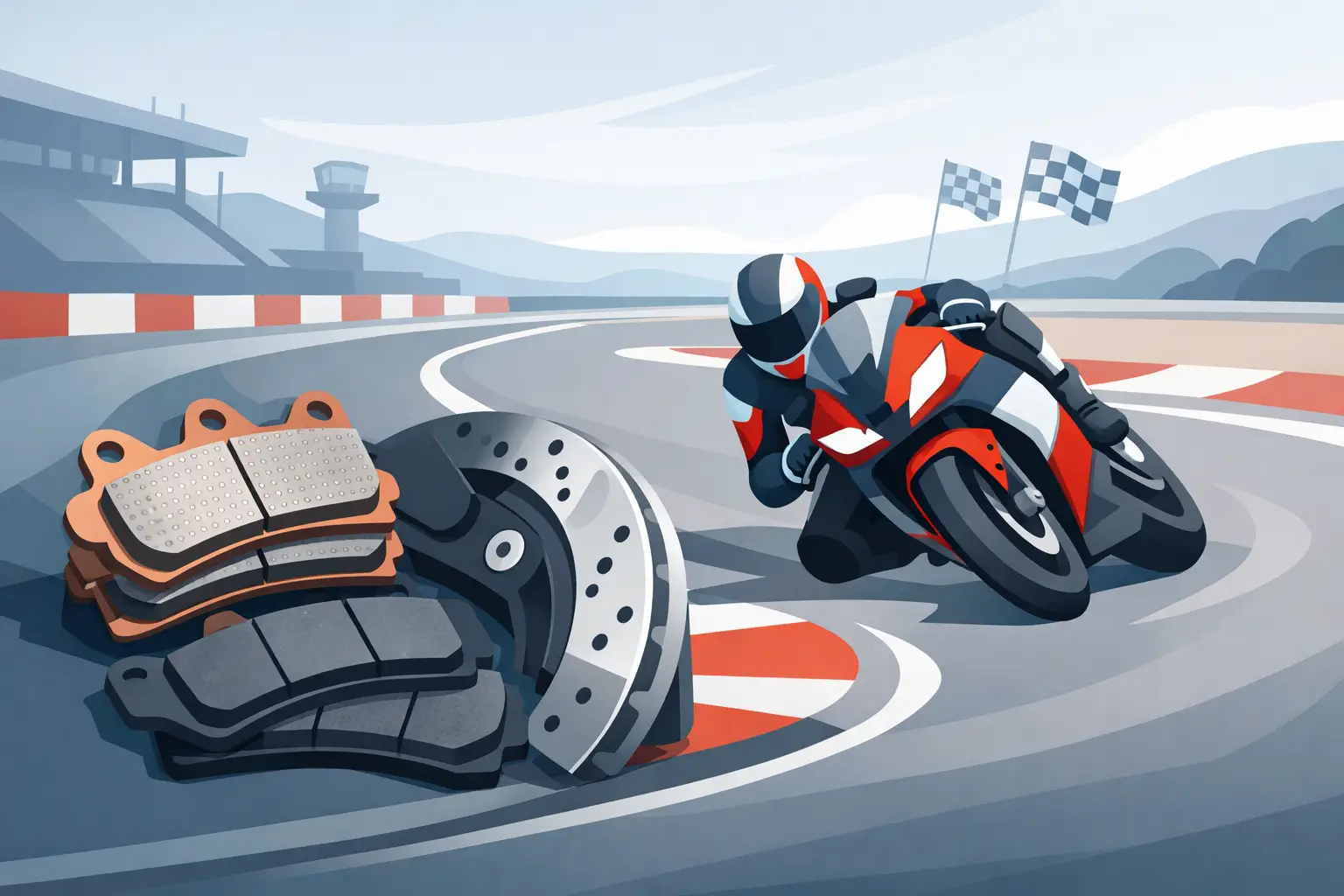
If your lever starts going long after three hard laps, your problem is not always fluid or lines. Very often, it is pad choice. The best brake pads for motorcycle track days are the ones that match your speed, bike weight, rotor setup, and how aggressively you use the brakes – not just the pads with the highest price tag or the most race-oriented label.
Track riding puts a brake system in a completely different operating window than street use. Heat comes up faster, stops are repeated harder, and consistency matters more than cold bite at a stoplight. That changes what counts as a good pad. A compound that feels excellent on the street can smear, fade, or lose feel once temperatures climb. On the other side, a true racing pad can feel wooden until it is hot and may be excessive for novice pace.
What makes the best brake pads for motorcycle track days?
The short answer is friction stability under heat. On track, you are not judging pads by one hard stop. You are judging them by the tenth hard stop, then the twentieth, when rotor temperature is up and braking markers are getting shorter. The right pad gives a predictable lever, strong initial response, and repeatable deceleration without a sudden drop in bite.
Feel matters just as much as outright power. Some riders want a strong initial attack for late braking and fast direction changes into the corner. Others prefer a more progressive pad that lets them trail brake with finer control. Neither approach is automatically better. It depends on your pace, your fork setup, tire grip, and whether you are trying to carry corner speed or square the bike off on exit.
Rotor wear is part of the equation too. More aggressive compounds usually bring more bite and temperature resistance, but they can be harder on rotors. For a dedicated track bike, that trade-off may be easy to accept. For a rider doing occasional track days on a street-based machine, a slightly less aggressive compound can be the smarter choice if it preserves rotors and still delivers stable performance.
Sintered vs racing compounds
For most track-day riders, the real comparison is not organic versus sintered. It is performance sintered versus dedicated racing pads.
Sintered pads are the common starting point because they offer strong all-around performance, decent cold response, and good durability. A quality sintered pad can work well for intermediate pace and lighter bikes, especially when paired with good fluid, stainless lines, and properly maintained calipers. The limitation shows up when temperatures stay elevated for longer sessions. Some street-performance sintered pads simply run out of headroom.
Dedicated race compounds are built for repeated high-energy stops. They handle heat better, resist fade more effectively, and usually offer sharper bite with more stable feel deeper into a session. The trade-off is that they may need temperature to work at their best, can increase rotor wear, and may feel too abrupt for some riders.
That is why “race pad” is not automatically the right answer. If you are in novice group, braking early, and still developing reference points, a very aggressive compound can make modulation harder. If you are in advanced group on a fast 1000 and regularly loading the front tire at the end of a straight, a mild dual-purpose pad is rarely enough.
Choosing by pace, bike, and braking style
The best way to narrow the field is to be honest about where and how you ride.
A middleweight bike ridden at intermediate pace places different demands on pads than a liter bike with slicks and late-braking habits. Weight, speed, and track layout all affect brake energy. A Yamaha R6 or Kawasaki ZX-6R at a flowing track may be happy on a high-quality track-focused sintered pad. A BMW S 1000 RR, Ducati Panigale V4, or Aprilia RSV4 ridden hard at a stop-and-go circuit usually benefits from a true race compound.
Rider style changes the answer too. If you like hard initial bite and a strong lever right at tip-in, look for compounds known for immediate response and high friction. If you prefer to build pressure gradually and carry brake deep to apex, a more progressive compound with stable modulation can be faster and easier to trust.
There is also a temperature window issue. Some compounds come alive once hot and stay extremely stable there. Others feel better on the first lap and through mixed street-track use, but they are not as resistant to fade in summer conditions or advanced sessions. The more dedicated your bike is to track duty, the more sense it makes to move toward a pure race pad.
Product tiers that make sense for track days
There are three broad pad categories worth considering.
The first is the fast street and light track category. These pads suit newer track riders, lighter motorcycles, and riders who still use the same bike on the street. They offer good bite, easier warm-up, and less compromise in everyday use. Their weakness is sustained heat capacity.
The second is the track-day performance category. This is the sweet spot for many riders. These compounds are noticeably more heat resistant than typical street pads, with stronger feel and better consistency, but they are still manageable and not overly harsh on the system. For many intermediate and some advanced riders, this is the smart buy.
The third is the full race category. These are for riders pushing hard enough to expose the limits of lesser compounds. They reward speed, heat, and commitment. They also demand a brake system in good condition and a rider who can use that extra performance without overwhelming front-end grip.
Brand examples riders actually look at
Brembo remains one of the first names riders consider for a reason. Its higher-spec track and race compounds are widely used because they deliver the lever feel and consistency expected from a serious braking setup. Different Brembo pad lines suit different uses, so the important point is choosing the right compound family, not just choosing the logo.
Other race-focused brands can be equally effective depending on the caliper, rotor material, and rider preference. Some compounds emphasize initial bite. Others focus on modulation and wear characteristics. On identical bikes, two riders can prefer different pads and both be right, because confidence at the lever is personal.
If you are buying with fitment in mind, a specialist catalog matters more than most riders admit. Brake pads are simple in theory, but caliper variation, model-year changes, and aftermarket brake conversions can create expensive mistakes. That is where a fitment-driven source like AXF Race Parts has a real advantage for track builds and race-prep parts selection.
Don’t choose pads in isolation
Pads are only one part of braking performance. If your fluid is old, your calipers are dirty, or your rotors are glazed or below service limit, even excellent pads will disappoint. Riders often blame pad compound when the real issue is system condition.
Fresh high-temp brake fluid is mandatory for track use. Stainless lines help preserve lever consistency under heat. Clean pistons and properly serviced calipers reduce drag and improve pad retraction. Rotor condition matters too. A premium race pad on a worn or contaminated rotor will not deliver what the compound is capable of.
Bed-in is another area riders rush. New pads need proper transfer to the rotor surface. Skip that process and you can get vibration, uneven feel, or reduced friction. The result gets blamed on the product when the installation process was the actual problem.
Common mistakes when buying track-day brake pads
The first mistake is buying the most aggressive pad available without matching it to pace. More bite is not always more control. If the pad is too abrupt for your skill level or tire setup, braking becomes harder to manage, not easier.
The second is trying to make one pad do everything. A street-legal compromise pad may be acceptable for occasional track use, but once track days become regular, dedicated compounds start making financial sense because they improve consistency and reduce frustration.
The third is ignoring rotor compatibility and wear rate. Some riders are happy to trade rotor life for peak braking performance. Others want a balanced setup that performs well without accelerating maintenance costs. Neither choice is wrong, but it should be a deliberate one.
So what should most riders buy?
If you are doing a few track days a year on a street-based sport bike, start with a proven track-focused sintered or entry race compound from a respected performance brand. You want clean bite, solid heat resistance, and manageable feel. Pair it with fresh fluid and a properly serviced system before assuming you need the most extreme option.
If you are in advanced group, riding a 600 or 1000 hard, or building a dedicated track bike, move to a true race pad. That is usually where you gain the most in consistency, confidence, and late-session braking stability. The higher you climb in pace, the more you value a compound that feels the same on lap twelve as it did on lap two.
And if you are between categories, choose the pad that matches the bike you actually ride and the braking habits you actually use – not the setup you imagine a pro racer would choose. The best track-day parts are the ones that let you brake later with more confidence, lap after lap, and still leave you with a setup you trust when the session gets serious.