

Motorcycle Brake Pads for Street and Track

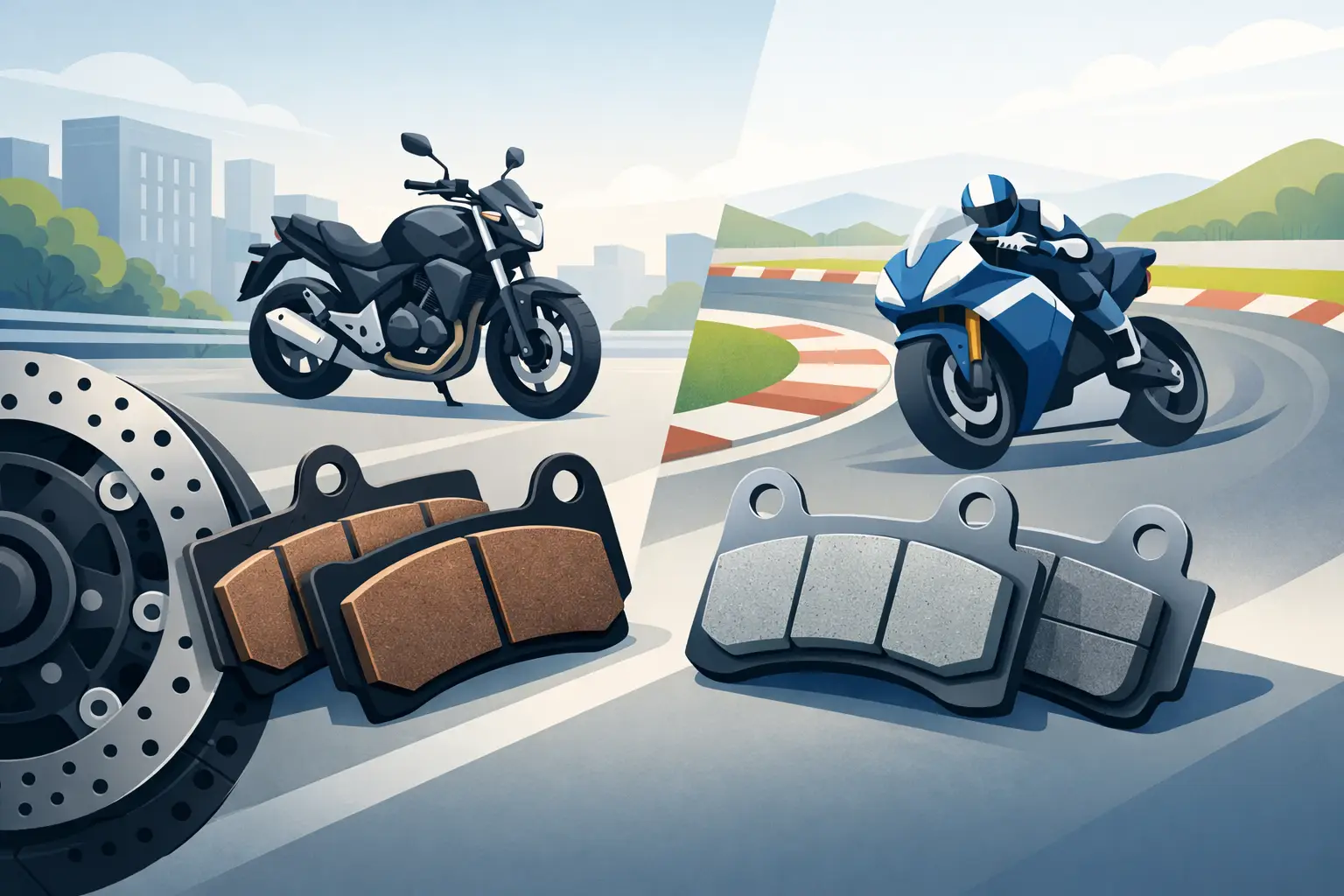
Brake feel tells you a lot before lap times do. If the lever comes back too far, the initial bite is vague, or power falls off as temperatures rise, motorcycle brake pads are usually one of the first places to look. Pad choice changes how a bike responds at corner entry, how confidently you trail brake, and how consistent the system stays over a full session.
For performance riders, this is not a generic maintenance item. Pad compound, rotor compatibility, operating temperature, and caliper fitment all matter. The right set can sharpen lever response and improve consistency. The wrong set can feel wooden on the street, fade on track, or wear rotors faster than expected.
Why motorcycle brake pads matter more than most riders think
A lot of riders focus on calipers, master cylinders, braided lines, and fluid. Those upgrades matter, but the pad is the friction material actually doing the work. It determines the bite you feel at the lever, the progression as pressure builds, and how stable braking remains when heat increases.
That matters even more on modern sport bikes. Current superbikes and middleweights carry serious speed, strong chassis grip, and electronics that let riders brake later and harder. A pad that is fine for casual commuting can become the weak link fast when the pace rises.
There is also no single best compound for every use case. Street riders want predictable cold performance, low noise, and reasonable rotor wear. Track-day riders need stronger heat resistance and repeatable feel. Racers often accept shorter service life and more aggressive behavior in exchange for maximum bite and consistency at speed.
The main types of motorcycle brake pads
Organic and semi-metallic compounds
These are common in general street applications. They warm up quickly, tend to be quieter, and usually offer a softer initial character than dedicated race compounds. For everyday riding, that can be a benefit. Lever response feels manageable in traffic and at lower temperatures.
The trade-off is heat capacity. Push them through repeated hard stops or long sessions and performance can taper off. For a performance-oriented sport bike, they are often a starting point rather than the end goal.
Sintered motorcycle brake pads
Sintered pads are the standard choice for many aggressive street riders because they combine strong bite, durability, and broad temperature range. They hold up better under repeated hard use than many softer compounds and usually perform well in mixed conditions.
This is where many riders find the best balance. A quality sintered pad can work on the street, handle canyon riding, and survive occasional track days without becoming inconsistent. The exact feel still varies by manufacturer, but the category is proven for dual-purpose use.
Track and race compounds
Race pads are designed around high temperatures and repeated heavy braking. They typically deliver stronger bite, firmer feel, and more stability at race pace. On the right setup, they reward committed braking with precise control.
But race compounds are not automatically better for every rider. Some need heat before they feel their best. On the street, that can mean reduced feel on a cold morning or during light-use riding. They can also be harsher on rotors and may wear faster depending on the bike, track, and rider input.
How to choose the right pad for your riding
The first question is simple: where does the bike spend most of its time? If it is primarily a street machine with occasional aggressive riding, a high-quality sintered pad usually makes sense. You get dependable cold response, solid power, and enough thermal capacity for real-world speed.
If the bike sees regular track days, the answer shifts. You want a compound that stays stable as temperatures climb and that keeps lever feel from changing over a session. A street-focused pad may feel fine for the first few laps, then start fading when pace and heat build.
For dedicated race bikes, consistency under extreme load matters more than comfort. Initial bite, release characteristics, and heat management become setup tools, not just product features. Riders often tune pad choice around braking style. Some want hard initial attack for deep entries. Others prefer a more progressive feel to carry cleaner brake pressure to apex.
Bike weight, speed, and electronics also play a role. A heavier machine or a bike with strong top-end speed will ask more from the front brakes. So will a rider who brakes late and aggressively. The same pad can feel excellent on one platform and average on another.
What good brake feel actually looks like
Initial bite
This is the first response when the pad contacts the rotor. Strong bite gives the system an immediate, decisive feel. It helps riders shorten reaction time at corner entry and gives confidence under hard braking.
Too much bite for the application can make the bike feel abrupt, especially on the street or in mixed-grip conditions. Too little, and the lever can feel lazy even if ultimate stopping power is acceptable.
Progression and modulation
Modulation is how precisely braking force builds as lever pressure increases. Strong modulation gives riders more control at turn-in and while trail braking. It is one of the biggest differences between average pads and well-matched performance compounds.
A pad can have high friction but poor communication. That usually shows up as an on-off feel rather than a clean, predictable build in power.
Heat consistency
The best-performing pad on lap one is not always the best pad by lap eight. Consistency matters. If bite changes as the system gets hot, the rider starts adapting to the brake instead of trusting it. That costs confidence and usually lap time.
Fitment, rotor compatibility, and setup details
Choosing motorcycle brake pads by compound alone is not enough. Fitment has to be exact. Caliper design, backing plate shape, pin arrangement, and manufacturer-specific applications all need to match the bike correctly.
Rotor material matters too. Some pads are more aggressive on stainless rotors, while others are developed to work best with specific high-performance discs. Mixing an overly aggressive pad with a rotor not intended for that friction level can increase wear and reduce overall braking quality.
Fluid, lines, and caliper condition also influence pad performance. If the system has old fluid, contaminated pistons, or flex in the lines, even a premium pad will not perform at its full level. Brake pads are part of a system, not a standalone fix.
Signs it is time to replace your pads
Wear thickness is the obvious one, but it is not the only one. If the lever feel becomes inconsistent, braking distances increase, or the pad surface looks glazed from excess heat, replacement may be the right move even before the material is fully gone.
Track riders should inspect pads often. High heat cycles can change compound behavior before the backing plate is close. Uneven wear can also point to caliper service issues, rotor problems, or pad material that is not suited to the actual use case.
Noise alone is not always a failure sign, especially with aggressive compounds. But noise combined with reduced bite, vibration, or visible rotor scoring deserves attention.
Street versus track is where most buying mistakes happen
A lot of riders buy race pads for a bike that mostly sees street miles because race sounds faster. Sometimes that works. Often it just creates a braking setup that is less friendly when cold and harder to live with day to day.
The opposite mistake is just as common. Riders start doing regular track days on a premium street pad, then wonder why the lever goes long late in a session. The pad is not defective. It is simply outside the operating range it was designed for.
This is where fitment-based shopping and brand-specific selection become valuable. A rider on a Ducati Panigale, Yamaha R1, BMW S 1000 RR, Kawasaki ZX-10R, Honda CBR1000RR-R, KTM RC 8C, Aprilia RSV4, Suzuki GSX-R, Triumph Daytona, or MV Agusta superbike should be choosing with both bike platform and riding intensity in mind. That is how serious buyers avoid guesswork and get to a setup that performs from the first session.
Buying with a performance mindset
Price matters, but the cheapest pad is usually expensive if it compromises control or needs replacing too soon. The better approach is to buy for actual use, expected heat range, and proper fitment from manufacturers with a real track record in high-performance braking.
That is the logic performance riders follow when they shop AXF Race Parts. They are not looking for generic options. They want race-proven brands, exact fitment, and a braking setup that matches the bike and the pace.
If you are upgrading, be honest about how the motorcycle is used. A strong street-sport pad is often the right answer for fast road riding and occasional track work. A dedicated track or race compound makes sense when temperatures, speeds, and braking loads stay high enough to use it properly. The best motorcycle brake pads are not the most aggressive ones on paper. They are the ones that let you brake later, release cleaner, and trust the front end every time you come off the straight.