

Race Fairing Mounting Guide for Track Bikes

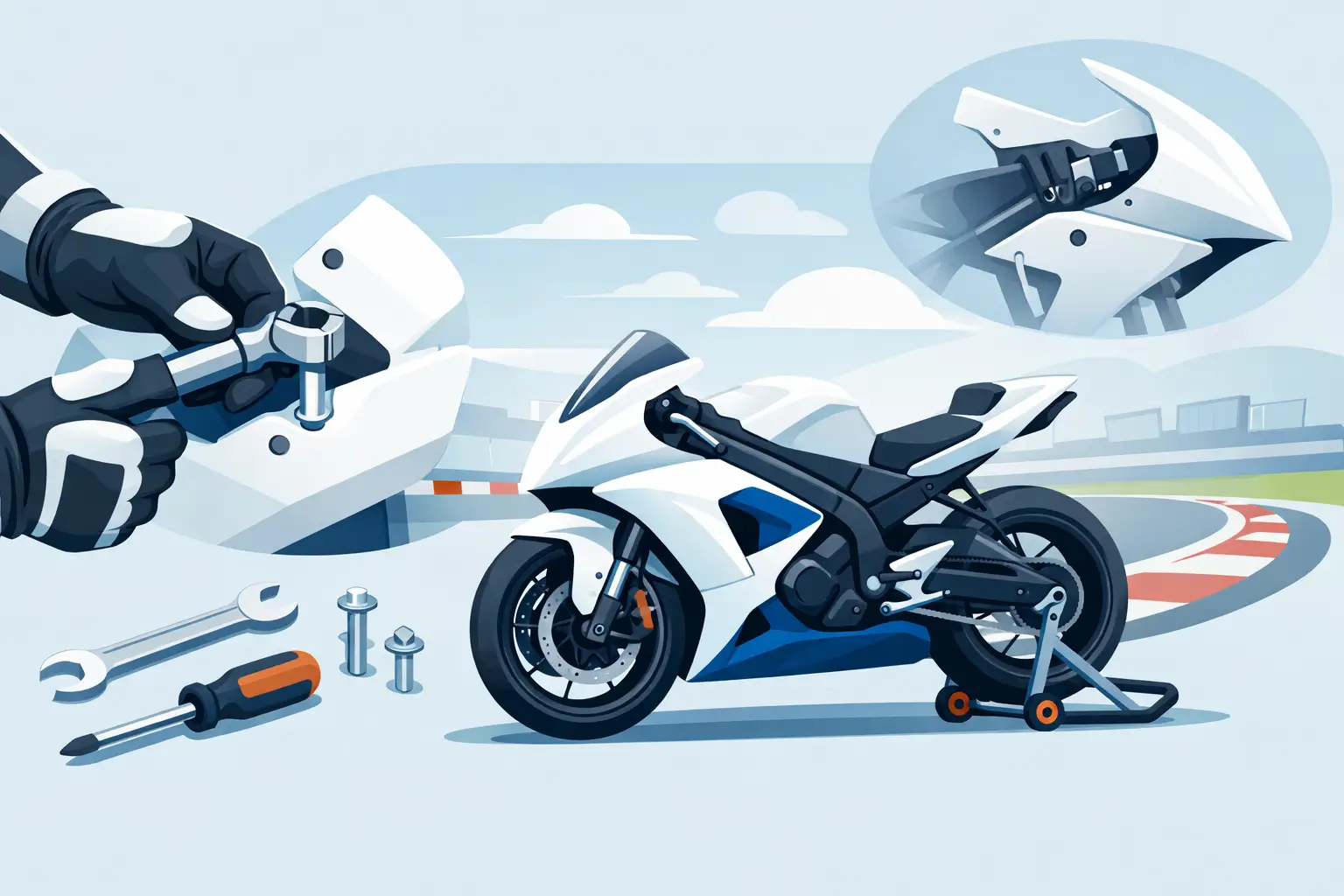
A bad fairing install shows up fast at the track. Panels vibrate, bolt holes fight alignment, dzus fasteners sit under tension, and a simple bodywork job turns into cracks around every mounting point. This race fairing mounting guide is built for riders and mechanics who want a clean install that holds up under heat, speed, and repeated service.
What a proper race fairing install actually needs
Race bodywork is not street bodywork with the lights removed. It is lighter, simpler, and built around quick access, lower weight, and track function. That also means it usually asks for more care during setup. Fiberglass and composite race fairings often need minor trimming, bracket adjustment, hole marking, and careful stress management before the final hardware ever goes in.
The biggest mistake is treating the kit like a drop-on OEM replacement. Even high-quality race plastics can vary slightly by mold, bike history, subframe position, radiator setup, or aftermarket stay design. If your bike has been down before, or is running a race stay, aftermarket ram air tubes, different coolant plumbing, or non-stock clip-ons, fitment becomes even more bike-specific.
That is why the right approach is mock-up first, drilling second, final tightening last. If you rush the sequence, the fairing may still bolt on, but it will be loaded with tension. At speed, that tension turns into cracks, fastener pull-through, and panels that never sit right again.
Race fairing mounting guide: start with the support structure
Before you touch the bodywork, inspect what the bodywork will mount to. That means the fairing stay, upper bracket, side mounting tabs, lower supports, and belly pan attachment points. If the support structure is bent even slightly, the fairing will tell on it immediately.
Check the front stay for symmetry and look at the relationship between the stay, the tank, and the front wheel. Confirm the subframe is straight. Make sure radiator mounts and side brackets are secure. If you are using aftermarket race brackets, confirm they match the intended bodywork style. Some combinations work, but require spacing changes or slight trimming.
This is also the stage to decide on hardware. Dzus fasteners are common because they speed up service, but they need accurate spring placement and panel overlap. Standard bolts with well nuts or rubber-isolated hardware can work on some points, especially where you want a little compliance. The best setup depends on how often the bodywork comes off, how rigid the mounting tabs are, and how much vibration the bike produces.
Test-fit before you drill anything
Set the upper fairing in place first and support it lightly. Do not force the nose into position with bolts. Instead, get the screen area, intake openings, and side edges sitting where they naturally want to sit relative to the stay and tank.
From there, add the side panels and then the lower. Many race kits only align correctly when all sections are loosely assembled together. If you drill one section in isolation, the next section may end up pulling it out of position.
Use tape, spring clamps, or a second set of hands to hold everything in place. Watch the gaps around the tank, frame, radiator, and headers. The belly pan needs special attention. You want adequate clearance from the exhaust, but not so much that the panel hangs low or twists the side fairings outward.
At this point, turn the bars lock to lock and compress the front end if possible. Check brake line clearance, master cylinder clearance, lever protection space, and the relationship between the front fender and lower fairing under compression. A setup that looks fine on stands can still make contact under load.
Marking and drilling without ruining the panel
Once the fairing sits correctly with minimal stress, mark the holes. Start with the most fixed reference points, usually the upper stay mounts, then work outward. If the upper is off, everything below it follows that error.
Use masking tape over drill locations so you can mark clearly and reduce chipping. Drill small pilot holes first, then open them gradually to the final size. A step bit often gives a cleaner result than trying to hit the final diameter in one pass. Support the backside of the panel where possible, especially near edges or thin molded tabs.
Do not drill holes to force alignment. If a mark looks wrong, stop and re-fit the panel. Slight elongation can help with serviceability on some bikes, but oversized holes used to pull bodywork into place are usually covering up a bracket or alignment issue.
If your kit uses dzus fasteners, spend extra time on spring placement. The fastener should pull the panels together securely without overloading the fiberglass. If the spring location is off, the panel may latch, but it will be under constant stress every time the fastener is closed.
Managing stress around mounting points
Most race fairing failures start at the mounting holes, not in the middle of the panel. That is why load management matters as much as alignment.
Use washers where appropriate to spread the load, and do not overtighten hardware against fiberglass. Snug is enough. If the panel cannot stay put without being cranked down hard, the fitment is wrong or the mounting point needs adjustment.
Rubber well nuts or isolation washers can help on certain bikes, especially around high-vibration areas. The trade-off is that too much compliance can let panels move at speed or make repeated removal less precise. For a dedicated race bike with frequent service, many teams prefer a more direct and repeatable dzus-based setup. For a track-day bike that sees less frequent disassembly, a mixed approach can work well.
Reinforcing high-load points is also smart, especially on the lower and side joints. Some race bodywork comes ready for this, while some benefits from added backing washers or localized reinforcement. It depends on panel thickness, hardware type, and how aggressive the bike is with vibration and heat cycles.
Heat, exhaust, and clearance problems
A race fairing that fits cold in the garage can become a problem after a session. Exhaust routing, radiator heat, and engine temperature all affect panel shape and durability. Belly pans and lowers are the most common trouble spots.
Leave real clearance around headers and collector sections. If the gap is marginal, use heat protection before the bodywork sees track temps. Tight packaging may look clean, but repeated heat exposure can soften resin, discolor the panel, and eventually create weak points.
Also check airflow paths. Race bodywork is designed to manage cooling and containment, but that only works if the fairing is seated correctly around the radiator and side exits. Misaligned lowers can trap heat or direct hot air into places it does not belong.
Common fitment issues and what they usually mean
If the nose sits high on one side, suspect a bent stay or uneven bracket spacing before blaming the fairing. If the side panel holes line up only when the belly pan is removed, the lower is likely clocking the assembly out of position. If dzus fasteners need excessive force to close, the spring position, panel overlap, or hole placement is off.
Cracks appearing after only a few removals usually point to tension at the mount, not weak bodywork alone. Fasteners backing out often mean vibration, poor load distribution, or mounting tabs that are flexing more than they should. None of these issues are unusual, but all of them get worse if ignored.
This is where fitment-specific parts matter. A bodywork kit, fairing stay, subframe, and hardware package need to work as a system. That is one reason riders shopping by exact bike, year, and category save time and avoid expensive trial and error.
The race fairing mounting guide standard: fit for service, not just photos
A clean install is not just about looks. It is about how fast the bodywork comes off in the paddock, how reliably it goes back on, and how well it holds alignment over a season. The standard should be simple: panels install without force, fasteners close without drama, and nothing rubs, binds, or rattles when the bike is hot.
For most track bikes, the best result comes from patience on the first install. Mock it up fully, correct the support structure, drill only after the panels settle naturally, and use hardware that matches how the bike is maintained. Premium components help, but process matters just as much. AXF Race Parts serves riders who understand that race-ready fitment is never random.
If your bodywork goes on clean, comes off fast, and survives repeated sessions without new stress marks, you did not get lucky – you mounted it the right way.