

How to Replace Brake Pads on a Sport Bike

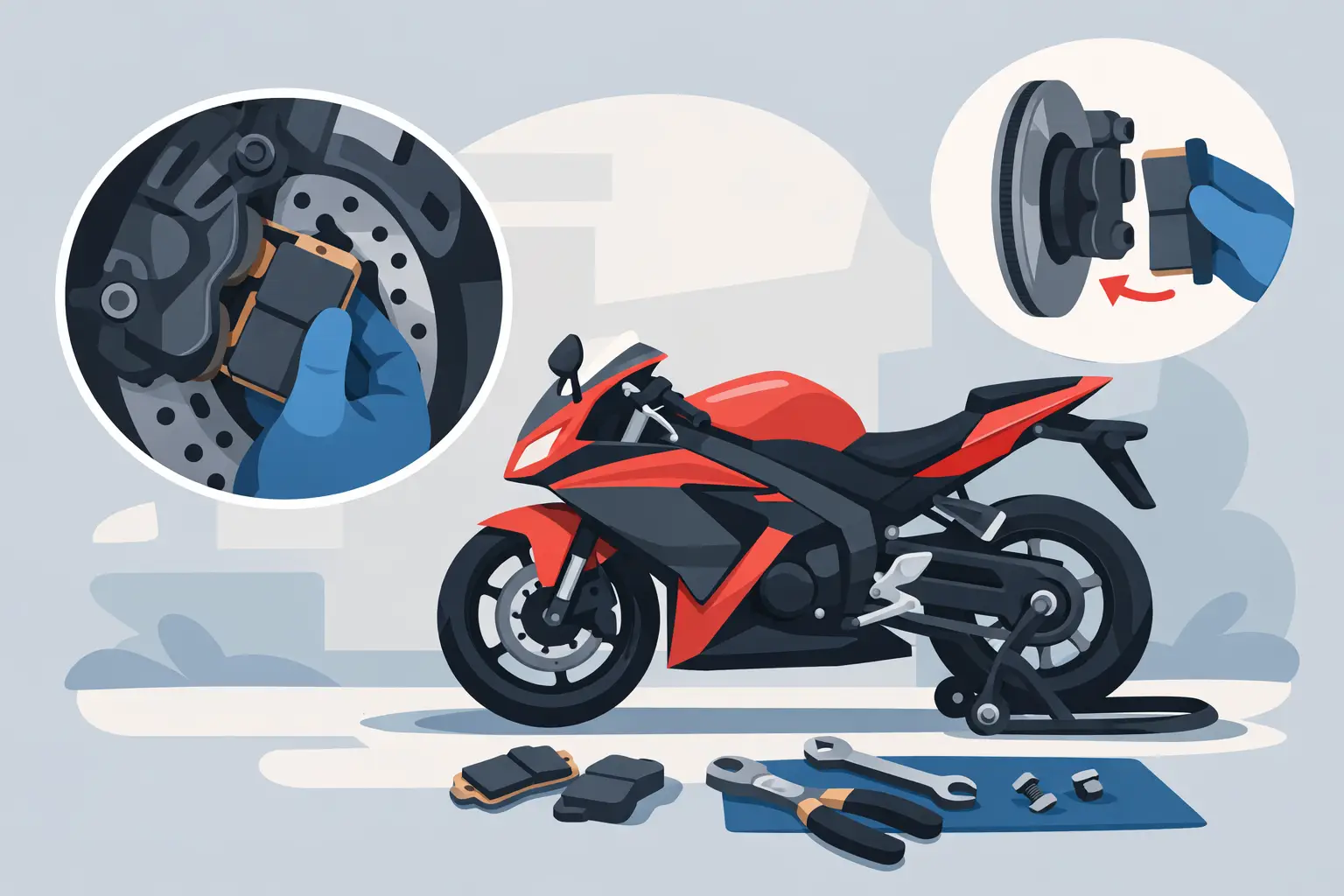
Brake feel goes away fast when pads are past their best. On a sport bike, you notice it at corner entry, on hard street braking, and especially at the track when consistency matters lap after lap. If you want to know how to replace brake pads correctly, the job is straightforward – but only if you pay attention to fitment, cleanliness, and the condition of the rest of the braking system.
This is not a place to rush. Brake pads are a wear item, but they are also a control part. Install the wrong compound, contaminate the friction surface, or miss a sticking caliper issue, and braking performance will suffer no matter how premium the parts are.
Before you replace brake pads, confirm what the bike needs
Start with the basics. Check pad thickness through the caliper window or by removing the caliper for a closer look. Most pads have a wear groove, but visual checks vary by brand and backing plate design. If the friction material is getting thin, wearing unevenly, or showing signs of glazing or crumbling, replace them.
Look at the rotor at the same time. Deep grooves, blue heat marks, cracking, or a lip at the outer edge can point to a bigger problem than worn pads alone. New pads against a damaged rotor can give poor bite and uneven transfer. If the rotor is below minimum thickness, pad replacement is only part of the fix.
Pad choice matters too. A street-focused compound can feel good cold and stay quiet, but it may fade sooner under repeated hard use. A race-oriented pad can deliver stronger initial bite and better heat stability, but it may need temperature to work at its best and can be harsher on rotors. For track-day riders and racers, choosing the correct compound is as important as the installation itself.
Tools and prep for how to replace brake pads
You do not need a full workshop to handle this job, but you do need the right setup. A front stand or secure rear stand keeps the bike stable. Basic hand tools, brake cleaner, clean nitrile gloves, a torque wrench, and a small brush cover most of the work.
Have the replacement pads ready before you begin, and verify fitment by exact bike model and year. On performance motorcycles, caliper variations within the same model family are common. That is one reason fitment-driven parts sourcing matters. A pad that is close is not good enough.
Before touching anything, clean the area around the caliper. Brake dust builds up around retaining pins and pad springs, and that debris can fall into places you do not want it. Clean work is faster work in the long run.
Remove the caliper and old pads carefully
The exact process depends on the caliper design, but most sport bikes follow the same pattern. Loosen the pad pin or retaining hardware first if access is easier while the caliper is still mounted. Then remove the caliper mounting bolts and slide the caliper off the rotor.
Do not let the caliper hang by the brake line. Support it by hand or rest it securely. With the caliper off, remove the retaining pin, clip, or spring plate as required, then slide the old pads out.
This is the point where you inspect everything. The old pads tell a story. If one pad is much thinner than the other, the pistons may not be moving evenly. If both pads are tapered, the pad pins or caliper body may have contamination or wear. If the backing plates show unusual discoloration, the system may be running hotter than it should.
Clean the caliper before installing new pads
This step gets skipped too often. It should not.
As pads wear, the pistons extend farther out of the caliper body, and road grime plus brake dust collect on the exposed piston surfaces. If you push dirty pistons straight back in, that contamination gets dragged past the seals. That can lead to sticking pistons, uneven pad wear, and poor lever feel.
Spray brake cleaner on a clean cloth or soft brush and wipe the exposed piston surfaces carefully. Do not gouge them with metal tools. Once they are clean, compress the pistons slowly back into the caliper. A proper piston tool works best, but a flat plastic tire lever or the old pad can help spread force evenly. Go slowly so you do not overflow the master cylinder reservoir.
Check the brake fluid level as the pistons retract. If the reservoir was topped off when the old pads were worn down, fluid can rise more than expected when the pistons go back in. Protect painted surfaces, because brake fluid damages finishes fast.
Install the new pads the right way
With the pistons fully retracted, slide the new pads into position. Make sure the friction material faces the rotor – obvious, but still worth stating because rushed installs create expensive mistakes. Reinstall any spring plates, anti-rattle clips, and retaining pins in the correct order.
If the manufacturer specifies threadlocker or a torque value for the pad pin, follow it. The same goes for caliper mounting bolts. This is where a torque wrench matters. Too loose is unsafe. Too tight can damage threads, distort hardware, or make future service harder than it needs to be.
Before you bolt the caliper back in place, take one more look at pad alignment and rotor condition. Then reinstall the caliper over the rotor carefully so the pad edges do not get chipped or contaminated.
How to replace brake pads without creating poor lever feel
Once everything is torqued, pump the brake lever until firm pressure returns. Never roll the bike or start riding before doing this. The pistons need to move back out and seat the new pads against the rotors.
Spin the wheel by hand if the bike is on a stand. A light drag is normal with fresh pads, but the wheel should still rotate freely. If the brake is binding hard, stop and find the issue before going further. It could be a misinstalled spring, a pad not seated correctly, or pistons not retracting as they should.
Now check the fluid level again and reinstall the reservoir cap if you opened it. Wipe down the caliper and rotor with brake cleaner if there is any chance they picked up grease, fluid, or fingerprints.
Bedding in matters more than most riders think
New brake pads need a proper bed-in process. This is not just about breaking them in gently. It is about transferring an even layer of pad material to the rotor surface so the system works consistently.
The exact process depends on the pad compound, but the general rule is controlled heat cycles, not panic stops from full speed on the first ride. Start with several moderate stops to bring temperature up progressively, then allow the system to cool. Race compounds may need a more deliberate bed-in than street compounds.
If you skip this step, braking can feel weak, noisy, or inconsistent even when the install was correct. Riders often blame the pad brand when the real issue is poor bedding.
When replacing pads is not enough
Sometimes new pads do not fix the complaint. If the lever still feels spongy, the issue may be old fluid or air in the system. If braking pulses, the rotor may have runout or uneven deposits. If the bike pulls to one side under braking, one caliper may not be working evenly.
For track-focused bikes, this is also the right moment to think bigger. Pad upgrades make a real difference, but they work best as part of a complete braking package that matches your riding speed, tire grip, and heat load. Fluid quality, braided lines, rotor condition, and caliper health all affect what you feel at the lever.
That is why serious riders source braking components by exact fitment and intended use, not just by price or a generic listing. AXF Race Parts serves that need well, especially for riders building sport bikes that have to perform under real load, not just look good in the garage.
Common mistakes to avoid
The biggest mistake is treating all pads as interchangeable. They are not. Shape, backing plate thickness, compound, and intended temperature range all affect performance. The second mistake is installing new pads into a dirty caliper. The third is skipping torque specs and bed-in.
There is also the temptation to replace only one side because one set looks worse. On a dual-disc front setup, replace pads as a complete axle set unless there is a very specific service reason not to. Balanced braking matters.
If any part of the job feels uncertain – seized hardware, damaged pistons, questionable rotor thickness, stripped threads – stop there and correct the problem properly. Brakes reward precision and punish shortcuts.
Fresh pads should give you a lever that feels direct, predictable, and repeatable. That is the standard. If the bike does not stop with confidence, keep working the system until it does.