
How to Pick Race Fairings That Fit

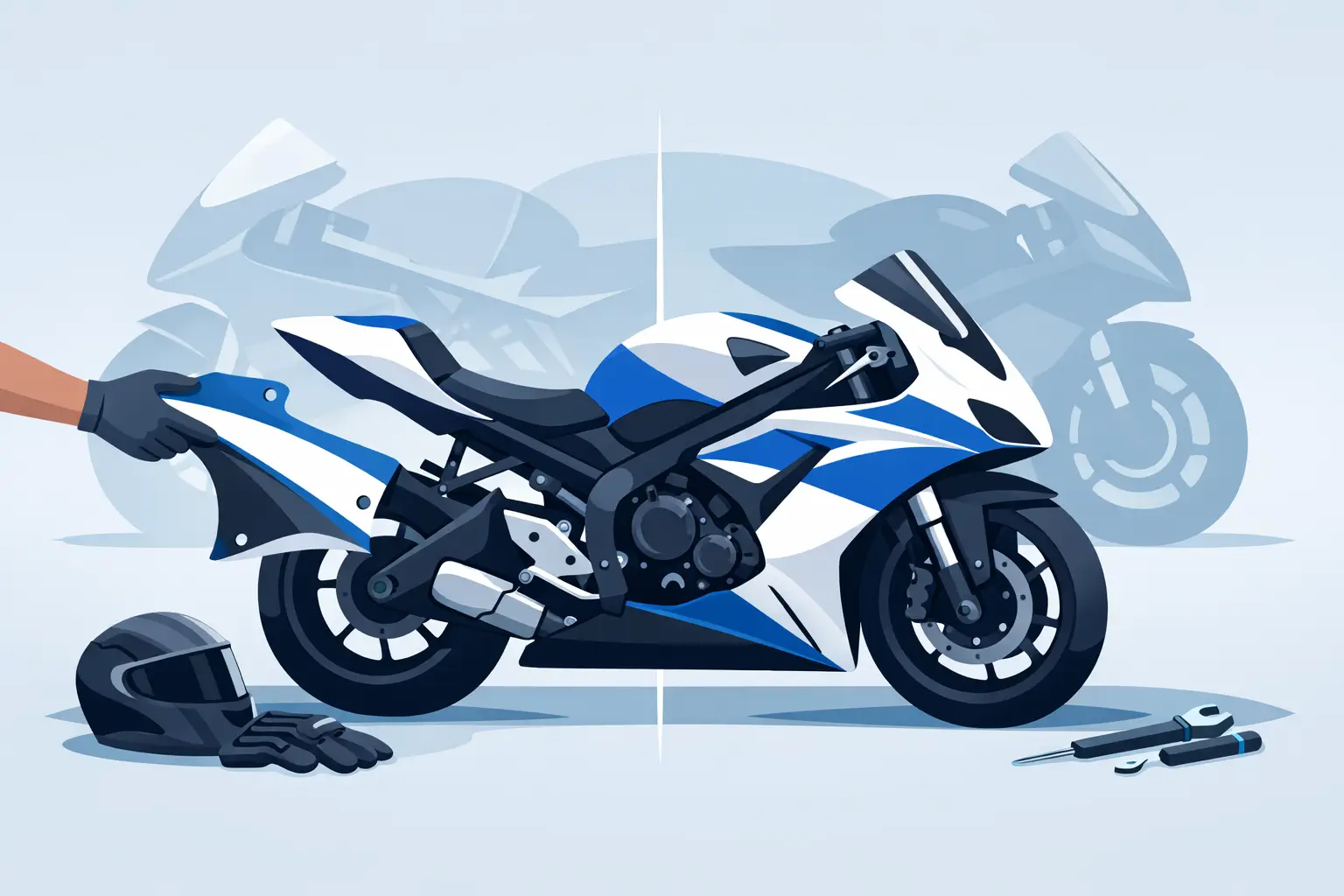
A race bike with the wrong bodywork never feels finished. Panels fight the mounting points, belly pans need trimming, fastener holes sit slightly off, and what should be a straightforward install turns into a garage problem that costs track time. If you are figuring out how to pick race fairings, the right approach is simple – start with exact fitment, then work forward through material, finish, mounting style, and the level of use your bike actually sees.
Race fairings are not just cosmetic bodywork. They affect service access, crash repair cost, weight, airflow management, and how quickly you can prep the bike between sessions. For a track-day rider, that might mean easier oil containment and less expensive replacement after a low-side. For a club racer or dealer building customer bikes, it means consistent fit, clean installs, and predictable prep.
How to pick race fairings without buying twice
The fastest way to make a bad choice is to shop by appearance alone. A fairing set can look right in photos and still be wrong for your exact year, submodel, or race conversion. That is why fitment always comes first.
Start with the bike’s exact make, model, and year, and verify whether the bodywork is built around the stock tank, stock subframe, or a race subframe setup. Some kits are designed to work with OEM mounting points. Others assume additional race hardware, different stays, or modified brackets. If your bike has already been converted with aftermarket stays, seat units, or an upgraded cooling setup, those details matter.
This is where many riders lose money. They buy a fairing kit that technically fits the bike family, but not the actual build. A 2017 and 2019 model may look similar, yet have small mounting or duct differences that create install issues. If the bike is heavily track-prepped, the fairings need to match the current configuration, not just the VIN plate.
Fitment is the first performance feature
Good fitment saves time before it saves weight. A properly molded kit lines up more consistently, needs less modification, and gives you cleaner panel gaps and better hardware retention. That matters in the paddock because bodywork gets removed often. If you are checking wiring, replacing clip-ons, servicing the air filter, or inspecting crash damage, poor-fitting panels become a recurring problem.
There is also a durability angle. When fairings are under stress because holes are misaligned or panels are forced into place, cracks start earlier. The material gets blamed, but the real issue is installation tension. Better fitment usually means longer life, especially around DZUS points and mounting tabs.
For riders who care about fast turnarounds, a cleaner fit also makes paint and graphics easier. Less prep, less reshaping, less filler. If the bodywork is being wrapped or painted for sponsors, surface consistency matters more than many riders expect.
Check what comes in the kit
Not every race fairing package includes the same components. Some include upper, lower, side panels, and tail. Others may separate the front fender, seat pad, or tank covers. Before buying, look at the full kit composition and compare it to your current bike setup.
That sounds basic, but it prevents one of the most common purchasing mistakes – buying the main fairing set and then realizing the matching tail section or belly pan style is different from what your build requires. If you are converting a street bike to track use, you also need to confirm whether additional mounting hardware, a race stay, or foam seat pad will be needed to finish the job correctly.
Material choice depends on how the bike gets used
If you want to understand how to pick race fairings like an experienced builder, pay close attention to construction. Not all fiberglass bodywork behaves the same, and the best choice depends on whether the bike is doing occasional track days, full club racing, or repeated crash-prone development work.
Fiberglass remains the standard because it balances weight, repairability, and cost. A good fiberglass kit is light enough for race use, strong enough for repeated service, and easier to patch than many plastic alternatives. For most riders, that is the sweet spot.
But there are trade-offs inside that category. Some fairings are built with more emphasis on low price, which can mean rougher inner surfaces, inconsistent thickness, and more prep work before paint. Others are produced to tighter standards, with cleaner layup, more accurate mold quality, and better edge finishing. Those differences show up immediately during installation.
For a dedicated race bike, paying more for better construction often makes sense because labor becomes the real cost. Saving money on the kit does not help much if your installer spends extra hours slotting holes, reinforcing weak sections, or correcting uneven surfaces. For a rider who expects occasional damage and does their own repairs, a simpler, cost-effective fiberglass kit may still be the right call.
Pre-finished or ready for paint?
This decision comes down to budget, timeline, and expectations. Some riders want bodywork that arrives in a basic finish, ready for prep and paint. Others want a cleaner cosmetic starting point to reduce labor.
If the bike is a serious race machine, appearance usually matters less than fit and serviceability. A primer-ready fairing set is often the practical choice because you can prep it for your exact paint or vinyl plan. If the bike doubles as a premium track build or dealer display machine, surface quality becomes more important.
Do not overbuy finish quality if the bike is likely to hit the ground. At the same time, do not underestimate the value of cleaner bodywork if the build needs to look professional for sponsors, resale, or customer delivery.
Belly pan design matters more than people think
On a race bike, the lower fairing is not just another panel. It affects oil containment, exhaust clearance, cooling airflow, and ground clearance under heavy lean. Some designs are tighter and lighter. Others prioritize containment volume and easier rule compliance.
If your bike has an aftermarket exhaust, oversized headers, or modified oil cooler routing, check the lower section carefully. A fairing that fits a stock exhaust path may need trimming with a race system. That is normal in some setups, but it should be an informed compromise, not a surprise after the box arrives.
Think about crash strategy, not just purchase price
Every racer eventually learns this lesson. Race fairings are consumable to a point. Even high-quality bodywork can get damaged in a slide, during transport, or in a rushed paddock repair. So the smart buy is not always the cheapest set or the most expensive set. It is the set that makes sense over a season.
If you are a newer track rider, you may value affordable replacement cost and simple repairs. If you are racing for points, you may care more about consistent fit from one set to the next so spare bodywork swaps over with minimal drama. Teams and tuners often prioritize repeatability because it keeps the bike serviceable under pressure.
This is also where supplier quality matters. A specialist source like AXF Race Parts has real value because fitment-specific shopping reduces guesswork. That matters when you are ordering race bodywork for a specific model year and do not have time to sort through generic listings.
Don’t ignore the hardware around the fairings
Race fairings do not work in isolation. Their fit and usefulness depend on the surrounding parts. The front stay, side brackets, windscreen, seat unit, fasteners, and heat shielding all affect the final result.
If your current setup uses worn OEM mounts or bent race brackets, even good fairings may look bad. If you are planning a full track conversion, think of the bodywork as one part of a system. Fresh fasteners, proper well nuts or quarter-turn hardware, and heat protection near the exhaust will do more for long-term durability than many riders realize.
This is especially true on modern superbikes where packaging is tight. A fairing can fit on paper but still need the right combination of stay, intake duct alignment, and dash support to install cleanly.
What smart buyers check before ordering
The strongest buying decisions are usually the least emotional ones. Confirm fitment by year and model. Check whether the kit assumes stock or race mounting hardware. Verify exactly what panels are included. Match the material and finish to how the bike will be used, not how you hope it will be used. And be honest about whether you want the lowest up-front cost or the smoothest install.
That last point matters. A rider building one clean, dependable track bike often benefits from paying for better mold quality and fit. A rider running frequent practice miles and accepting occasional bodywork damage may want something more budget-conscious and easier to replace. Neither choice is wrong. The mistake is buying for the wrong scenario.
The best race fairings are the ones that match your bike, your pace, and your workload in the paddock. Buy with the next install, the next crash repair, and the next event in mind, and you will make a better decision than the rider who shops by photos alone.