

Is a Ducati Dry Clutch Conversion Worth It?

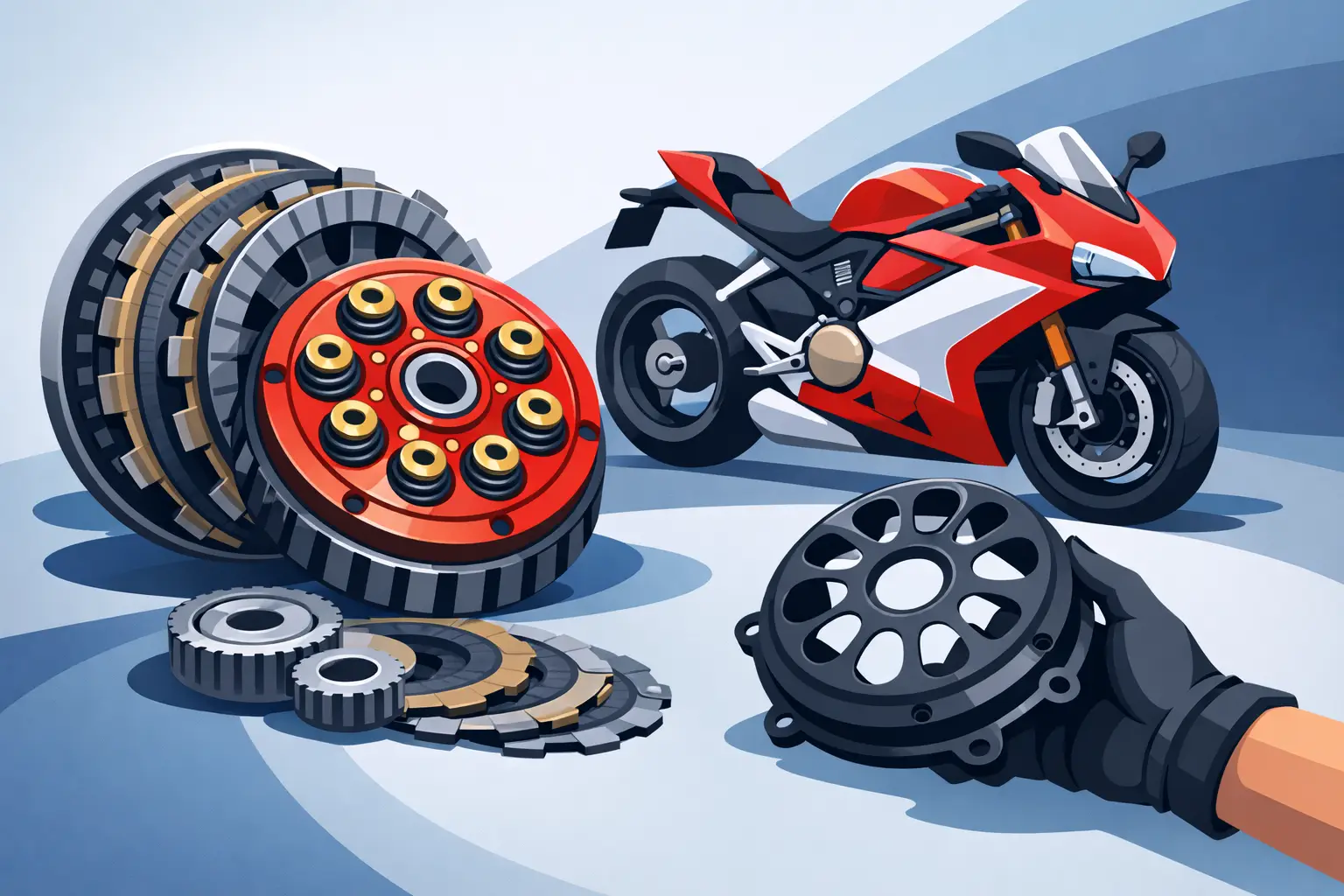
A Ducati dry clutch conversion is one of the most recognizable changes you can make to a performance Ducati. The exposed basket, mechanical rattle, and quick-access serviceability have real appeal. But for a track bike, race build, or serious street machine, the decision needs to go beyond the sound and appearance.
A properly selected conversion can support faster clutch inspection, easier plate changes, and a more race-focused setup. It can also create unnecessary expense, noise, and compatibility problems if the kit is chosen around a look rather than the motorcycle’s engine platform and intended use. The right answer depends on your Ducati, your riding conditions, and whether you are building for lap times, reliability, or both.
What a Ducati Dry Clutch Conversion Changes
A wet clutch runs inside the engine’s oil supply. The oil cools the clutch pack, reduces noise, and generally gives the system a long, low-maintenance service life. That is why wet clutches remain the standard on many modern high-performance Ducati models.
A dry clutch places the clutch pack outside the engine oil. The plates, basket, hub, pressure plate, springs, and cover are designed to work as a dedicated assembly. Without oil damping the components, a dry clutch produces the unmistakable mechanical sound associated with classic Ducati race and superbike platforms.
The practical advantage is access. On a dry-clutch configuration, you can inspect plates, check basket wear, change spring rates, and service the assembly without draining engine oil. For a rider who tracks the bike frequently or a team managing multiple race weekends, that can make routine maintenance more efficient.
It does not mean every dry clutch is automatically superior. A quality wet clutch can deliver excellent power transfer, smooth engagement, and dependable operation under hard use. The conversion earns its place when its serviceability, intended clutch behavior, and racing character suit the build.
Fitment Is the First Requirement
The most common mistake is treating a Ducati dry clutch conversion as a universal bolt-on upgrade. It is not. Ducati engines, crankcases, primary-drive arrangements, clutch actuation systems, covers, and model-year details vary significantly. A kit designed for one engine family may not work on another, even when the motorcycles appear closely related.
Older Ducati platforms that originally used dry clutches are usually the most straightforward territory for upgrades. Modern Ducati models built around wet-clutch architecture require a conversion engineered specifically for that engine. In some cases, the parts required go beyond the visible basket and cover. The system may need a dedicated hub, clutch pack, pressure plate, hardware, and model-specific interface components.
Before ordering, confirm these five details:
- Exact Ducati model, model year, and engine family
- Whether the motorcycle is factory dry clutch or factory wet clutch
- Hydraulic or cable clutch actuation and the required slave-cylinder setup
- Intended use: street, track day, sprint racing, endurance racing, or show build
- Compatibility with existing performance parts, especially engine covers and rearset controls
Do not rely on a generic model name alone. A fitment-based catalog is valuable because it reduces the risk of mixing components across similar-looking Ducati platforms. If the manufacturer specifies a production range, engine code, or VIN break, treat that information as mandatory.
Check the Complete System, Not Just the Basket
A clutch conversion is a system. The basket may be the most visible piece, but it cannot be selected in isolation. Friction plates and steel plates must match the basket and hub design. The pressure plate, spring set, retaining hardware, and cover must provide correct stack height, clearance, and release action.
For race use, the clutch cover deserves particular attention. An open cover improves visibility and emphasizes the dry-clutch sound, but it also exposes the assembly to dust, debris, water, and accidental contact. A more protective cover may be the smarter choice for street miles, wet track days, or paddock environments where the bike is moved frequently.
Performance Benefits That Matter at the Track
The biggest benefit is not a dramatic horsepower increase. A dry clutch conversion should not be purchased with the expectation that it will transform engine output. Any reduction in parasitic drag is typically secondary to the real operational advantages of the setup.
Service speed matters in racing. Clutch plates are wear items, and clutch behavior can change with heat, riding style, gearing, and power delivery. A dry clutch lets a mechanic inspect the pack quickly between sessions. If the bike needs a plate change or a different spring setup, there is no oil drain and no wet-clutch cover gasket process slowing down the work.
Dry clutch systems also make wear easier to monitor. Basket tangs can develop notching, plates can glaze, and the pressure plate can show uneven contact. Catching those issues early protects shift quality and engagement consistency. On a race bike, that is more valuable than the novelty factor.
For riders pairing a conversion with an aftermarket slipper clutch, the gain can be even more meaningful. A race-spec slipper clutch is designed to manage back-torque under aggressive downshifting, helping reduce rear-wheel chatter and stabilize the chassis into a corner. The dry configuration can make tuning and servicing that clutch more accessible, but the slipper mechanism itself is what delivers the braking-entry benefit.
The Trade-Offs: Noise, Wear, and Street Use
Dry clutches are mechanical by nature. They rattle at idle, especially with the clutch lever released. That sound is normal, but it is not subtle. Riders who want a quiet street bike, commute through dense traffic, or regularly ride with passengers may prefer the refinement of a wet clutch.
Wear can also be more visible and more frequent depending on use. Stop-and-go riding adds heat and clutch slip, while an open dry-clutch setup can collect contamination. Plate life, basket condition, and spring performance should be part of your regular maintenance schedule rather than an occasional inspection.
Engagement feel is another variable. A well-built system can provide a positive, predictable lever feel, but it may be less forgiving than a stock wet clutch in slow-speed traffic. The setup must be tuned correctly through plate stack height, spring selection, clutch hydraulics, and lever adjustment. Chasing an ultra-light lever pull with unsuitable springs can compromise clutch holding capacity on a high-torque engine.
For a dedicated track bike, these compromises are usually manageable. For a street-focused Ducati that sees rain, traffic, long weekend rides, and low-maintenance ownership, the OEM wet clutch may remain the better-performing choice overall.
Choosing Components for a Race-Ready Build
Start with a conversion from a manufacturer that clearly identifies Ducati fitment and supplies a complete, engineered package. Premium clutch manufacturers build their systems around material quality, accurate machining, consistent plate dimensions, and repeatable engagement. That precision matters when the clutch is asked to handle hard launches, rapid downshifts, and repeated high-temperature sessions.
Avoid building a conversion from unrelated individual parts unless the manufacturer explicitly confirms the combination. A basket from one system, plates from another, and an unknown pressure plate can produce incorrect stack height or release travel. The result can be clutch drag, slip at full throttle, difficult neutral selection, or premature component damage.
For a track-oriented Ducati, prioritize a durable basket, a clutch pack matched to your torque output, a pressure plate with dependable release characteristics, and springs selected for the engine’s power level. If your bike runs engine tuning, aggressive cam timing, or increased displacement, confirm that the clutch’s torque capacity supports the build.
AXF Race Parts focuses on fitment-specific performance components because race upgrades only work when the parts are engineered to work together. A correct clutch package is a better investment than a collection of attractive parts that create setup problems on the stand.
Installation and Setup Require Precision
A dry clutch conversion is not the place for approximate torque values or improvised hardware. Follow the component manufacturer’s instructions and the Ducati service manual for the exact platform. Use the specified torque settings, locking methods, and installation sequence.
Before the first ride, verify smooth lever operation, full clutch disengagement, correct free play where applicable, and clean engagement under load. With the rear wheel safely off the ground, check that the clutch releases fully when the lever is pulled. After the first heat cycle and initial track session, inspect the fasteners, basket, plate condition, and any signs of abnormal rubbing.
A dry clutch rewards riders who are willing to maintain it. For the Ducati that spends its weekends at the track, that visibility and service access can be a genuine advantage. For every other build, choose it because it fits the motorcycle’s purpose, not simply because you want the rattle at a coffee stop.