
Kawasaki ZX6R Race Conversion Example Track Build

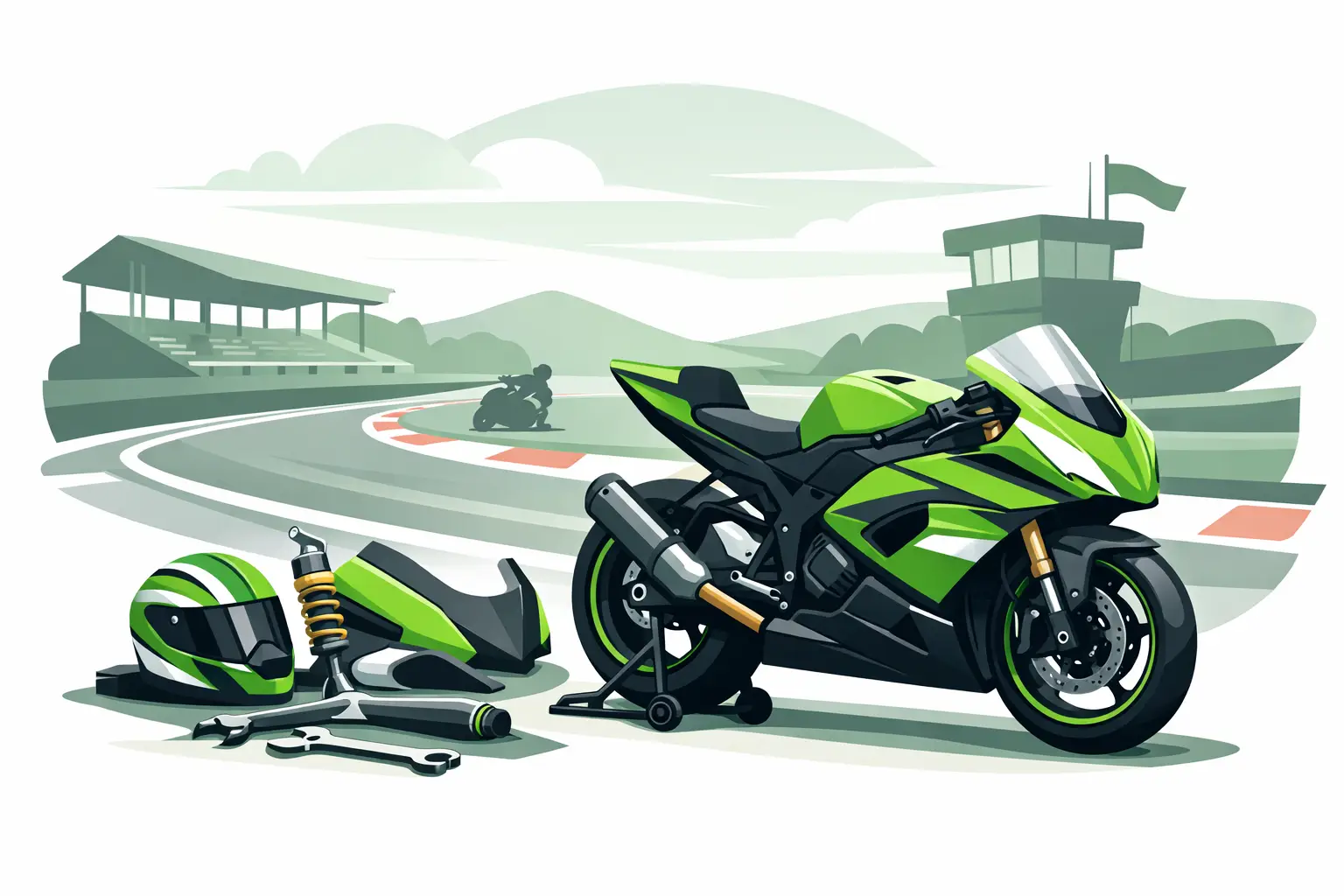
A proper Kawasaki ZX6R race conversion example is not a catalog of expensive parts bolted onto a street bike. It is a focused build that removes unnecessary street equipment, improves rider control, protects critical components, and creates a machine that can survive repeated hard sessions. For track-day riders and club racers, the goal is predictable pace first. More power only matters after the chassis, brakes, and rider interface are working together.
This example follows the order that makes sense for a ZX-6R moving from road duty to serious track use. Exact fitment, class rules, and budget will vary by model year, so verify every component against your motorcycle before ordering.
This Kawasaki ZX6R Race Conversion Example Starts With a Baseline
Before changing a single part, establish that the bike is healthy. A race conversion will expose weak maintenance far faster than street riding. Check valve-clearance history, compression, cooling-system condition, wheel bearings, steering-head bearings, chain and sprockets, brake fluid, and fork service intervals. Fresh race-grade oil, coolant permitted by your track organization, and correctly torqued fasteners are not glamorous purchases, but they prevent expensive weekends.
Set rider sag and record the current suspension settings before replacing components. A ZX-6R with the wrong spring rate or tired fork oil can feel vague on entry, run wide at the apex, and punish the rear tire on exit. Those symptoms are often blamed on geometry or electronics when the base setup is the real issue.
Start with quality track tires and confirm cold and hot pressures with the tire supplier’s guidance. Tire performance is part of the suspension system. Chasing lap time with premium rearsets or engine work while running incorrect pressures is money in the wrong place.
Remove Street Equipment and Add Race Protection
The first visible stage of a conversion is usually bodywork, but the job is more than a cosmetic change. Race fairings reduce replacement cost after a low-side, simplify access to the engine, and remove vulnerable street panels. Install a proper race fairing stay rather than relying on modified OEM brackets. It gives the front assembly a cleaner, more stable foundation for the screen, number plate, and dash.
Remove the headlight, taillight, mirrors, passenger pegs, license-plate hardware, and street-side wiring that is no longer needed. Do this carefully. A rushed wire-cutting job creates electrical faults that are difficult to trace at the track. Where applicable, use purpose-built race connectors, blanking plugs, or a simplified harness solution.
Engine covers, frame sliders, axle protection, and a protected radiator should be considered operating equipment, not optional dress-up parts. Protection will not make a bike invincible, but it can turn a minor slide into a repairable incident rather than a lost race weekend. A race belly pan with fluid containment may also be mandatory under your organization’s rules.
Safety wiring requirements differ between track-day providers and race organizations. Many racing classes require wired oil drain plugs, oil filters, filler caps, and other specified fasteners. Confirm the rulebook before drilling anything. The same applies to catch cans, coolant choice, numbers, and safety-light requirements.
Build the ZX-6R Rider Interface First
A rider must be able to move around the motorcycle without searching for controls. That makes rearsets, clip-ons, grips, levers, and throttle setup high-value upgrades on a ZX-6R race build.
Adjustable rearsets give you ground clearance and let you position the footpegs for your height, boot size, and riding style. The highest or rearmost setting is not automatically the fastest. Excessively high pegs can cramp the rider and reduce confidence under braking, while a moderate position may make body movement easier over a full session. Set both sides evenly, secure all hardware correctly, and verify that the shift linkage does not bind through its range of movement.
Race clip-ons provide a direct, serviceable setup and make replacement easier after a crash. Bar position should support braking leverage without forcing too much weight into your wrists. Pair them with firm race grips and adjustable levers that allow one- or two-finger braking while maintaining a secure hand position.
A quick-turn throttle can sharpen response, especially when paired with ECU calibration, but it requires discipline. A shorter throw helps at wide-open throttle and during rapid transitions. It can also make wet conditions, cold tires, and early throttle application less forgiving. Choose the ratio that matches your experience and the track environment, not simply the most aggressive option available.
Make Braking Consistent Under Pressure
The ZX-6R is capable of serious braking performance, but track use demands repeatability. Begin with fresh high-temperature brake fluid, properly serviced calipers, and race-oriented pads matched to your rotors and riding pace. Bedding pads correctly matters. Poor bedding can create uneven deposits, lever inconsistency, and a false impression that the rotors are damaged.
Stainless braided brake lines improve lever feel by reducing hose expansion under heat. A quality radial master cylinder can offer a more defined pressure point and improved modulation, particularly for riders who trail brake aggressively. Match piston size to the calipers and the feel you want. A larger master cylinder can produce a firmer lever, but may require more force. A smaller option can improve feel while increasing lever travel.
Do not overlook brake cooling and maintenance. After hard sessions, inspect pad thickness, rotor condition, banjo fittings, and lever travel. If the lever begins coming back toward the bar, solve the cause before the next session. Track brakes should inspire confidence every lap, not just on the first flying lap.
Suspension and Geometry Create the Real Pace
If budget allows only one major performance area after safety and controls, invest in suspension. Correct springs for rider weight, pace, and tire choice are the foundation. Revalved forks and a quality rear shock can give the ZX-6R better support on the brakes, more controlled chassis pitch, and stronger drive out of the corner.
The right setup is not necessarily stiff. A bike that feels impressively firm in the paddock may lose compliance over curbing and struggle to maintain front-tire load on rough pavement. Work from baseline settings, make one change at a time, and keep notes on tire wear, lap conditions, and rider feedback.
Geometry changes should be measured, not guessed. Fork height, rear ride height, and shock length affect steering speed, stability, and rear grip. Raising the rear can help the bike turn, but excessive change may make it nervous on the brakes or reduce drive. A race shop with chassis experience can shorten the learning curve, especially when the bike is being prepared for a specific tire brand or class.
Electronics and Engine Work Come After Control
A track conversion benefits from clean, reliable controls. Race switches remove bulky street functions and can simplify the handlebar area. An electronic quickshifter reduces shift time and helps maintain chassis stability under acceleration. Auto-blip capability can be valuable on downshifts, but riders should still understand throttle, clutch, and gear-selection technique rather than relying on electronics to cover poor inputs.
ECU tuning is most effective when supporting hardware is already selected. A calibrated map can improve throttle response, remove unnecessary restrictions where legal, and suit an exhaust system or high-flow filter. The trade-off is that tuning should be done carefully, with fuel quality, engine temperature, and reliability in mind. A loud exhaust and peak-horsepower number are less useful than a smooth, controllable power delivery that lets the rider pick up the throttle earlier.
For many riders, an exhaust, filter, and ECU package is enough. Internal engine modifications can make sense for dedicated race programs, but they add cost, maintenance demands, and potential class restrictions. Spend on braking and suspension before chasing the last few horsepower.
A Practical Parts Order for the Track
For a reliable conversion, prioritize the build in this order: maintenance and required safety work, tires and brake service, protection and race bodywork, rearsets and controls, suspension, then electronics and engine tuning. This sequence keeps the motorcycle usable at each stage and directs budget toward changes the rider can feel immediately.
AXF Race Parts supports this approach with model-specific performance components from recognized racing manufacturers, helping riders source compatible upgrades without piecing together a build from unrelated suppliers.
The best ZX-6R race bike is not the one with the longest modification list. It is the one that starts every session, stops at the same brake marker, holds its line through the fast section, and gives its rider the confidence to improve one clean lap at a time.