

Sportbike Suspension Geometry Guide for Fast Laps

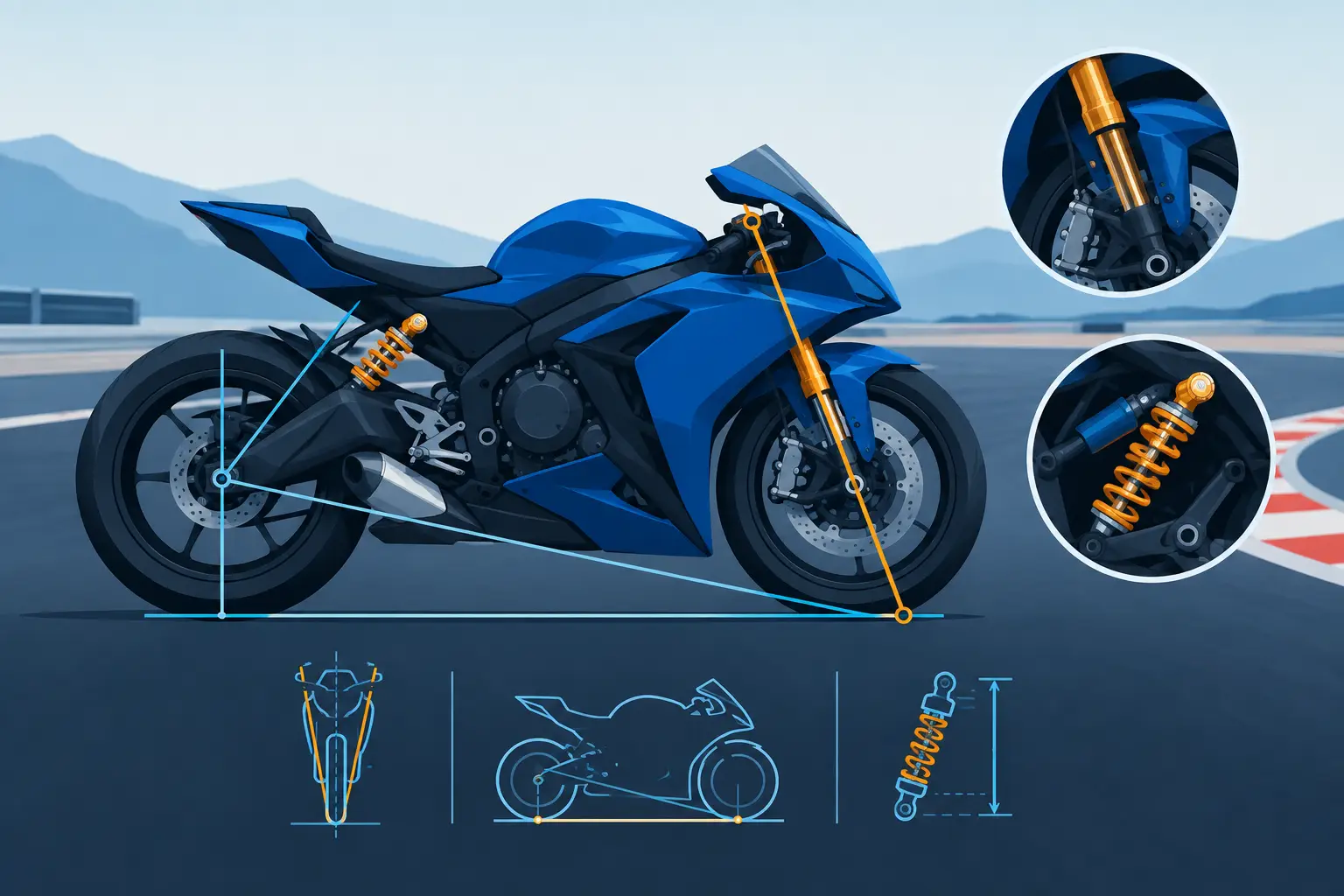
A sportbike can have premium tires, race-spec brakes, and a strong engine, yet still feel slow and nervous when its chassis attitude is wrong. This sportbike suspension geometry guide focuses on the dimensions that determine how your bike turns, holds a line, transfers grip, and drives off a corner.
Geometry is not a substitute for correct springs, damping, tire pressures, or rider technique. It is the platform those settings work from. Get the platform close, and the bike becomes easier to steer at the limit. Chase geometry before setting sag or fixing a worn tire, and you can mask the real problem while creating another.
What Suspension Geometry Actually Changes
Suspension geometry is the relationship between the motorcycle’s chassis and the ground at ride height. When you raise or lower either end of the bike, you alter steering-head angle, trail, wheelbase, swingarm angle, and the distribution of load between the tires.
A front-end height change may only be a few millimeters at the fork tubes, but it can produce a meaningful difference in how the bike behaves at corner entry. The same is true at the rear, where a small ride-height adjustment can sharpen turn-in, increase rear grip under acceleration, or make the bike feel unsettled if pushed too far.
The goal is not the quickest-steering motorcycle in the paddock. The goal is a predictable motorcycle that turns with reasonable effort, stays composed through the apex, and lets you apply throttle without fighting the rear tire.
Sportbike Suspension Geometry Guide: The Core Numbers
Rake
Rake is the angle of the steering axis relative to vertical. More rake means the forks sit at a more relaxed angle. Less rake means a steeper steering axis.
Reducing rake generally makes the bike steer faster and respond more quickly to bar input. Increasing rake generally adds straight-line stability and can make a bike calmer through fast, loaded corners. Neither direction is automatically better. A tight, technical track may reward a quicker setup, while a high-speed circuit may demand more stability.
Trail
Trail is the distance between where the steering axis meets the ground and where the front tire contacts the ground. It is one of the main reasons the front wheel self-centers and the bike feels stable.
Less trail usually creates a lighter, faster steering feel. Too little trail can reduce confidence under hard braking, make the bike wander at high speed, or create a vague front contact patch. More trail can improve stability but may make the bike require extra effort to finish a turn.
Rake and trail move together in many adjustments, but not always by the same amount. Fork offset, tire profile, and front ride height also influence trail. That is why copying another rider’s fork position without matching their tires, pace, weight, and track can lead you in the wrong direction.
Ride Height
Ride height is the most accessible geometry tool on many track-prepared sportbikes. It is typically adjusted by moving the fork tubes in the triple clamps, changing rear shock length, using a ride-height adjuster, or selecting linkage components where the rules and platform allow.
Lowering the front or raising the rear steepens the chassis. The usual result is quicker turn-in, reduced rake and trail, and more willingness to finish a corner. Raising the front or lowering the rear relaxes the chassis. The usual result is more stability, more rake and trail, and a slower but steadier steering response.
Do not confuse ride height with sag. Ride height is the chassis position created by component dimensions and adjustments. Sag is how far the suspension settles under its own weight and rider load. Sag must be in a usable range before ride-height changes mean much.
Wheelbase and Swingarm Angle
Wheelbase is the distance between axle centers. A longer wheelbase tends to improve stability and reduce wheelie tendency. A shorter wheelbase can make direction changes easier, but it may reduce composure when accelerating hard.
Swingarm angle affects how the rear suspension reacts to chain force and acceleration. More angle can increase anti-squat behavior, helping the bike hold its attitude under throttle. Too much can make the rear tire feel harsh, reduce compliance, and limit mechanical grip over bumps. Too little can let the rear squat excessively, causing the bike to run wide or feel vague on exit.
On many modern sportbikes, rear ride-height changes influence wheelbase and swingarm angle at the same time. That is why a change that improves turn-in can still hurt drive grip if the rear geometry becomes too aggressive.
Set the Baseline Before You Chase a Problem
Start with a repeatable baseline. Fresh or known-condition tires, accurate pressures, properly serviced forks and shock, and correct spring rates are non-negotiable. A fork with excessive internal friction or a shock that has lost damping control cannot be tuned into consistency with geometry adjustments.
Set rider sag according to the suspension manufacturer’s recommendation or a proven setup range for your bike and use case. Check that the fork and shock have adequate travel remaining under braking and acceleration. If you are bottoming the fork, topping out the shock, or using nearly all available travel too easily, solve that issue before moving geometry.
Measure from fixed points with the bike supported consistently. Record fork tube position above the top triple clamp, rear ride-height adjuster length, shock length if accessible, axle position, tire sizes, gearing, and clicker settings. The numbers matter because your memory will not be as accurate as a setup sheet after four sessions in summer heat.
Reading What the Bike Is Telling You
A bike that resists turning, runs wide from the apex, and requires excessive bar pressure may benefit from a steeper chassis attitude. A modest rear ride-height increase or small front-end reduction may help. But first confirm that the front tire is not overinflated, the fork is not packing from excessive compression damping, and the rear is not sitting too low because of weak spring rate or too much sag.
A bike that drops into corners too eagerly, feels nervous during trail braking, or shakes its head over crests may have an overly steep setup or insufficient front support. Adding front ride height or reducing rear ride height can restore stability. So can correcting fork preload, spring rate, damping, or tire condition. Geometry is only one lever.
If the bike turns well but runs wide when you pick up the throttle, look at rear squat and drive behavior. The rear may be too soft, too low, or too lightly controlled. More rear support can help, but adding excessive rear ride height may reduce traction on a bumpy exit. This is where lap-time chasing becomes chassis compromise management.
If the bike finishes the corner but feels heavy during quick left-right transitions, a small change in ride height may help. Check wheelbase, tire profile, and handlebar position as well. A tall-profile front race tire can make a meaningful steering change on its own.
Make Changes That Produce Useful Data
Change one variable at a time. For ride-height testing, start small. A 2 to 3 mm fork-position change or a modest adjustment at the shock can be enough to feel. The exact amount at the rear wheel depends on linkage ratio, so use the shock manufacturer’s adjustment guidance and measure the final chassis result.
Run the same tire pressures, use the same reference corner or sector, and avoid judging a change during a session disrupted by traffic, fading tires, or a sudden temperature swing. Ask specific questions: Did initial turn-in improve? Can you release the brake later? Does it hold the apex with less lean angle? Can you pick up the throttle sooner?
Avoid using steering-damper settings to hide a geometry problem. A damper can control a genuine headshake tendency, but cranking it up to make an unstable bike feel calm often removes feedback and makes low-speed steering heavier. Fix the cause before adding resistance.
Parts That Support a Repeatable Setup
Track geometry adjustments are only as reliable as the components holding them. A properly serviced shock with a functional ride-height adjuster, quality fork internals, correct-rate springs, and precise triple clamps give you a stable tuning platform. Rearsets with accurate adjustment also help the rider maintain body position without forcing awkward control inputs that can be mistaken for a chassis issue.
When selecting race components, verify fitment by exact model year and configuration. A shock, linkage, fork cartridge kit, or triple clamp designed for a closely related model may not produce the intended geometry on your bike. AXF Race Parts focuses on fitment-based access to race-ready suspension and chassis components so riders can build from compatible hardware rather than guesswork.
The best geometry setting is the one that gives you repeatable confidence through the sections where you lose the most time. Start from a measured baseline, make small intentional changes, and let tire feedback, corner-exit control, and consistent lap times decide the direction.