

Does a Quickshifter Damage the Gearbox?

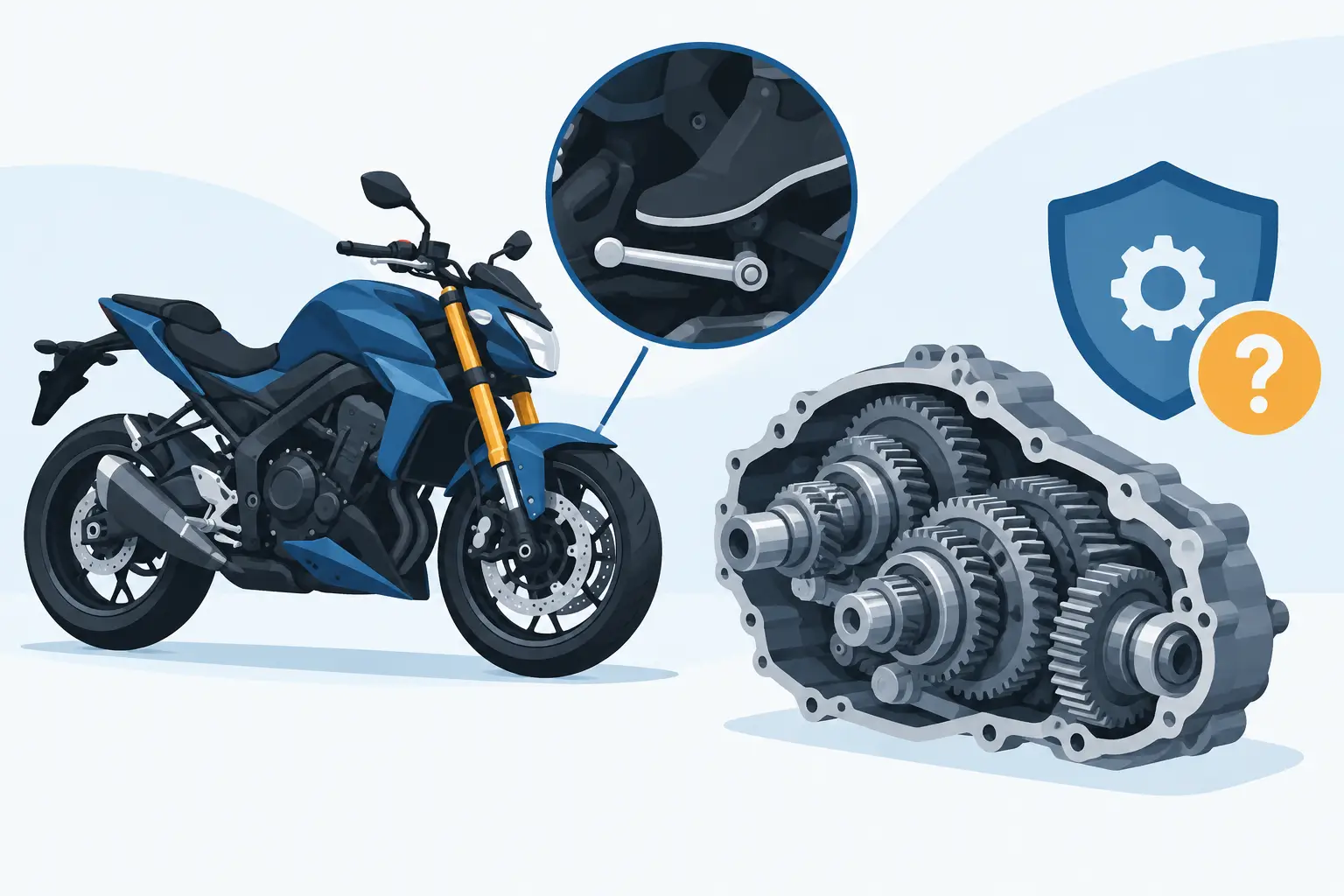
A missed upshift at the exit of a fast corner costs more than lap time. It can unsettle the bike, interrupt drive, and leave the rider wondering whether the electronics are protecting the transmission or punishing it. Does quickshifter damage gearbox hardware? A correctly specified, correctly calibrated quickshifter normally does not. In many track applications, it can reduce the abuse caused by rushed manual clutchless shifts. The risk comes from poor setup, incorrect use, or a gearbox that already has a problem.
Does a Quickshifter Damage the Gearbox?
A quickshifter is designed to unload the transmission for a fraction of a second during an upshift. It detects pressure on the shift lever and briefly cuts ignition, fuel, or both. With engine torque removed, the gearbox dogs can disengage and engage the next gear without the rider closing the throttle or pulling the clutch.
That matters because most sport bike gearboxes are constant-mesh, dog-engagement designs. They are built to shift quickly under the right conditions. They do not use the synchronizers found in a car transmission. The dogs need a moment with minimal load to move cleanly from one gear to the next. A quality quickshifter creates that moment with repeatable timing.
When the system is matched to the bike and tuned properly, the shift is generally cleaner than forcing an upshift while the drivetrain is still heavily loaded. Riders often associate quickshifter use with gearbox damage because a failed shift feels violent. But the quickshifter is frequently exposing another issue: weak shift technique, excessive drivetrain lash, incorrect sensor configuration, worn shift components, or a calibration that does not suit the engine and riding conditions.
What Actually Wears a Sport Bike Gearbox
Gearbox damage usually begins at the engagement dogs and the matching windows on the gears. Repeated partial engagement rounds the dog edges. Once those edges lose their undercut and engagement surface, the bike may jump out of gear under acceleration. Second gear is a common victim because it sees frequent, high-load shifts.
A quickshifter can contribute to that wear if the ignition-cut duration is wrong. If the cut is too short, the dogs remain loaded when the rider applies shift pressure. The lever may resist movement, the shift may only partly complete, or the dogs can clash as torque returns. If the cut is too long, the shift can feel lazy and create unnecessary chassis disturbance. Neither condition is what a race-focused system should deliver.
Shift force also matters. A quickshifter does not make a stiff, hesitant lever action acceptable. The rider should use a firm, positive movement through the lever, not a stomp or a vague toe pressure. Preloading the lever lightly before the shift is normal with many systems, but hanging on the lever can trigger the sensor early or create inconsistent timing.
The rest of the driveline has a role as well. An overtight or badly worn chain, damaged sprockets, loose rear cush-drive rubbers, worn shift linkage joints, or a bent shift lever can turn an otherwise clean electronic shift into a harsh one. Before blaming the ECU, inspect the mechanical path from your boot to the shift drum.
OEM Systems, Standalone Quickshifters, and Track Setup
An OEM quickshifter is usually calibrated around the stock engine, ECU strategy, throttle bodies, and shift linkage. It may work exceptionally well on a stock or lightly modified street bike. Once the bike receives an exhaust, race ECU, fuel tuning, altered gearing, or track-only mapping, the original settings may no longer be ideal.
Standalone and race-oriented systems provide more adjustment, which is an advantage only when the installer understands the application. Sensor direction must match the shift pattern. Push and pull sensors are not interchangeable in operation, even if both physically fit the linkage. The system must also be compatible with the bike’s ignition, injector, and ECU architecture.
Cut time should be set for the engine speed, gear change, and level of modification. High-rpm, wide-open-throttle shifts often need a different strategy than moderate-rpm street shifts. Some advanced systems allow gear-specific settings because the shift behavior from first to second is not always the same as fifth to sixth. More adjustment is not automatically better. Start with proven fitment and conservative settings, then refine only when there is a clear reason.
For race-prepared motorcycles, component quality is part of reliability. A precise sensor, rigid rearsets, properly aligned shift rod, and model-specific electronics create a more consistent shift than a universal setup installed around worn linkage hardware. AXF Race Parts focuses on fitment-driven performance components for exactly this reason: the part has to work with the motorcycle, not simply bolt onto it.
Quickshifter Use That Protects the Transmission
Use the quickshifter during positive acceleration, with the throttle held steady or open as the system instructions require. This is where an upshift quickshifter is intended to operate. At very low rpm, light throttle, or while coasting, there may not be enough stable driveline load for the shift to feel smooth. Pull the clutch when the situation calls for it rather than demanding a race-style shift in traffic.
Do not confuse an upshift quickshifter with an auto-blipper. A standard quickshifter handles clutchless upshifts only. Downshifting without clutch use requires a properly configured auto-blip system that momentarily matches engine speed to the lower gear. Trying to clutchless downshift on an upshift-only system can hammer the dogs, destabilize the rear tire, and over-rev the engine.
A slipper clutch helps manage rear-wheel back torque on aggressive downshifts, but it does not replace correct rev matching or auto-blip calibration. Likewise, a quickshifter does not compensate for an improperly adjusted clutch, worn transmission, or poor chain maintenance. Each component has a different job.
Warm engine oil also helps shift quality. Cold, heavy oil can make gear engagement slower and more resistant, especially on bikes with close-ratio transmissions. Use the oil grade specified for the engine and maintain the correct level. If the bike shifts noticeably worse after an oil change, verify the oil specification before changing electronic settings.
Warning Signs You Should Not Ignore
One missed shift does not automatically mean the gearbox is damaged. A rider may have eased off the throttle, failed to complete the lever movement, or shifted outside the system’s preferred operating range. Repeated problems are different. Stop treating the issue as a software annoyance if you notice any of the following:
- The bike jumps out of one specific gear under hard acceleration.
- The shift lever feels inconsistent, binds, or does not return cleanly.
- Shifts produce repeated grinding, banging, or false neutrals.
- The quickshifter activates without deliberate lever pressure.
- Metal debris appears on the drain plug or in the oil filter.
First inspect the external hardware. Check rearset mounting bolts, shift rod straightness, rod-end play, lever adjustment, chain condition, sprocket wear, and sensor mounting. Confirm that the sensor is installed in the correct orientation and that its wiring is secure and routed away from heat and moving parts.
Next, review calibration. If the problem began immediately after fitting a quickshifter, an exhaust, an ECU flash, or aftermarket rearsets, that change is the logical place to start. Do not keep making hard shifts to “test” a bike that is jumping out of gear. If a gear is disengaging under power, further riding can quickly turn a repairable dog wear issue into a more expensive gearset, shift fork, or shift drum repair.
The Real Trade-Off: Speed Versus Setup Discipline
A quickshifter is not a shortcut around maintenance or rider input. It is a performance tool. On track, it keeps the throttle open, reduces interruption to drive, and lets the rider focus on braking markers and chassis control. On the street, it can make spirited riding smoother, but it is not necessary for every shift.
The trade-off is that electronic shifting demands correct installation and periodic inspection. A manual clutch shift gives the rider more tolerance for poor conditions. A quickshifter gives greater speed and consistency when the system, linkage, and transmission are all in good order. That is a worthwhile exchange for track-day riders and racers, provided the bike is maintained to the same standard as the rest of its performance package.
Treat every harsh shift as useful feedback. Verify fitment, set up the system for the way the bike is ridden, and keep the shift linkage and drivetrain tight. A properly calibrated quickshifter should make the gearbox feel more controlled at speed, not make you afraid to use it.