

Race Batteries for Track-Ready Sport Bikes

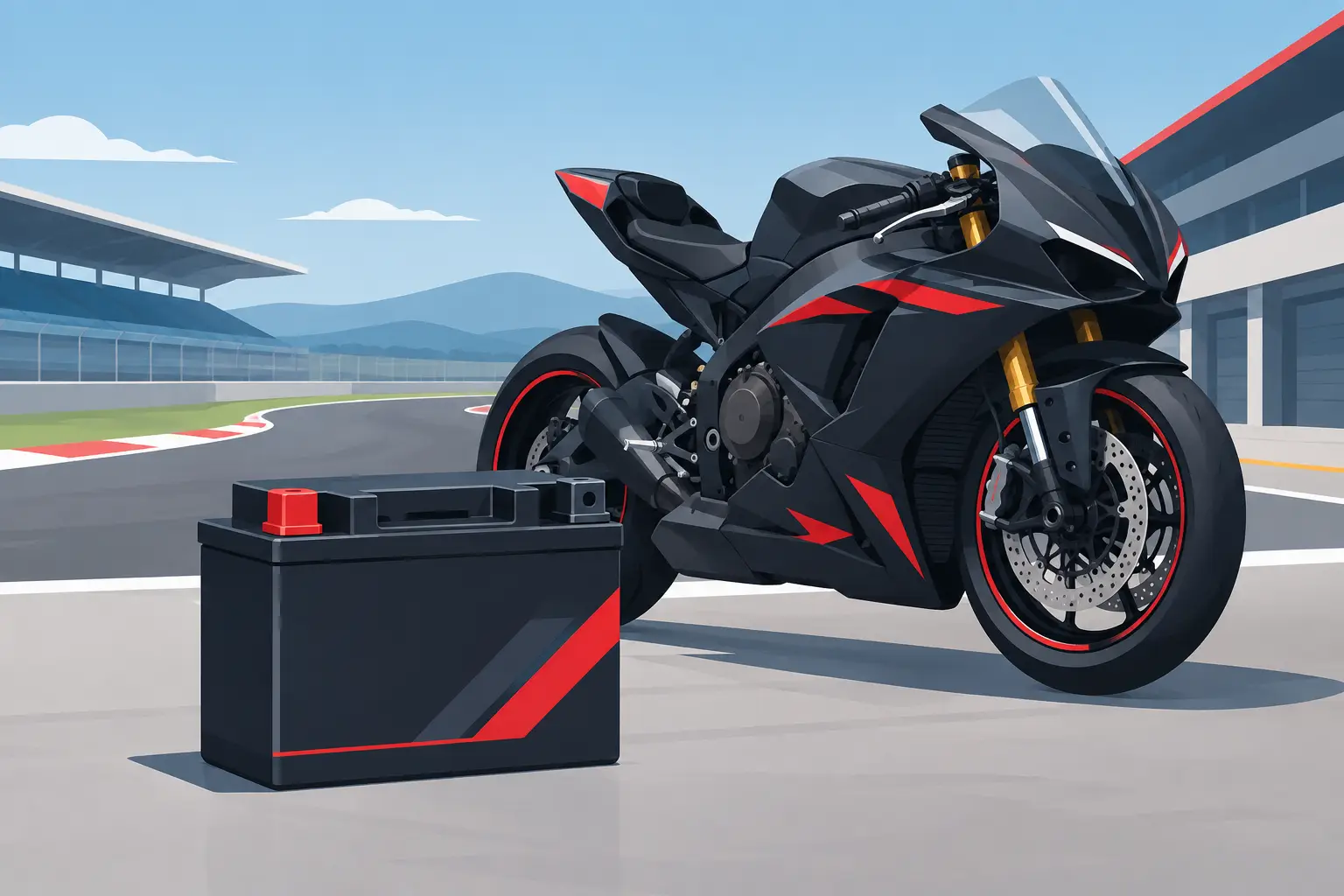
A weak start in pit lane is more than an inconvenience. It can cost a session, disrupt a race weekend, or leave you diagnosing an electrical issue that was never really there. Race batteries need to deliver reliable starting power, tolerate vibration and heat, and fit a tightly packaged sport bike without adding unnecessary weight.
For track-day riders and racers, battery selection is not simply about buying the lightest option available. The right unit must match the motorcycle’s charging system, starting demand, electrical load, and actual operating routine. A lightweight lithium battery can be an excellent upgrade, but only when its capacity and charging requirements suit the bike.
What Race Batteries Must Do Differently
A street motorcycle battery is designed around broad, everyday use. It may spend weeks parked, run accessories, start in cold weather, and carry enough reserve capacity for inconsistent maintenance. A race-prepared motorcycle has different priorities: reduced weight, strong cranking output, compact packaging, and dependable performance under repeated heat cycles.
Weight matters because it affects more than the number on a spec sheet. Removing several pounds high in the chassis can make a noticeable difference during transitions, braking, and direction changes. This is especially relevant on modern liter bikes, where performance upgrades often focus on reducing rotating mass, improving braking feel, and sharpening rider control.
Still, a battery is part of the electrical system, not an isolated weight-saving part. Fuel injection, ECU operation, quickshifters, data systems, dash displays, cooling fans, and electric starters all place demands on it. A battery that is too small may start the bike once in perfect conditions yet struggle after a hot shutdown or a long wait in the paddock.
Lithium vs. AGM Race Batteries
Lithium iron phosphate batteries, commonly called LiFePO4 or lithium race batteries, are the preferred choice for many performance builds. Their greatest advantage is weight reduction. Depending on the original battery and replacement size, a lithium unit can save several pounds while providing strong cranking power.
Lithium batteries also hold voltage well during use and typically have a lower self-discharge rate than conventional lead-acid designs. For a dedicated track motorcycle that is maintained correctly, that combination makes them highly effective. Their compact dimensions can also create valuable room around a tightly packaged subframe or airbox area.
The trade-off is capacity. A small lithium battery may advertise impressive cranking amps, but cranking output is not the same as reserve capacity. If the motorcycle sits with a dash, data logger, tire warmer controller, or other electronics switched on, a minimal-capacity battery can discharge quickly. That can create hard starting, ECU fault codes caused by low voltage, or a no-start situation between sessions.
AGM batteries remain a sound choice for riders who need more reserve power, ride in colder weather, or use their motorcycle for a mix of street and track miles. They are heavier than lithium options, but they are generally more forgiving of charging habits and extended accessory use. For some race classes, endurance applications, or street-track builds, that added reserve is worth the weight penalty.
The best choice depends on how the bike is used. A stripped track bike stored indoors and maintained with the correct charger is an ideal lithium candidate. A bike that sees frequent street use, cool-weather starts, and occasional periods of neglect may be better served by a quality AGM battery or a larger-capacity lithium unit.
Do Not Choose by Weight Alone
The smallest battery that physically fits is rarely the smartest purchase. Consider the engine displacement, compression ratio, starter condition, climate, and electronic equipment. A high-compression superbike with an aging starter system requires more margin than a lightweight middleweight race bike.
Look at the battery’s stated capacity as well as its cranking rating. Manufacturers may use different rating methods, so direct comparisons are not always perfect. Fitment guidance from the battery manufacturer and the motorcycle’s original specifications are more valuable than chasing the largest number printed on the case.
Fitment Is More Than Length and Width
Motorcycle battery fitment starts with physical dimensions, terminal orientation, and mounting security. Measure the battery tray and confirm where the positive and negative terminals must sit. Reversing terminal orientation can force cables to stretch, interfere with bodywork, or create a short-circuit risk.
Many lithium batteries are smaller than OEM units and include foam spacers to secure them in the battery box. Use those spacers properly. A battery that can move under hard braking or curb impact is not race-ready, even if it starts the motorcycle perfectly in the garage.
Also inspect the main leads, terminal bolts, and ground connection. High-performance motorcycles are sensitive to poor electrical connections. Clean terminals, correct bolt torque, and secure cable routing help prevent intermittent starting faults that can mimic larger mechanical problems.
If the bike has been converted to race bodywork, a total-loss electrical setup, or a simplified harness, reassess the battery requirement rather than assuming the stock replacement remains correct. Electrical modifications can reduce demand, but added electronics can just as easily increase it.
Charging and Storage Can Decide Battery Life
Battery failures are often maintenance failures. Lithium and AGM batteries require different charging approaches, and using the wrong charger can shorten service life or create a safety issue. Use a charger specifically approved for the battery chemistry installed in the motorcycle.
A conventional lead-acid tender is not automatically suitable for lithium. Some chargers include a desulfation or recovery mode that can apply voltage profiles inappropriate for lithium batteries. A lithium-compatible maintainer monitors voltage without using those aggressive modes.
Before charging, inspect the battery and wiring for damage, swelling, loose terminals, or corrosion. If the battery has been deeply discharged, do not assume it can be recovered safely with any available charger. Follow the battery manufacturer’s instructions. When reliability matters, replacement is often less expensive than losing a race weekend to an electrical failure.
Cold temperatures deserve attention as well. Lithium batteries can be reluctant to accept a charge when cold, and their available starting performance can drop in low temperatures. In cold paddock conditions, briefly waking the battery by switching on a small electrical load can help, but this is not a substitute for choosing the correct capacity or maintaining the battery properly.
For off-season storage, disconnect parasitic loads if practical and keep the battery in a dry, temperature-stable environment. Check voltage periodically instead of leaving it ignored for months. A modern sport bike can draw small amounts of current even when parked, particularly if it retains an alarm, clock, or electronic accessory.
A Practical Battery Selection Process
Before ordering, verify four points: the motorcycle’s exact year and model, the original battery dimensions and terminal layout, the intended use, and the charging equipment already in the garage. This avoids the common mistake of installing a compact battery that works for a weekend but lacks the reserve needed for the rider’s actual routine.
For a dedicated sprint race bike, prioritize secure fitment, appropriate lithium capacity, and high cranking performance. For a track-day motorcycle with cooling fans, a dash, and frequent restarts throughout the day, move up one capacity level rather than selecting the absolute lightest option. For street-track use, weigh the convenience and tolerance of AGM against the performance benefit of lithium.
Quality matters here. The battery must withstand vibration, repeated heat cycles, and the physical demands of a sport bike ridden hard. Premium race components are selected to improve control and confidence, and the battery should be treated the same way. AXF Race Parts supports performance-focused riders with fitment-driven access to race-ready motorcycle components, making it easier to build a package that works together.
A properly chosen battery disappears from your attention, which is exactly the goal. Confirm fitment, give it enough capacity for the way you ride, use the correct charger, and let the bike fire immediately when the call goes out for the next session.