

Race Tire Pressure for Faster, Safer Track Days

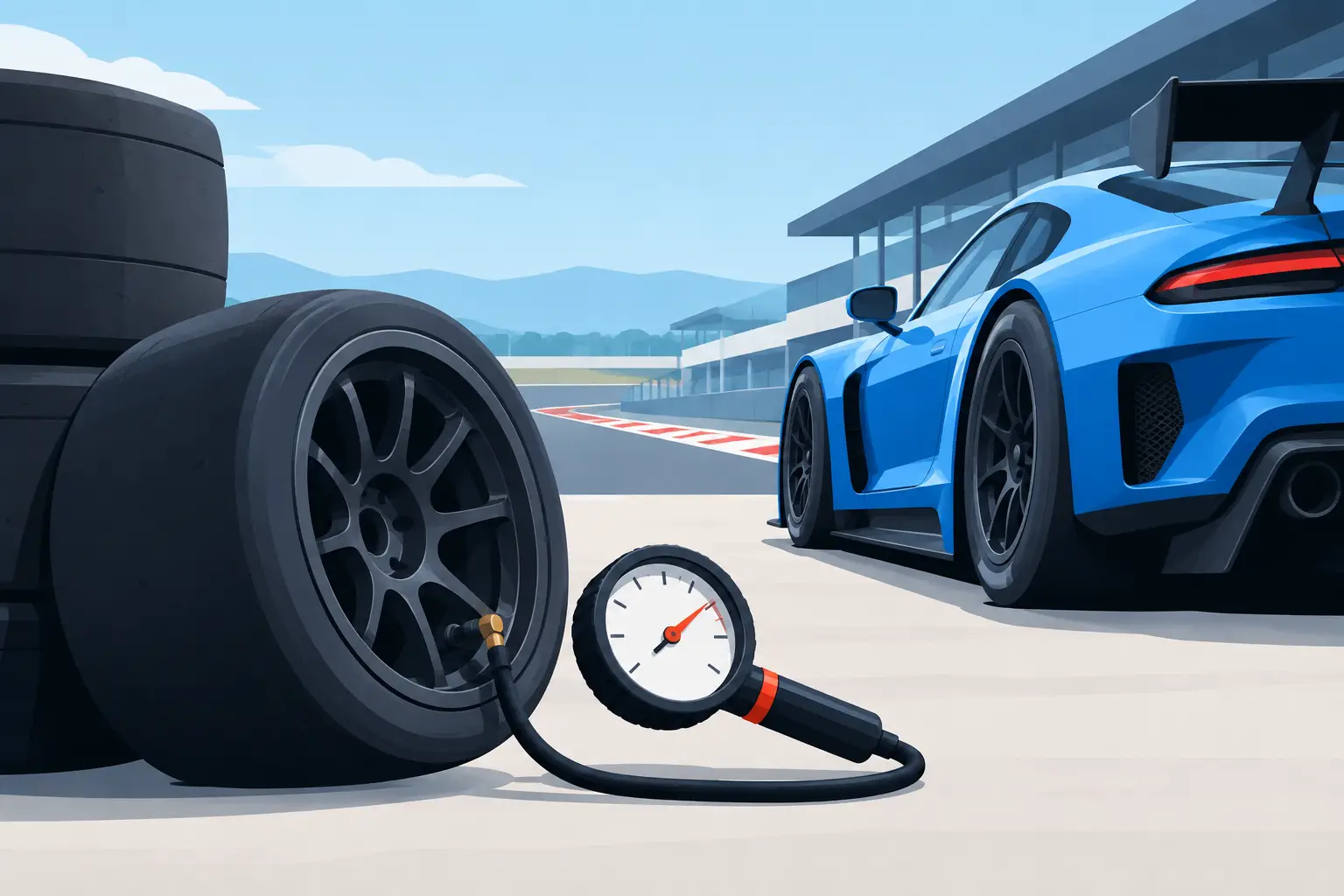
A tire can look perfect in the paddock and still feel vague, nervous, or unwilling to turn once the session starts. Race tire pressure is often the difference. It controls how the carcass supports the bike, how quickly the tire reaches its working window, and how much usable grip remains when braking hard or driving off a corner.
For track-day riders and racers, pressure is not a number copied from a friend’s pit board. It is a setup variable that must match the tire construction, compound, warmer use, ambient conditions, pace, motorcycle, and track surface. Get it right and the bike feels planted and predictable. Get it wrong and even premium tires can feel like a chassis problem.
Why Race Tire Pressure Changes the Motorcycle
Pressure determines the tire’s contact patch, but that is only part of the story. A race tire is an engineered structure. Its carcass flexes under load, generates heat, and works with the suspension to keep the contact patch stable. Pressure changes the way that structure responds.
Too much pressure usually makes the tire feel harsh and reduces compliance over bumps, curbing, and surface changes. The contact patch can become less forgiving at maximum lean, and the rider may report a lack of feel rather than an obvious slide. The bike can turn quickly but feel skittish, especially on corner entry.
Too little pressure allows more carcass movement. In some conditions that can increase mechanical grip, but it also creates extra heat and instability if taken too far. The tire may feel vague, move under braking, or overheat across a long session. Excessive carcass flex can accelerate wear and make the handling change dramatically from the first lap to the last.
The goal is not the lowest possible number. The goal is to place the tire in its intended operating range, where it delivers grip, support, and consistent feedback.
Start With the Tire Manufacturer’s Hot Target
The tire manufacturer’s specification is the only correct place to begin. Racing slicks, DOT race tires, and track-focused street tires can require very different pressures, even when their sizes look similar. Construction matters. A modern rear slick may be designed to run at a relatively low hot pressure, while a street-oriented hypersport tire may need considerably more support.
Use the manufacturer’s recommended hot pressure whenever it is provided. That is the pressure measured immediately after the bike comes off track, before the tire has time to cool. It reflects the condition the tire is designed to see while it is doing its job.
Cold pressure is only a starting point used to reach that hot target. It will change with weather, tire warmer temperature, session length, rider pace, and the circuit itself. A cold morning, a fast rider, and abrasive pavement can all produce a different pressure rise than a warm afternoon on smooth asphalt.
Never assume the pressure printed on the sidewall or listed in a street motorcycle owner’s manual is suitable for a race tire on track. Those numbers may be intended for road use, passenger loads, different speeds, or a completely different tire category.
Cold Pressure Is Not a Universal Setup
If you use tire warmers, set pressure according to the tire brand’s warmer procedure. Some brands publish a pressure to set while the tire is hot on the warmer; others publish a cold baseline that assumes a specific warmer temperature and heating time. Follow the exact guidance for that tire model.
Without warmers, start from the manufacturer’s cold recommendation and check pressure as soon as you return to the paddock. The first sessions of the day are data-gathering sessions. Do not make large changes based on a single lap or a single impression.
A calibrated gauge matters here. Two inexpensive gauges can disagree by several psi, which is enough to put a race tire outside its intended window. Use one quality gauge consistently, protect it from damage, and verify it periodically against a trusted reference. Consistency is more valuable than swapping between gauges that read differently.
Build a Repeatable Pressure Routine
Fast riders do not guess at tire pressure. They create a repeatable routine that makes meaningful changes visible. Check the tires before the first session, record the setting, then check them immediately after each session in the same way.
Write down the cold or warmer-set pressure, hot off-track pressure, track temperature, ambient temperature, session length, tire model, compound, and rider feedback. You do not need a complex data system. A notebook in the trailer or a note on the phone is enough if the information is consistent.
The useful question is not simply whether the rear gained three or four psi. Ask whether the tire reached the manufacturer’s target, whether the bike maintained the same feel through the session, and whether the wear pattern supports what the rider felt. This turns pressure adjustment into a controlled setup process instead of paddock folklore.
Make one change at a time. If you alter tire pressure, rebound damping, preload, and ride height together, you will not know which adjustment fixed or created the problem. Pressure changes should generally be small, often one psi or less, unless you are correcting a clearly incorrect baseline.
Tire Warmers Change the Starting Point
Tire warmers are not just convenience equipment. Quality warmers bring the tire closer to its operating temperature before the first lap, reduce the time spent cautiously building heat, and make the initial pressure setting more repeatable.
They also require discipline. A tire left on warmers for an insufficient time may have a warm surface but a cooler carcass. A tire heated far beyond the manufacturer’s recommendation can start the session at the wrong temperature and pressure. Set the warmers to the tire maker’s specified temperature, allow adequate heat-soak time, and measure pressure immediately before the bike leaves the paddock.
Warmers do not eliminate the need for hot checks. The forces generated under braking and acceleration are different from stationary heating. A tire can leave the pits at the correct warmer pressure and still finish the session above or below its intended hot target.
Read Rider Feedback Before You Blame the Tire
Pressure symptoms can overlap with suspension symptoms, worn tires, incorrect geometry, or poor throttle control. That is why a disciplined approach matters.
A front tire that feels nervous on the brakes or lacks confidence at maximum lean may be overinflated, but it could also point to fork setup, excessive trail reduction, or a tire that has cooled between sessions. A rear that feels like it is moving on corner exit may need a pressure adjustment, but it can also be a traction-control intervention, shock issue, or a compound that does not suit the temperature.
Look at the evidence together. Rider feedback, hot pressure, tire wear, and lap-to-lap consistency provide a clearer picture than any one signal. Do not chase cosmetic wear marks alone. Some surface texture is normal on a hard-ridden track tire, and the wrong reaction can create a larger problem.
If the tire has obvious tearing, blistering, or an abrupt loss of grip, stop treating it as a minor pressure question. Inspect the tire, confirm the correct compound and direction, check the suspension settings, and consider track temperature and pace. A damaged or severely overheated tire should not be pushed through another session to save a few laps.
Conditions That Demand an Adjustment
Track conditions do not stand still. As the pavement heats up, the tire may generate more pressure during the session. As rain arrives or temperatures fall, the tire may struggle to build heat. A newly resurfaced circuit can load tires differently than the same track did last season.
Pace has the same effect. A rider who picks up several seconds per lap can produce a much larger pressure rise without changing anything in the paddock. That is why a setup that worked during an early intermediate session may not be correct later in the day when pace and confidence improve.
Bike setup matters as well. Aggressive engine braking, a powerful superbike, soft suspension settings, or a rear ride-height change can all change how the tire is loaded. Race tire pressure should be treated as part of the complete chassis package, alongside suspension, geometry, tire choice, and electronic settings.
Make Pressure Part of Your Race Preparation
The fastest route to confidence is a known baseline. Choose the exact tire model and compound, follow its manufacturer guidance, use a reliable gauge, and record hot readings after every session. From there, make small decisions based on real feedback rather than borrowed numbers.
Premium tires, dependable warmers, paddock equipment, and model-specific performance components all help create a more controlled track program. AXF Race Parts supports that process with race-ready equipment built for riders who expect precision from every lap.
When the bike feels different, pressure is one of the first items worth checking. Treat it with the same attention you give brake pads, chain tension, and suspension settings, and your next adjustment will be based on evidence instead of guesswork.