
Best Motorcycle Paddock Equipment

A bike can be fully prepped, safety wired, and mapped correctly, then still lose time or suffer damage because the paddock setup is weak. The best motorcycle paddock equipment is not about looking professional. It is about keeping the bike stable, the tires in the right temperature window, the tools accessible, and the work area ready when every session is on a clock.
For track-day riders, club racers, and race teams, paddock gear sits in the same category as any other performance part. If it saves time, protects components, and reduces mistakes between sessions, it matters. The right setup also scales. A rider doing six weekends a year does not need the same investment as a team running multiple bikes, but both need equipment that works every time.
What the best motorcycle paddock equipment actually includes
A proper paddock setup starts with support, heat management, power, transport, and workspace efficiency. That sounds broad because it is. Most riders first think about stands and tire warmers, but those are only the foundation.
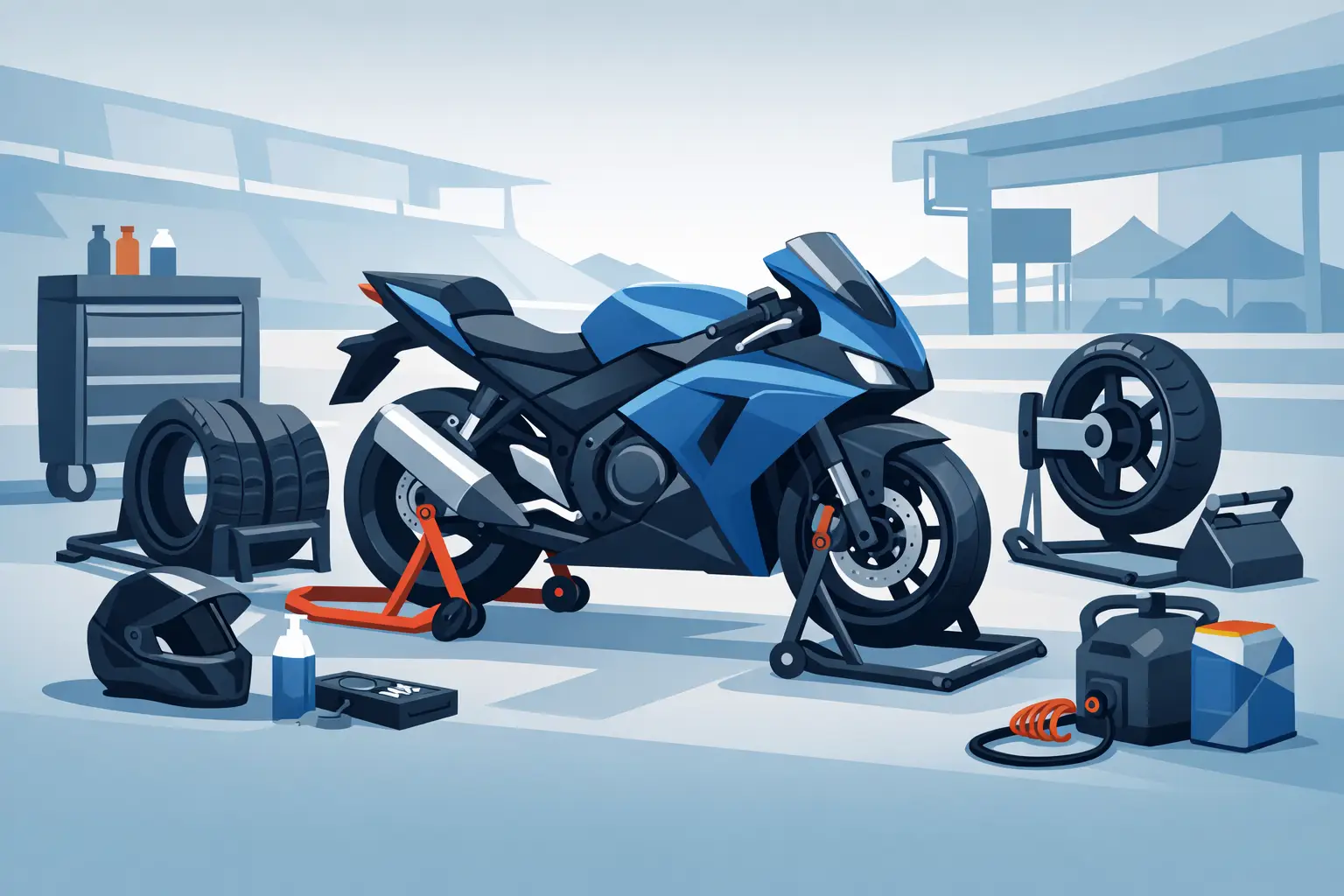
At minimum, the best motorcycle paddock equipment usually means front and rear stands, quality tire warmers, a dependable source of power, basic transport protection, and a tool layout that keeps routine jobs fast. If one of those areas is weak, the whole setup feels slower and less controlled.
There is also a big difference between equipment built for occasional use and equipment designed around repetitive race weekends. Lightweight materials are great until they flex under load. Cheap rollers feel fine until the bike has to come on and off the stand several times a day. Budget warmers may heat the tire, but not evenly or consistently enough to support pressure control.
Start with paddock stands, because everything depends on stability
If the bike is not stable, nothing else in the paddock works properly. Rear stands are the first priority. They need solid weld quality, smooth wheel movement, and geometry that fits the bike correctly. A stand that lifts awkwardly or drags during use becomes a problem fast, especially when the bike is hot and time is short.
For most modern sport bikes, a rear stand used with spools is the cleanest and most secure option. It gives repeatable engagement and better confidence during tire changes, chain service, and warmer installation. A fork-lift rear stand can work, but for race-prepped bikes and regular track use, spool compatibility is usually the better choice.
Front stands depend on how you work. A fork-bottom stand is convenient for quick lifting, brake cleaning, and basic paddock use. A head-lift stand gives more service access and is the better tool when front-end work is on the schedule. If you only buy one first, start with the rear. If you want a more complete setup, the front stand should match the type of maintenance you actually do.
Material matters, but design matters more. Aluminum saves weight in transport, while steel often brings lower cost and a more planted feel. Neither is automatically better. If you move gear often and load alone, lighter stands are easier to live with. If your setup stays local and durability is the priority, heavier construction can be a smart trade.
Tire warmers separate a casual setup from a track-ready one
Tire warmers are not optional if you are chasing consistency. They help control the first laps, stabilize carcass temperature, and make pressure adjustments more meaningful. Good warmers do more than get hot. They heat evenly, hold temperature accurately, and fit the tire profile correctly.
This is where riders often spend too little, then wonder why pressure readings drift or grip feels inconsistent session to session. Uneven heating creates false confidence. The tire may feel ready on the outside while the internal temperature is lagging. That changes how the bike reacts on corner entry and pickup, especially in cooler conditions.
The best motorcycle paddock equipment should include warmers with reliable thermostatic control, durable outer construction, and sizing that matches your tire dimensions. A loose fit wastes heat. An overly tight fit wears the warmer and makes installation frustrating. If you run multiple wheel sets or change tire sizes, that should shape the warmer choice from the start.
For serious use, warmer durability matters as much as peak temperature. Repeated removal, hurried installation, and generator-powered weekends expose weak stitching and poor internal construction quickly. Race-proven warmers cost more up front, but they usually cost less over time.
Power supply is where many paddock setups fall apart
A strong paddock setup needs dependable electricity. Tire warmers, battery chargers, fans, and tools all rely on stable power. Yet power planning is often an afterthought until breakers trip or extension cords start running across the pit area like a hazard.
If your track offers reliable wall power, use heavy-duty cords rated for the load and keep cable routing clean. If power access is limited, a generator becomes part of the core equipment list. In that case, output quality matters. Sensitive electronics and tire warmers benefit from stable, consistent current. Noise level matters too, especially in tighter paddock environments.
Do not size power equipment around the bare minimum. Two warmers, a charger, and a fan can add up quickly. Build in overhead so the system is not operating at its limit all day. That reduces heat, improves reliability, and avoids interruptions before a session.
Transport equipment protects the bike before the day starts
A fast bike that arrives stressed, scratched, or loosely secured is already behind. Transport gear belongs in the paddock conversation because loading and unloading are part of every race weekend. Wheel chocks, tie-down points, quality straps, and soft loops all matter.
The main goal is controlled support without over-compressing suspension or risking bodywork damage. Cheap straps with inconsistent buckle action or weak stitching are false economy. The same goes for badly placed anchor points in trailers and vans. A secure bike should not shift under braking, and unloading should feel controlled, not improvised.
If you transport multiple bikes, repeatability becomes even more important. The setup should let you position each bike quickly and safely without creating a puzzle every time you load. Good transport equipment saves time, but more importantly, it reduces the chance of preventable damage before the wheels ever touch pit lane.
Tools and workspace setup should support fast routine jobs
Paddock efficiency is usually won in small moments. Finding the right socket immediately. Keeping axle tools where they belong. Having brake cleaner, tire gauge, chain tools, and spare hardware within reach. The best motorcycle paddock equipment is not only the big-ticket gear. It is also the organization around it.
A compact work table, a tool chest that travels well, and a parts tray for removed hardware can make between-session work much cleaner. That matters more than riders think. Lost spacers, mixed fasteners, and cluttered tools waste time and increase the chance of mistakes.
The exact tool inventory depends on the bike and class, but the principle is the same. Pack around service tasks you actually perform. Wheel changes, lever adjustment, chain tension, brake bleeding, data checks, bodywork removal, and fluid top-offs should all be supported without digging through random storage bins.
Weather protection is not glamorous, but it changes the whole day
Canopies, sidewalls, floor mats, and basic seating do not add horsepower, but they do improve consistency. Shade protects riders, electronics, and tires. Cover keeps tools dry and preserves workflow when conditions change. A clean floor mat helps you spot leaks and keeps parts out of dirt and gravel.
This is one of those categories where it depends on how often you ride and where. For occasional fair-weather track days, a simple canopy may be enough. For regular race weekends, stronger frames, weighted anchors, and weather-resistant materials are worth the money. Wind and rain expose weak paddock gear fast.
Buy by use case, not by hype
The right paddock setup is not the most expensive one. It is the one that fits your schedule, transport method, bike count, and mechanical workload. A solo rider with one 600 needs a different setup than a dealer-supported amateur team running two superbikes.
Spend first on the equipment that directly affects safety and repeatability. That usually means stands, tire warmers, and power. Then add transport optimization, workspace organization, and weather coverage. If the budget is limited, avoid buying broad and shallow. A few strong pieces are better than a paddock full of equipment that works only halfway.
Brand reputation matters here because race environments expose weak products quickly. Premium paddock gear tends to justify itself through stability, thermal consistency, and service life. For riders sourcing race-ready components from suppliers that understand fitment and track use, that difference is easier to see. AXF Race Parts operates in that lane for a reason.
A clean paddock setup does more than support maintenance. It sharpens the whole weekend. When the bike is secure, the tires are hot, the tools are where they should be, and power is dependable, you spend less time fixing avoidable problems and more time focusing on lap time.