

Best Motorcycle Rain Lights for Track Riders

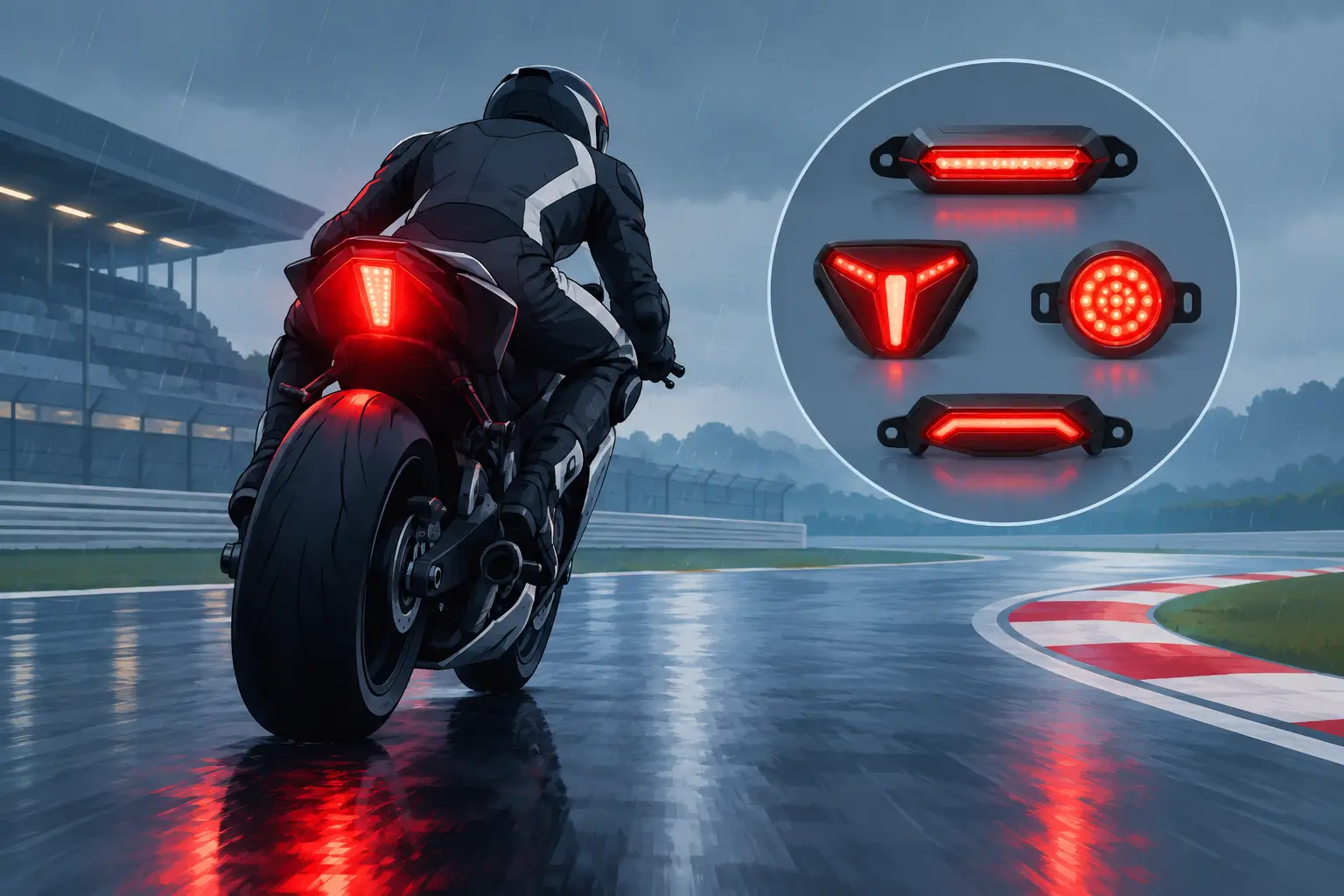
A rain light is not an accessory you notice when conditions are perfect. It earns its place when spray turns the braking zone into a gray wall and the rider behind you needs a clear reference point immediately. The best motorcycle rain lights combine intense rearward visibility with compact, secure installation that suits a race fairing, tail section, or track-prepared sport bike.
For track-day riders and racers, this is a safety component first. A proper high-intensity red rain light cuts through standing-water spray, stays visible at speed, and does not become a loose, vibrating liability after two sessions. The right choice depends on your motorcycle, the rules of the organization you ride with, and whether you need a dedicated rain light, a brake-light-integrated unit, or a dual-purpose setup for street and circuit use.
What Makes a Motorcycle Rain Light Effective?
Brightness matters, but raw output alone does not define a quality rain light. The LED array must produce a concentrated red signal that remains identifiable from directly behind, even when the following rider is dealing with tire spray, a fogged visor, and low contrast. A small light with a focused lens can be more useful than a larger unit that spreads its output too broadly.
Flash pattern is the next decision. Many dedicated race rain lights use a rapid, consistent flash that is hard to confuse with a normal tail light. That distinction is valuable in heavy rain, but rules vary between track-day organizers, race series, and street jurisdictions. Check the applicable rulebook before fitting a flashing unit for competition, and do not assume a race-spec flash mode is street legal where you ride.
A good unit also needs a weather-resistant housing, sealed wiring exit, and vibration-resistant internal construction. Sport bikes transmit substantial vibration through the subframe and tail plastics. A rain light that works on the workbench but fails after a wet session is not race-ready equipment.
Best Motorcycle Rain Lights by Riding Use
The best motorcycle rain lights are not always the brightest or the most expensive. They are the lights that meet the job your bike is built to do.
Dedicated race rain lights
A dedicated race unit is the correct choice for a track-only motorcycle with race bodywork. These lights are typically compact, lightweight, and designed around a bright flashing red pattern. They are often mounted centrally in the tail area, where they are visible without interfering with rider movement or bodywork removal.
This setup keeps the rain-light circuit separate from the brake-light circuit. That separation is useful when your race bike has removed the factory rear harness, deleted street equipment, or uses a simplified racing electrical system. It also gives tech inspection a clear, purpose-built safety light rather than a compromised street-tail solution.
The trade-off is convenience. Dedicated units may require a separate switch, relay, connector, or wiring lead depending on your electrical layout. If your bike is frequently converted between road and track trim, factor that installation time into the decision.
Integrated tail and brake lights
An integrated LED tail light can work well for performance street riders who want improved rear visibility without adding another component to the bike. Some units incorporate running, brake, and flashing functions in one compact assembly. On a street bike that sees occasional wet track days, this can be the cleanest route.
The limitation is rule compliance and signal clarity. A brake light that flashes only during braking is not the same as a dedicated rain light that operates continuously in poor visibility. If a track organization specifies a dedicated rear rain signal, verify that an integrated unit meets its technical requirements before relying on it.
Universal compact LED lights
Universal LED rain lights suit custom builds, endurance projects, older sport bikes, and machines with modified subframes. Their appeal is flexibility: you can position them in a central tail opening, on a rear bracket, or beneath a race seat unit.
Fitment is where universal lights demand more attention. Confirm the mounting-hole spacing, cable length, voltage requirement, and clearance to the rear tire at full suspension compression. A light that looks neatly placed in the paddock can contact the tire under load if the mount is poorly positioned.
OEM-style replacements with added visibility
For riders who prioritize a factory-style appearance, an upgraded LED replacement may be enough for road riding in regular rain. It improves visibility and can reduce the bulk or heat of an older incandescent assembly. It is not automatically the right answer for serious track use, especially in endurance racing or events that require a distinct flashing rain light.
Brightness, Lens Design, and Flash Mode
Do not buy solely from a lumen number. Manufacturers do not always measure LEDs the same way, and a high output figure says little about how a light performs through road spray. Look instead for a purpose-designed rear warning light with a bright red LED source, an optical lens that directs output rearward, and a pattern visible in daylight as well as dark conditions.
A steady red mode is generally less conspicuous in a rainstorm than a flashing mode, particularly when it sits near other rear lighting. A controlled flash pattern creates movement that the eye picks up quickly. However, excessively aggressive strobing can be distracting at close range and may not meet event rules. The strongest option is often a light that offers selectable steady and flash modes, provided the selected setting complies with the event requirements.
Viewing angle matters as well. Riders do not always follow directly behind one another through a corner. A light with useful off-axis visibility gives the rider behind more time to identify your position when the racing line shifts or spray drifts across the track.
Fitment and Wiring for Sport Bikes
A rain light should be mounted high enough to stay visible above tire spray, but not so high that it conflicts with the seat, tail cowl, or rider movement. On race bodywork, a centered location at the rear of the tail section is usually the most effective. It provides a predictable visual reference and reduces the chance that the exhaust, tire, or a number plate blocks the signal.
Before drilling a race tail, remove the seat unit and inspect what sits behind the proposed location. Check for subframe braces, wiring looms, ECU placement, and quick-release fasteners. A clean installation uses a protected pass-through for the wire, enough slack for bodywork removal, and a connector that can be disconnected without cutting or straining the harness.
Most modern motorcycle rain lights are designed for 12-volt DC systems, but confirm voltage and current draw before connecting to an existing circuit. If you are wiring into a race loom, use a fused circuit and quality connectors. Crimp terminals left exposed under the tail are a common source of intermittent failures after a wet weekend. Heat-shrink protection, secure routing, and strain relief are small details that protect a critical safety signal.
If the bike retains its street harness, avoid overloading an existing lighting circuit or creating a wiring arrangement that confuses the brake-light switch. A dedicated switched feed is often cleaner, particularly for a track bike where the rain light needs independent control.
Common Buying Mistakes
The first mistake is treating a rain light as a styling item. Dark lenses, tiny housings, and hidden mounting locations may look clean, but they can reduce the visibility that makes the component worthwhile. Prioritize signal strength and placement over cosmetic minimalism.
The second is overlooking rule requirements. Some organizations specify color, operating mode, location, or whether the light must be active whenever the track is declared wet. Read the current rules for your event rather than relying on what another rider used last season.
The third is ignoring bodywork compatibility. Race fairings vary widely by manufacturer and model year. A unit that fits one Yamaha tail may require modification on a Ducati, BMW, Aprilia, or Kawasaki race seat. Measure the available mounting area and confirm whether the light needs a flat surface, a recessed opening, or a bracket.
Finally, do not install the light and forget to test it under real conditions. Check it with the engine running, inspect the wiring with the suspension compressed, and view it from several yards behind the bike in daylight. If the signal is difficult to see in the paddock, it will not improve once the track is wet.
Choose the Right Light Before the Weather Turns
A high-performance motorcycle deserves a rain light with the same focus on function, fitment, and reliability as the rest of its track preparation. Choose a bright red unit, mount it where spray cannot hide it, and wire it as carefully as any other race-critical electrical component. When visibility disappears, the rider behind you should still know exactly where you are.