
Race Electronics Guide for Faster, Cleaner Laps

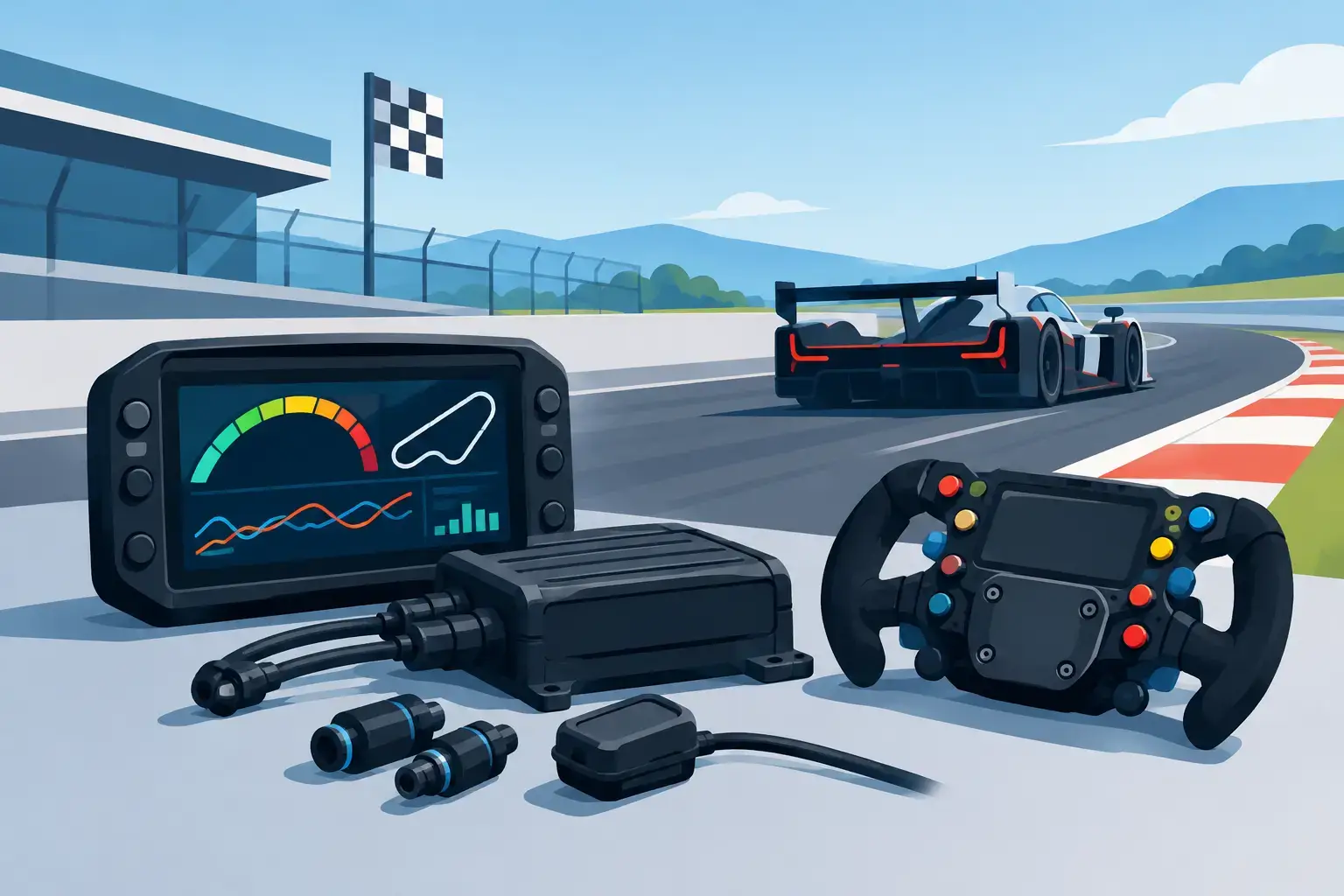
A race bike can have premium brakes, fresh tires, and a well-built engine, yet still feel slow or difficult to ride if the rider interface is wrong. This race electronics guide focuses on the components that translate rider input into consistent performance: controls, engine-management hardware, data systems, and the wiring that keeps them working under track conditions.
For track-day riders and racers, electronics should solve a specific problem. A quick-action throttle can reduce hand movement on corner exit. A quality quickshifter can make upshifts more repeatable. A dedicated switch assembly can remove unnecessary street-bike functions and reduce handlebar clutter. The right setup depends on the motorcycle, class rules, rider level, and how far the bike has moved from street duty to race preparation.
Race Electronics Guide: Build From the Rider Controls
Start with the parts you touch every lap. Controls have an immediate effect on confidence, especially when braking hard, hanging off the bike, or making quick changes while wearing gloves.
A race switch assembly replaces bulky OEM left- and right-hand controls with compact, purpose-built buttons. Common functions include engine start, kill switch, pit-lane limiter, traction-control adjustment, riding-mode selection, and lap trigger. On a dedicated track bike, this reduces clutter and frees room for brake master cylinders, remote adjusters, and data displays.
Fitment matters more than appearance. Switches may be designed for a specific OEM wiring connector, a particular ECU, or a standalone racing harness. Some units are plug-and-play for selected Ducati, Yamaha, BMW, Kawasaki, Honda, Aprilia, Suzuki, KTM, Triumph, or MV Agusta models. Others require pin changes, custom wiring, or ECU configuration. Verify model year, connector style, and required functions before ordering.
Throttle assemblies deserve the same attention. A quick-action throttle shortens the rotation required to reach full throttle, which can improve control when the bike is accelerating aggressively out of slower corners. But a shorter throw is not automatically better. Riders who are still refining throttle application may prefer a less aggressive ratio, particularly on high-torque superbikes where a small wrist movement has a larger effect on rear-tire load.
For cable-throttle motorcycles, consider the throttle tube ratio, cable compatibility, grip length, and housing clearance. For ride-by-wire bikes, the focus shifts toward compatible switchgear, ECU calibration, and whether the OEM throttle housing remains in place. Never assume that a race control kit replaces every original component.
Quickshifters and Auto-Blippers: Speed With a Setup Requirement
A quickshifter cuts ignition or fuel briefly during an upshift, allowing the rider to change gear without closing the throttle or pulling the clutch. An auto-blipper adds controlled throttle input on downshifts, reducing rear-wheel disturbance while braking and entering corners. Properly configured systems can improve consistency and reduce fatigue over a race distance.
The key word is properly. Shift-cut duration, kill strategy, sensor direction, gear-position input, and engine speed all affect how the system feels. Too much cut can make shifts slow. Too little can load the transmission harshly. A downshift system that is poorly calibrated can create abrupt engine braking or inconsistent blips that upset the chassis.
Many modern sport bikes include quickshifting functions from the factory, sometimes as an optional software activation. Before adding an aftermarket system, establish what the motorcycle already has and what the intended ECU supports. Replacing a working OEM system solely to add parts can create unnecessary integration work. An aftermarket kit becomes more valuable when it offers better adjustability, race ECU compatibility, improved sensor quality, or functions the stock system cannot provide.
Use a strain-gauge sensor designed for the shift pattern on the bike. Standard and reverse-shift configurations do not always use the same sensor orientation or mounting arrangement. Confirm whether the kit supports push, pull, or bidirectional operation. A sensor that reads incorrectly can cause missed shifts, unwanted cuts, or no shift assistance at all.
Choose ECU and Engine Management Around the Rules
The ECU is where a race electronics package becomes either highly effective or unnecessarily complicated. Flash tuning, race ECUs, piggyback modules, and standalone systems serve different purposes. The correct choice depends on the bike, race class, exhaust configuration, fuel, and level of control required.
For many track riders, an ECU flash paired with a correctly mapped exhaust and intake setup delivers the most sensible improvement. It can adjust fueling, ignition, fan temperature, throttle behavior, engine-braking settings, and available electronic rider aids where supported. This route generally retains much of the factory electrical architecture and keeps the motorcycle easier to service.
A race ECU may provide expanded mapping, switch inputs, logging capability, and compatibility with racing switchgear or dash systems. It is often the better choice for a dedicated race build, but it may require a matching harness or specific sensors. A standalone ECU offers the deepest control, yet it also demands a serious wiring plan, accurate calibration, and the ability to diagnose the bike when it does not start in the paddock.
Class regulations come first. Some organizations restrict ECU modifications, traction-control strategies, data acquisition, or aftermarket wiring. Build around the rules you intend to race under, not the maximum feature list on a product page. A legal, reliable bike with a clean tune is more useful than a sophisticated package that cannot run in your class.
Data Acquisition Should Answer Track Questions
Data systems can be simple or comprehensive. At the basic level, lap timing helps a rider see whether a setup change produced a measurable result. More advanced loggers can record GPS position, speed, RPM, throttle position, brake pressure, lean angle, gear position, suspension travel, wheel speed, and engine parameters.
Do not buy channels you cannot use. A rider working on consistency may gain more from accurate lap timing and video overlay than from a full sensor package. A team tuning suspension, traction control, and engine braking can justify additional inputs because the data supports specific decisions.
The best data system is one that is easy to review after each session. Mount the display where it can be seen without distracting the rider. Protect the unit from vibration, use secure connectors, and route the harness away from steering movement, heat, and sharp edges. If the bike goes down, a poorly routed cable can turn a minor crash into an expensive electrical failure.
Wiring Is a Performance and Reliability Upgrade
Race wiring is not glamorous, but it often determines whether the bike completes the weekend. OEM harnesses are designed to support headlights, turn signals, emissions equipment, road controls, and convenience features. A dedicated race harness can eliminate unused circuits, reduce complexity, and make servicing faster.
That does not mean every bike needs a complete harness conversion. For a track-day machine, careful removal of unnecessary street equipment and installation of compatible plug-in controls may be enough. For a competition motorcycle, a simplified harness can make fault finding far easier when time matters.
Use motorsport-grade connectors, proper crimping tools, heat protection, abrasion-resistant sleeving, and strain relief at every moving or vibration-prone point. Label connections before final assembly. Keep a wiring diagram with the bike. A clean harness is not just visual discipline – it makes troubleshooting faster when a switch, sensor, or charging circuit fails.
Pay close attention to charging-system health. Low voltage can cause misleading electronic problems, including dash resets, sensor errors, weak starting, and inconsistent quickshifter operation. Test battery condition, regulator output, grounds, and charging voltage before blaming the ECU.
A Smarter Order of Operations
Build electronics in stages so each change can be tested. Start with essential safety and rider controls, then add shifting support, engine calibration, and data acquisition as the motorcycle and rider demand more capability. Changing the ECU, switchgear, quickshifter, dash, and wiring at once makes fault diagnosis difficult.
Before purchasing, confirm five points: exact motorcycle model and year, current ECU and harness configuration, shift pattern, race-class restrictions, and the functions you actually need at the handlebar. This prevents the common mistake of combining premium components that were never designed to communicate with one another.
AXF Race Parts supports fitment-based shopping across race-ready electronics, controls, throttles, and motorcycle-specific performance components, helping riders source compatible parts without spreading a build across multiple suppliers.
The right electronics package should make the motorcycle easier to ride at the limit, not harder to understand. Start with control, choose components that match the bike’s existing architecture, and test every change before the next race weekend. That approach produces the result racers value most: predictable performance when the lap matters.