
Aprilia Track Bike Upgrades That Build Pace

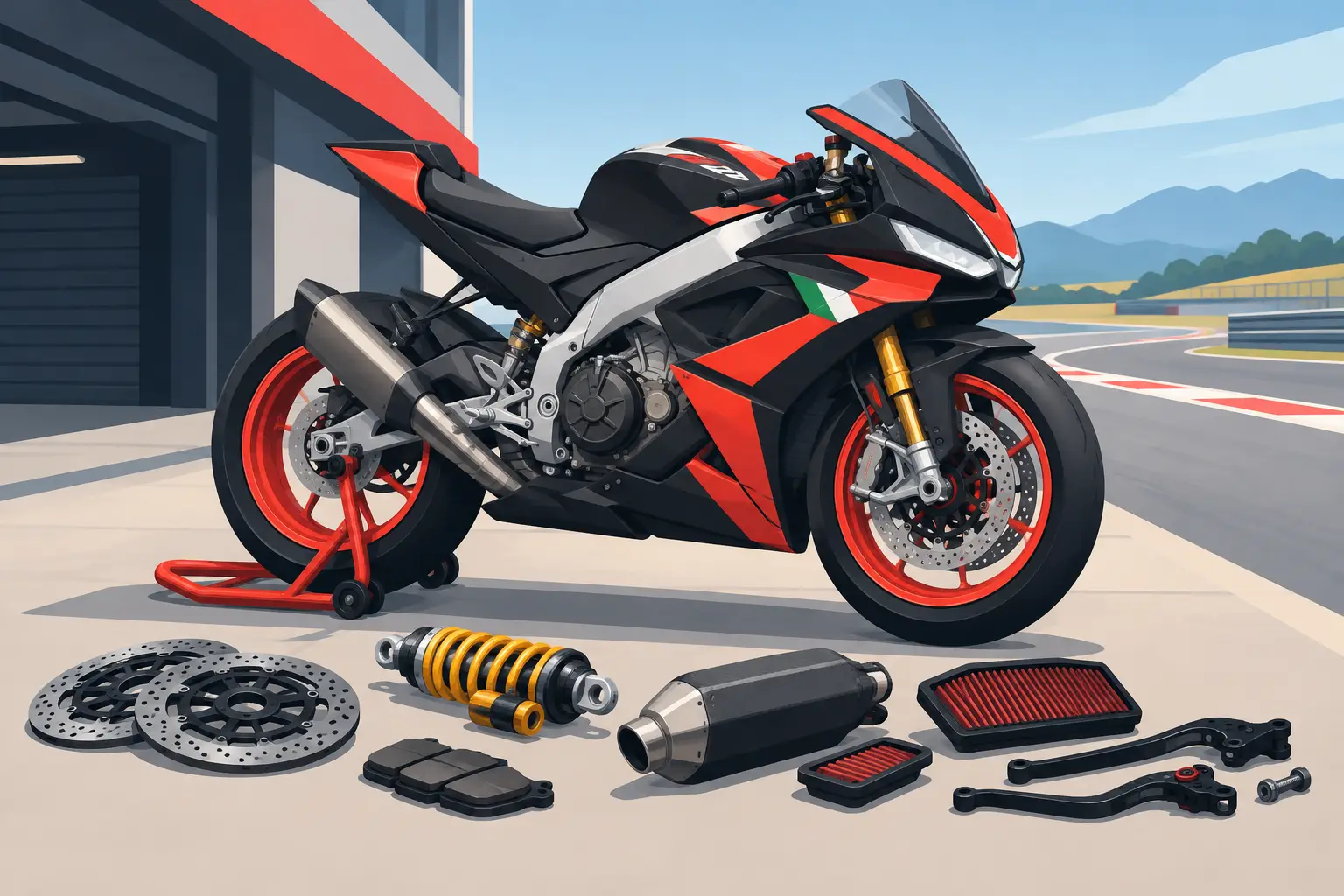
A stock Aprilia RSV4 or RS 660 is already a serious platform, but track riding exposes the limits that street development has to accept: lever feel after repeated hard braking, body position under load, heat management, and the cost of a minor slide. The right aprilia track bike upgrades do not come from adding parts at random. They come from building a controlled, reliable package around your pace, tire choice, track conditions, and class rules.
For most riders, the smartest first move is not peak horsepower. It is predictable braking, secure rider contact, and a setup that can survive full track days without consuming expensive OEM parts. Start where confidence and consistency are gained, then move toward the upgrades that sharpen lap time as your riding and data demand more.
Start With the Parts That Improve Control
A fast Aprilia needs a rider who can brake late, release the lever cleanly, and hold a repeatable line. That makes braking components, rearsets, and controls the foundation of a proper track build.
High-performance brake pads should match the temperature range and feel you need. A true race compound can provide stronger initial bite and better consistency during long sessions, but it may need heat before it performs at its best. Track-day riders who ride in mixed conditions may prefer a compound with a broader working range. Fresh high-temperature brake fluid and properly serviced calipers are mandatory before judging whether more expensive hardware is necessary.
A quality master cylinder is one of the most noticeable upgrades on a hard-ridden Aprilia. It can deliver a firmer lever, more precise pressure control, and better confidence when trail braking into a fast corner. The trade-off is setup sensitivity. Lever ratio, lever position, pad compound, rotor condition, and line routing all affect the final feel. Install the system carefully, bleed it thoroughly, and give yourself time to adapt.
Steel braided brake lines reduce expansion under pressure and make lever response more consistent. They are a practical reliability upgrade for a bike that sees repeated heat cycles. If your lines are aging or you are converting a street bike into a dedicated track machine, fitment-specific lines are a sensible place to eliminate uncertainty.
Rearsets matter for more than ground clearance. Adjustable foot controls let you place your feet and knees where they support your body position instead of fighting it. On an RSV4, a higher and farther-back position can increase clearance at deeper lean angles, but an extreme setting can make braking and shifting less natural. On an RS 660, rearsets can transform a street-oriented riding position into one that gives the rider more room to move. Set them for control first, then adjust for clearance.
Clip-ons, race throttles, and race switches complete the rider interface. A shorter-throw throttle can reduce wrist movement at wide-open throttle, while race switches clean up the bar area and remove street functions you no longer need. Neither is automatically faster, but both can make a track-focused cockpit more direct and easier to operate with gloves on.
Aprilia Track Bike Upgrades for Braking and Chassis
Suspension is where an Aprilia becomes either planted and precise or nervous and inconsistent. Before replacing components, establish a baseline. Confirm that the fork and shock are serviced, springs are appropriate for rider weight and pace, sag is set correctly, and damping settings are recorded. Many riders spend heavily on engine parts while riding around worn fluid, incorrect springs, or a rear shock that cannot control tire load.
If the stock suspension cannot deliver the support or adjustment range you need, upgraded cartridges, forks, or a race shock can make a substantial difference. The goal is not a stiff motorcycle. The goal is a chassis that stays composed when you transition from full braking to corner entry, holds geometry through the apex, and drives without excess squat or wheelspin.
Suspension changes should be made with tire data in mind. Tire wear tells a useful story, but only when pressures, warmers, ambient temperature, pace, and settings are all considered together. A torn rear tire is not always a damping problem. It may involve pressure, tire temperature, geometry, or throttle application. Work with a knowledgeable suspension technician and change one variable at a time.
Steering dampers deserve the same measured approach. A quality adjustable unit can improve confidence over bumps, curbs, and hard acceleration zones, particularly on high-power RSV4 builds. Too much damping can make turn-in heavy and hide useful front-end feedback. Use only enough control to settle unwanted movement.
Protect the Bike Before Adding Power
A dedicated track machine will eventually touch down. Protection is not a cosmetic purchase. It keeps a low-side, paddock mishap, or off-track excursion from becoming an expensive repair that ends the weekend.
Prioritize case covers, frame and axle protection, and race bodywork that is designed for fast access and repair. Engine case covers are especially valuable because they protect vulnerable magnesium or aluminum covers from abrasion. A small crash can otherwise turn into an oil-loss issue, a damaged engine cover, and a missed event.
Race fairings reduce the cost of replacing premium street panels and remove unnecessary headlights, brackets, and road equipment. Fit quality matters. Poorly molded bodywork adds stress, complicates maintenance, and can require more modification than expected. Choose panels intended for your exact model and year, then plan the installation around quick-release hardware and safe wire routing.
A race-grade radiator guard can help defend against track debris, but airflow must remain a priority. Aprilia V4 engines create serious heat during slow pit-lane operation and hot summer sessions. Cooling upgrades should be selected based on actual need, especially if the engine has been tuned or the bike is used in endurance conditions. Monitor temperatures before assuming a larger component is the answer.
For a track-only build, remove or secure anything that can create a failure point. That includes unneeded street hardware, loose brackets, and fluid caps that are not properly safety wired where regulations require it. Always check the rulebook for the organization and class you run. What is acceptable at an open track day may not pass technical inspection in club racing.
Add Electronics and Engine Parts With a Clear Goal
The RSV4 has powerful OEM electronics, and the RS 660 also provides a capable modern rider-aid package. Before changing ECU calibration or traction-control settings, learn how the stock system behaves at your pace. A rider who does not understand when traction control intervenes cannot make an informed decision about reducing intervention or adding a race calibration.
A properly developed ECU tune can improve throttle response, optimize fueling for a full exhaust system, remove restrictions intended for street compliance, and calibrate engine-braking behavior. It should be treated as part of a system, not a standalone horsepower purchase. Intake changes, exhaust configuration, fuel quality, and engine condition all affect the result.
A high-flow race air filter can be a practical service item and performance component, particularly when paired with correct fueling. The benefit comes from supporting the complete intake and tuning package, not from expecting a filter alone to transform acceleration. Use filters designed to seal correctly in the Aprilia airbox. A poorly seated filter is not a performance upgrade.
Slipper clutches and advanced clutch components are valuable when aggressive downshifts unsettle the rear tire. On a motorcycle already equipped with a slipper function, aftermarket options can offer improved adjustment, durability, or feel under race use. The investment makes the most sense for riders who are consistently loading the rear tire at high entry speeds, not for a bike that still needs baseline brake and suspension work.
Build in the Right Order
A disciplined purchase order protects your budget and makes every modification easier to evaluate:
- Service the motorcycle completely, set tire pressures, and establish baseline suspension settings.
- Improve brake fluid, pads, lines, and rider controls before chasing engine output.
- Add rearsets, protection, and track bodywork to improve position and reduce crash costs.
- Upgrade suspension when springs, service, and adjustment cannot meet your pace.
- Add ECU, intake, exhaust, and clutch components as a matched performance package.
This order is not absolute. A racer entering a class with mandated safety equipment may need bodywork and safety wire immediately. A rider on tired stock suspension may need springs and service before anything else. The point is to spend according to the limitation you can identify, not the part that generates the biggest claim.
Fitment is equally critical. Aprilia model families can share visual similarities while using different mounting points, electronic systems, brake configurations, and engine layouts. Confirm the exact model, model year, and current modifications before ordering. AXF Race Parts focuses on fitment-based access to premium race components, helping riders narrow the search without compromising on race-ready quality.
The best track bike is not the one with the longest parts list. It is the Aprilia that brakes the same way every session, gives clear feedback at lean, survives hard use, and lets its rider focus on the next braking marker. Build that foundation first, then let your lap times tell you what the bike needs next.