

Ducati V4 Brake Upgrade Case Study

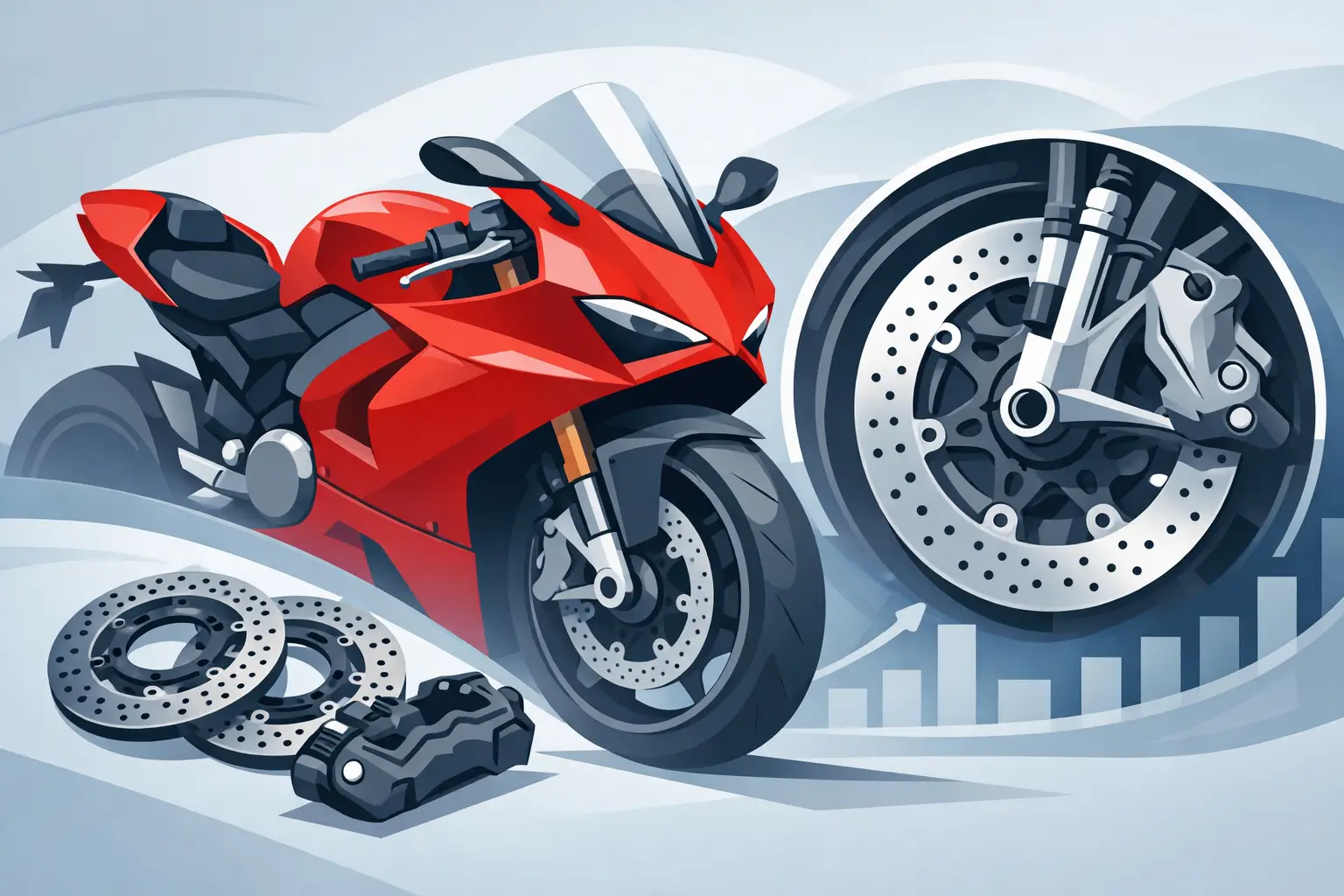
The stock Ducati V4 braking package looks serious on paper, and for many riders it is. Then the pace comes up, braking markers move deeper, and the real questions start. This Ducati V4 brake upgrade case study looks at what changes when a fast track rider pushes the system hard enough to expose lever travel, heat buildup, and inconsistency over a full session.
The point is not to claim every V4 needs the same fix. It does not. A street rider, an occasional track-day rider, and a racer running repeated late-brake entries will stress the bike in very different ways. What matters is matching the upgrade path to the actual problem instead of throwing expensive parts at a setup that may only need better fluid, race pads, or a cleaner hydraulic package.
Ducati V4 brake upgrade case study – the baseline
The bike in this case is a Ducati Panigale V4 used primarily for track days with lap times at the sharp end of advanced group pace. The rider reported strong initial bite and plenty of stopping power for the first few laps, followed by a lever that gradually came back farther to the bar. It never fully disappeared, but consistency dropped off enough to change braking points and reduce confidence on corner entry.
That detail matters. Peak stopping force was not the complaint. Repeatability was. On a modern superbike, those are two different conversations.
The original setup included stock calipers, stock master cylinder, OEM-style lines, a street-leaning pad compound, and fluid that had seen mixed road and track use. Tires, suspension, and geometry were already sorted, so the rider could isolate the issue to the braking system with reasonable confidence. There was no crash damage, no obvious mechanical fault, and no rotor warping. The weak point was thermal management and feel once the session built heat.
What the rider actually wanted
Most riders say they want more braking power. In practice, they usually want three things – a firmer lever, less fade, and more confidence releasing the brake into the corner. The Ducati V4 already makes enough braking torque to overwhelm front tire grip if the setup is wrong. Adding more bite without improving control can make the bike worse, not better.
For this case, the target was simple. Keep the initial response strong, reduce lever growth after repeated hard stops, and sharpen modulation in the last part of trail braking. That points toward a system upgrade, not just a single part swap.
Stage one – fluid, pads, and lines
The first step was the most cost-effective one. Fresh high-temperature racing brake fluid went in, the system was bled carefully, and the bike was fitted with a track-focused pad compound and braided steel lines. This is the point where some riders find the problem is largely solved.
The result was meaningful but not final. Initial lever feel improved immediately. The first half of the session felt cleaner, with a more direct connection between hand pressure and deceleration. Pad choice also changed the character of the brake entry, giving the rider a stronger and more predictable bite with less vague response at first lever application.
By the end of a hard session, though, the lever still moved more than the rider wanted. Not dramatically, but enough to confirm the issue was deeper than fluid condition or casual pad selection. Stage one was worth doing because it removed the obvious weak links and created a better baseline. It also prevented the next upgrades from masking basic setup problems.
Stage two – master cylinder upgrade
This was the turning point. The bike moved to a premium radial brake master cylinder with a ratio suited for track use. On the V4 platform, this changes more than feel at the lever. It changes how clearly the rider can load the front tire and how accurately pressure can be held at maximum braking.
The difference was immediate. Lever travel shortened, feedback sharpened, and the rider could brake later with less second-guessing. Just as important, the release phase became easier to control. That matters on a V4 because the bike rewards aggressive corner entry, but only if the front end stays settled while trail braking.
There is a trade-off here. A more race-oriented master cylinder can feel less forgiving on the street, especially in cold conditions or at lower speeds where a softer initial response is easier to live with. For a track-focused rider, that trade is usually worth it. For a rider who spends most of the bike’s life on the road, it depends how much sharpness they really want.
Stage three – rotor and caliper considerations
Rotors were the next question, but not the first mandatory answer. A lot of riders jump straight to rotors because they are visible and easy to market. In reality, the need depends on pace, heat load, and what the stock hardware is already doing.
In this case, the stock rotors remained serviceable, but the rider wanted more thermal stability and a stronger sense of consistency over repeated sessions. Upgrading to high-quality performance rotors improved heat handling and reduced the subtle drop in feel that still showed up late in the day. The gain was not as dramatic as the master cylinder change, but it was real.
Calipers are similar. If the stock calipers are in good condition and paired with the right pads, fluid, and master cylinder, they may be enough for many advanced riders. Replacing them makes the most sense when the bike is seeing genuine race pace, the rider wants every available advantage, or the current units are simply not delivering the stiffness and feel expected from the rest of the package.
That is the honest version of a Ducati V4 brake upgrade case study. Not every expensive part belongs in the first round.
The setup details that changed the outcome
Brake upgrades do not work in isolation. Pad bedding, proper bleeding technique, rotor condition, caliper cleanliness, and lever adjustment all affect the final result. Even front suspension setup plays a role. If the fork is diving too quickly or riding too low under load, riders often blame the brakes for a control problem that starts with chassis balance.
On this V4, a small change to front-end setup helped the upgraded braking system work better. Once the rider had a firmer, more stable lever, it became easier to identify how much fork support was needed under heavy braking. The bike held its attitude better into turn entry, and the rider could carry the brake longer without upsetting the chassis.
That is worth stressing because it changes buying decisions. If the bike feels unstable under braking, the best next part may not be the most expensive brake component. It may be the right pad, a fresh bleed, or suspension tuning that allows the braking package to do its job.
What delivered the biggest gain
If this case is broken down by value, the best gains came from fluid, race-capable pads, braided lines, and then the master cylinder. Those changes transformed confidence per dollar more effectively than chasing calipers first. Rotors added another layer of consistency, especially for a rider doing repeated hard sessions in warm conditions.
The full package made the bike faster because it made the rider more certain. Braking performance is not just about shorter stopping distance. It is about hitting the same marker lap after lap, carrying controlled pressure to apex, and knowing the lever will feel the same on lap two and lap twelve.
Who should upgrade and who should leave it alone
If your Ducati V4 lives mostly on the street, and the stock brakes feel strong, immediate, and stable, you may not need a major overhaul. Better fluid and a pad compound matched to your riding style may be enough. If you are doing regular track days, especially in advanced pace groups, the case for upgraded lines, high-temp fluid, and a stronger master cylinder gets much easier to make.
For racers and very fast track riders, consistency under heat is the real threshold. Once lever growth starts changing your braking points or your willingness to trail brake, you are already paying for the limitation in lap time and control. That is when the system needs to step up.
A fitment-correct package from a specialist source matters here. The V4 platform deserves components selected for actual use, not guesswork based on brand name alone. AXF Race Parts serves that part of the market well because the buying path is organized around the bike, the category, and proven performance brands rather than generic universal choices.
The best brake upgrade is the one that solves the problem you can feel at the lever and see on track. If your Ducati V4 is asking for more consistency, start with the basics, upgrade the control point, and let the lap data – and your braking markers – tell you what comes next.