

How to Choose Brake Pads for Track and Street

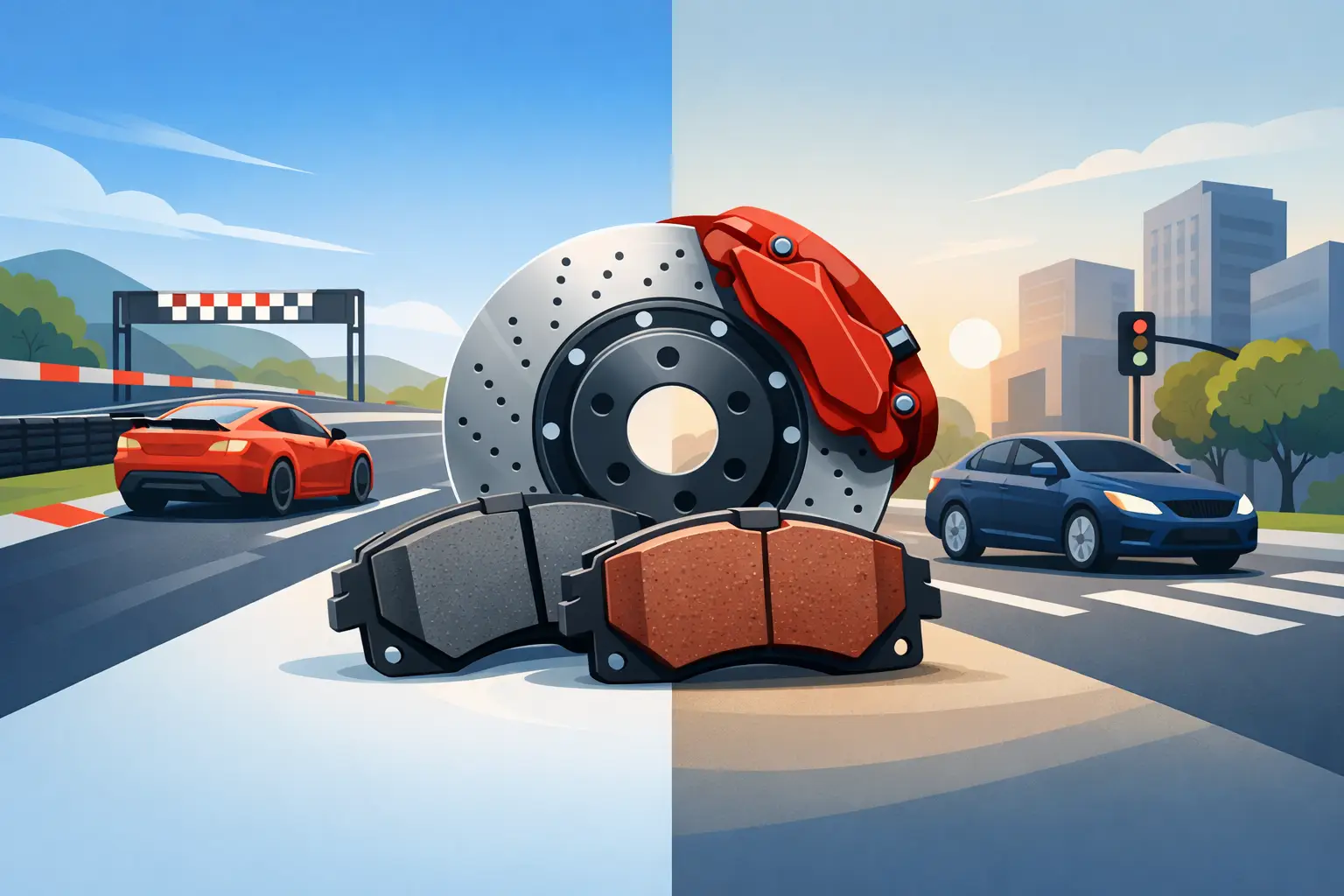
Brake pads are one of the few upgrades that can immediately change how hard you can brake, how consistently the lever feels, and how much confidence you carry into a corner. Knowing how to choose brake pads means looking beyond a brand name or a friction rating. The right pad must match your motorcycle, rotor material, riding pace, caliper setup, and the temperatures your braking system actually sees.
A pad that feels excellent on a canyon ride may fade during a fast track session. A full race compound may deliver massive bite at temperature but feel wooden during a cold morning commute. Choose for the job your bike does most often, not the most aggressive product description on the shelf.
How to Choose Brake Pads by Riding Purpose
Start with an honest assessment of where and how you ride. Street, track-day, and race use place very different demands on a brake pad.
For performance street riding, you need predictable cold response, good wet-weather behavior, reasonable rotor life, and enough thermal capacity for repeated hard braking. A quality sintered street or street-performance pad is usually the right direction for a modern sport bike. These pads build heat quickly, offer strong initial bite, and remain practical when the bike sits overnight or sees mixed conditions.
Track-day riders need more heat resistance and better consistency as braking zones get shorter and sessions get faster. A track-focused sintered or racing street compound can be a strong compromise, especially for riders who still ride to and from the circuit. Expect more dust, more noise, and potentially faster rotor wear as the compound becomes more aggressive.
For dedicated race bikes, choose a true race compound designed to operate in high temperatures. These pads are built for repeated high-energy stops, firm lever feel, and stable friction late in a session. The trade-off is real: race pads may need heat before they perform at their best, can be harder on rotors, and are not always the best choice for wet roads or low-speed street use.
The fastest rider in your group does not automatically need the most extreme pad. If you are still building braking technique, a predictable pad with a broad operating range can help more than an ultra-aggressive compound that changes feel with temperature.
Understand Brake Pad Compounds
The compound determines how the pad creates friction, handles heat, and wears against the rotor. Product names vary by manufacturer, but most motorcycle pads fall into a few useful categories.
Organic and semi-metallic pads
Organic pads use friction materials bonded with resin. They are often quiet, gentle on rotors, and capable of good initial feel at lower temperatures. They can suit lighter motorcycles, older machines, casual street use, and riders who prioritize smooth modulation over maximum braking force.
Their limitation is heat capacity. Under repeated heavy braking, organic pads can fade more quickly than sintered or race compounds. They are generally not the first choice for a fast sport bike used at track days.
Sintered pads
Sintered pads use metallic particles fused under heat and pressure. They are durable, work well across a wide temperature range, and handle wet conditions better than many organic compounds. That makes them a standard choice for performance street motorcycles and many track-day builds.
Not every sintered pad has the same character. Some are tuned for long life and street versatility, while others deliver sharper initial bite and higher heat resistance. Read the intended-use description rather than treating “sintered” as a complete performance rating.
Race compounds
Race pads are designed around high-temperature stability. They are commonly used with high-spec calipers, stainless steel rotors, race tires, and braking systems that see repeated maximum deceleration. Their advantage is consistency: as rotor and pad temperatures rise, a properly matched race compound should maintain reliable friction and a controlled lever.
The compromise is cold performance and maintenance. Some race pads can squeal, produce significant dust, and wear rotors faster. They also reward riders who bed them in correctly and inspect their braking components between events.
Match the Pads to Your Rotors and Calipers
Correct fitment is non-negotiable. Motorcycle brake pads can look similar while using different backing plate shapes, locating tabs, thicknesses, and retaining-pin positions. Confirm the exact year, make, model, and caliper specification before ordering. This matters even more on motorcycles with model-year changes, upgraded forks, radial calipers, or aftermarket brake conversions.
Rotor compatibility matters just as much. Most high-performance sport bikes use stainless steel rotors, but cast iron and specialty rotor materials require compounds approved for that application. Do not assume a race pad suitable for stainless rotors is compatible with every rotor on the market. An incorrect pairing can accelerate wear, reduce feel, or damage a premium rotor.
Also account for your complete front-end setup. A motorcycle with dual front discs needs pads for both calipers. If one caliper is fitted with a different compound, or if one side has substantially more wear, braking can become inconsistent. Replace pads as an axle set unless you are diagnosing a specific mechanical issue.
Before installing new pads, inspect the rotors for grooves, cracks, bluing, excessive runout, and thickness below the manufacturer’s service limit. Fresh pads cannot correct a damaged or worn-out rotor.
Choose the Feel You Want at the Lever
Maximum friction is only part of braking performance. Lever feel and modulation determine whether you can use that friction precisely at the limit.
Initial bite is the response you feel when you first apply the lever. A high-bite pad can make a bike feel more immediate and aggressive, which may help in hard braking zones. Too much initial bite, however, can make trail braking harder for some riders, particularly on a light chassis or a bike with a sensitive master cylinder.
Modulation is the pad’s ability to deliver controlled changes in braking force as you add or release pressure. Many experienced track riders value predictable modulation over a dramatic first bite because it helps them carry brake pressure deeper without upsetting the chassis.
If your lever feels soft or inconsistent, do not assume pads are the only cause. Old brake fluid, air in the system, worn rotors, sticking caliper pistons, glazed pads, or an unsuitable master cylinder can all affect feel. Pads are a key part of the system, not a substitute for maintenance.
Consider Temperature Range and Fade Resistance
Brake fade is not one single problem. Pad fade occurs when the friction material overheats and loses effectiveness. Fluid fade happens when brake fluid gets too hot, creating a spongy lever. Rotor heat can also affect pad behavior and contribute to vibration or uneven deposits.
A pad’s operating temperature range should suit your real use. If you complete 20-minute sessions on a high-speed circuit, brake deep into corners, and run sticky track tires, prioritize a compound with serious heat capacity. If your bike sees short spirited rides and regular street mileage, a broad-range street-performance pad will often deliver more usable performance.
Rider weight, motorcycle weight, track layout, speed, tire grip, and braking style all matter. A heavyweight superbike braking from high speed on a circuit with multiple hard stops generates far more heat than a middleweight twin used on flowing backroads. There is no universal “best” brake pad.
Do Not Ignore Wear, Dust, and Noise
Aggressive compounds usually ask for something in return. Higher friction and heat tolerance can mean faster rotor wear, more brake dust, and more noise at low speed. These are not necessarily defects. They are often normal characteristics of performance-oriented pads.
For a dedicated track motorcycle, quick pad wear may be an acceptable operating cost if the compound delivers stable performance when it matters. For a street bike with expensive OEM rotors, a durable sintered pad with controlled rotor wear may be the smarter investment.
Inspect pad thickness regularly, especially after track weekends. Do not wait until the friction material is nearly gone. Worn pads can overheat backing plates, damage rotors, and leave you with an unpredictable brake lever when you need it most.
Bed In New Brake Pads Correctly
Even the right compound can disappoint if it is installed and used without bedding in. Bedding transfers an even layer of pad material to the rotor and stabilizes the contact surface. Follow the pad manufacturer’s procedure where provided, as compounds can have different requirements.
In general, use a series of controlled, progressive stops to build temperature without holding the bike stationary with hot pads clamped against the rotor. Avoid immediate maximum-effort braking on brand-new pads, and avoid parking after a hard stop with the lever applied. That can create uneven deposits and contribute to pulsing or vibration.
If you are changing from one compound family to another, clean and inspect the rotor carefully. In some cases, lightly resurfacing or replacing heavily contaminated rotors is the best way to give the new compound a clean foundation.
For sport bikes built around precision and speed, brake pad selection should be treated like tire selection: match the component to the pace, conditions, and demands of the motorcycle. AXF Race Parts riders can use bike-specific fitment and intended-use details to narrow the field, then choose the compound that gives their machine the control to brake later with confidence.