
Steel vs Braided Brake Lines for Sport Bikes

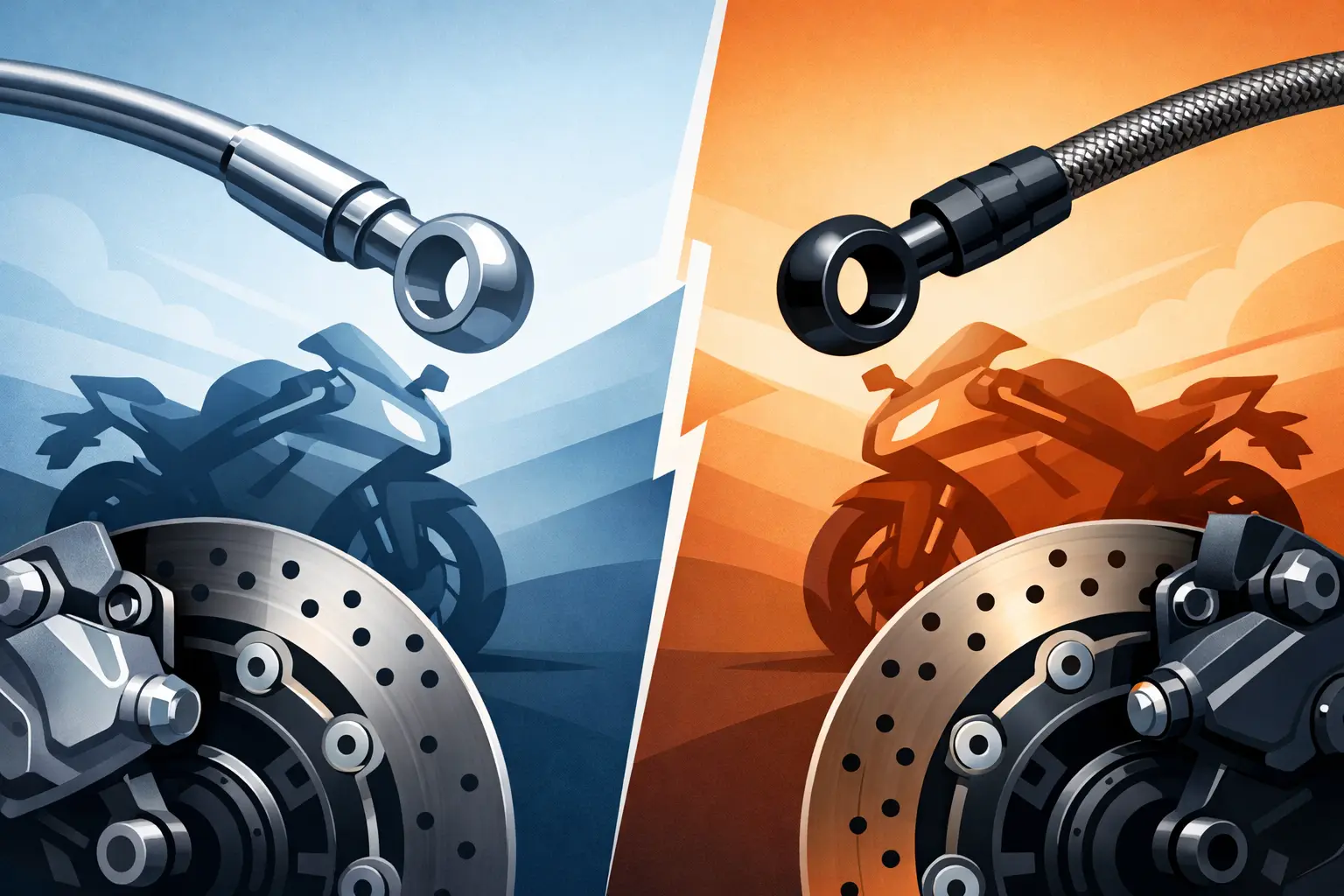
Brake feel tells the truth fast. If your lever starts getting longer after a few hard laps, or the initial bite feels less precise than the rest of the chassis, brake lines deserve a closer look. In the steel vs braided brake lines debate, the real question is not which one sounds more premium. It is which one gives your bike the consistency, feedback, and reliability your riding actually demands.
For performance riders, brake lines are not cosmetic hardware. They directly affect hydraulic stability, lever response, and confidence at corner entry. On a modern sport bike, that matters as much on a fast canyon road as it does in a race weekend.
Steel vs braided brake lines: what changes at the lever
The biggest difference comes down to expansion under pressure. Traditional rubber brake lines flex more as hydraulic pressure rises. That flex absorbs some of the force you apply at the lever, which can translate into a softer or less direct feel.
Braided stainless brake lines use an inner hose wrapped in a steel braid to limit expansion. Less expansion means more of your lever input reaches the calipers. The result is a firmer lever, more immediate pressure build, and better consistency when braking loads increase.
That does not automatically mean stock-style rubber lines are bad. On many street bikes, they are tuned to deliver a smoother, slightly more forgiving feel. For commuting or casual riding, that can be perfectly acceptable. But once pace goes up, heat builds, and braking zones get shorter, the limits show up quickly.
Why braided lines are standard on serious track builds
Track riding exposes weak points faster than street use. Repeated heavy braking generates heat in the fluid, calipers, pads, and surrounding components. As temperatures rise, line expansion becomes more noticeable. A bike that felt fine in session one may feel vague by session three.
Braided lines help control that variable. The more stable the line, the more repeatable the lever. That repeatability matters for trail braking, brake release timing, and rider confidence when grip is already being managed at the limit.
For club racers and advanced track-day riders, braided stainless lines are less of an upgrade and more of a baseline. They tighten lever feel, support better modulation, and reduce one of the common causes of an inconsistent front end under braking.
Rubber brake lines still have a place
It is easy to treat this as a one-sided comparison, but that misses how bikes are actually used. A street rider on a newer sport bike may not immediately notice a dramatic difference if the stock system is fresh, properly bled, and in good condition.
Rubber lines are also cheaper and often quieter in terms of maintenance demands. They generally come installed from the factory, fit cleanly with OEM routing, and are designed around mass-market durability standards. For everyday riding, especially at moderate pace, they can do the job.
The issue is that rubber lines age. Over time, heat cycles, UV exposure, moisture, and general wear reduce performance. Even if they do not fail, they can feel less crisp as the bike gets older. That is usually when riders notice a lever that feels spongier than it should, even after a fresh bleed.
Performance differences that matter on sport bikes
On a high-performance motorcycle, braking is not just about stopping distance. It is about control while the chassis is loaded. That is where braided lines make the strongest case.
The first gain is lever firmness. A firmer lever gives clearer feedback, which helps you judge how much tire and braking force you are using. The second is modulation. Because the system responds more directly, it is easier to make smaller, cleaner pressure adjustments. The third is consistency under heat. That becomes especially important for heavier riders, faster groups, race tires, and upgraded calipers or master cylinders.
If you have already upgraded pads, fluid, or a master cylinder and the bike still feels less precise than expected, brake lines are often the missing piece. A stronger hydraulic system only performs as well as the least stable component in the circuit.
Steel vs braided brake lines and durability
Braided stainless lines are built for harsher use, but durability depends on quality, routing, and installation. A good braided kit resists swelling, handles heat well, and holds performance over time better than rubber. That is why they are common on race-prepped motorcycles and premium aftermarket brake packages.
That said, braided lines are not indestructible. Poor routing can create chafing. Low-quality fittings can leak. Cheap kits with inconsistent tolerances can create more problems than they solve. This is one of those areas where buying by price alone usually backfires.
Rubber lines can last for years, but they are more vulnerable to age-related degradation. If your bike is older, still on original lines, and used aggressively, replacement is maintenance as much as performance work.
Installation and fitment are not minor details
Brake line performance means very little if fitment is wrong. Length, banjo angle, ABS compatibility, caliper configuration, and routing all matter. A universal-looking solution is rarely the best solution on modern sport bikes, especially when fairing clearance and fork travel need to be considered.
This is why model-specific fitment is so important. A line kit designed around your exact bike, year, and braking layout saves time and reduces risk. On some builds, especially with aftermarket clip-ons, master cylinders, or race bodywork, line routing may need extra attention.
Installation also needs to be done correctly. Torque specs matter. Washer placement matters. Bleeding matters. If there is any doubt, treat brake lines like the critical safety component they are and have them installed by someone who knows performance brake systems.
Street rider, track-day rider, or racer?
Your use case decides the answer more than marketing does.
If the bike is mostly a street machine ridden at a moderate pace, fresh OEM-style lines can be enough, particularly on a newer model. You may still prefer braided lines for a firmer feel, but the upgrade is about refinement more than necessity.
If the bike sees regular canyon riding, fast group rides, or occasional track days, braided stainless lines make much more sense. They improve feel where pace starts exposing the limitations of stock rubber components.
If the bike is a dedicated track or race platform, braided lines should already be on the build sheet. At that point, consistency, heat resistance, and feedback are not optional benefits. They are part of a serious setup.
Are braided lines always worth it?
For performance-oriented riders, usually yes. The value is not just in raw braking power, because line changes alone do not create magic stopping force. The value is in preserving hydraulic pressure and making the system feel cleaner and more predictable.
The best way to think about it is this: braided lines do not replace good pads, fluid, calipers, or setup. They allow the rest of the system to perform with fewer compromises. On a sport bike that is already capable of serious braking loads, that improvement is easy to justify.
The exception is the rider who wants pure OEM character, has a nearly new bike, and does not push the machine hard enough to heat-soak the brakes. In that case, the performance gain may be real but not urgent.
What to look for when choosing braided brake lines
Not all braided kits are equal. Material quality, fitting finish, hose construction, and fitment accuracy separate race-ready parts from generic replacements. For sport bikes, choose lines from proven brake and performance manufacturers, with clear application data for your make and model.
Pay attention to whether the kit is intended for ABS or non-ABS bikes, whether it supports stock calipers and master cylinders, and whether routing matches your configuration. If the bike has already been modified, confirm compatibility before ordering.
This is also where a specialist retailer adds value. AXF Race Parts focuses on fitment-based performance components because braking parts are not an area for guesswork. The right line kit should fit the bike, support the build, and deliver the lever feel you are paying for.
The real answer to steel vs braided brake lines
For sport bikes, braided stainless brake lines are the stronger performance choice. They sharpen lever feel, reduce expansion, hold consistency under heat, and better support aggressive braking. That is why they are common on track bikes, race bikes, and well-sorted street builds.
Rubber lines still make sense for riders who prioritize stock feel, lower cost, or simple replacement on lightly used street bikes. But once pace increases, or the braking system becomes a tuning priority, braided lines are hard to argue against.
If your goal is more confidence at the lever and fewer compromises under load, this is one of the cleaner upgrades you can make. Better braking starts with better control, and control starts with a system that responds the same way every time.