

STM Slipper Clutch Review for Track Riders

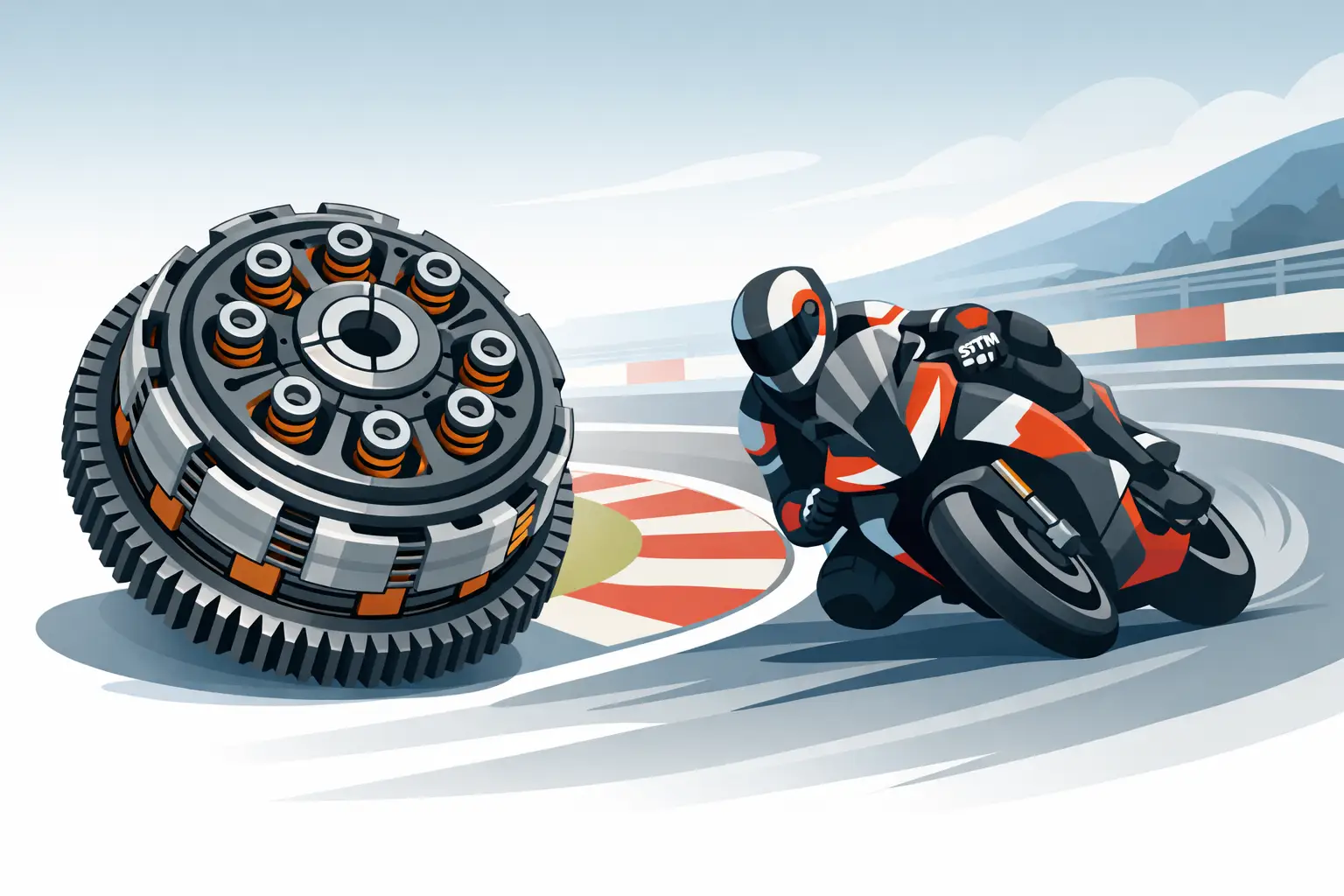
Miss a downshift marker by a bike length and dump the clutch a little too quickly into a fast corner – that is where an STM unit earns its keep. This STM slipper clutch review is written for riders who care about corner entry stability, cleaner back-torque management, and whether a premium clutch upgrade actually delivers on track.
STM has been one of the benchmark names in slipper clutches for years, especially in Ducati and high-performance sport bike applications. The reputation is not hype. These clutches are engineered for riders pushing hard into braking zones, where rear wheel chatter, hop, and unsettled chassis behavior can cost time and confidence. If your goal is smoother deceleration and more control on aggressive downshifts, STM is a serious option.
What an STM slipper clutch changes
A slipper clutch is not a horsepower part. It does not make the bike faster in a straight line, and it will not hide poor technique. What it does is manage back-torque when engine braking loads the rear tire during hard downshifts. On a stock clutch, that back-torque can overwhelm rear tire grip and upset the chassis. On an STM, the clutch partially disengages under deceleration load to reduce that effect.
The result is usually obvious from the first hard session. Corner entry feels calmer. The rear tire tracks more cleanly. The bike is less likely to hop or skip when you come down gears aggressively. Riders who brake deep and release the lever quickly tend to notice the biggest improvement.
That is the core strength of the STM design. It gives you a wider margin when you are entering a corner at pace, especially on bikes with strong engine braking or a tendency to get busy at the rear.
STM slipper clutch review: on-track feel
The best way to judge any slipper clutch is not on the workbench. It is on corner entry. STM units generally feel progressive rather than abrupt. They do not create a disconnected sensation at the lever, and they do not make the bike feel vague. Instead, they reduce the violence of poor or aggressive downshifts while preserving a direct mechanical feel.
On bikes that are known for heavy engine braking, the difference can be dramatic. The rear stays in line more consistently, which lets you focus on turn-in instead of managing instability. That matters for track-day riders building confidence and for racers trying to repeat the same braking release every lap.
Another strong point is predictability. A good slipper clutch should not surprise the rider. STM systems are generally very consistent once properly installed and matched to the bike setup. That consistency matters more than people think. A part can work brilliantly once, but if it changes behavior as temperatures rise or wear builds, it becomes a problem. STM has a strong reputation because the engagement characteristics stay controlled and repeatable.
Build quality and engineering
STM products are premium parts, and they look like it. Machining quality is excellent, tolerances are tight, and the overall finish reflects a race-focused component rather than a generic aftermarket replacement. That matters for durability, but it also matters for function. Slipper clutches depend on precise ramp angles, spring pressure, and smooth movement under load. Sloppy machining shows up quickly in performance.
The engineering detail is where STM separates itself. These clutches are designed around controlled slip behavior, not just flashy billet construction. Depending on the application, the setup may include different spring and ramp combinations that influence how aggressively the clutch reacts under deceleration. That allows real tuning potential for riders and teams who want a specific feel.
For the average performance rider, that translates into a clutch that feels refined rather than crude. For advanced users, it means the platform has enough depth to support setup changes instead of locking you into one behavior.
Installation and setup realities
This is where the review needs some honesty. An STM slipper clutch is not always a simple bolt-on-and-forget part, even when fitment is correct. Installation quality matters. Stack height matters. Plate condition matters. In some cases, setup choices matter more than the brand name on the box.
If the clutch is installed incorrectly or paired with worn friction plates, you may not get the clean, controlled action you expect. You can also create engagement issues that riders wrongly blame on the product. This is a precision component, and it deserves to be treated that way.
For experienced mechanics, race shops, and technically capable owners, that is not a downside. It is normal. But less experienced riders should know that premium clutch performance depends on proper setup. If you buy one for a race-prepped Ducati, Yamaha, BMW, Kawasaki, Honda, KTM, Aprilia, Suzuki, Triumph, or MV Agusta application, confirm the exact fitment and installation requirements before you start.
STM slipper clutch review: street versus track
STM clutches make the most sense on track. That is the blunt answer. If you ride hard on the street, you may still benefit from smoother downshift behavior, especially on powerful twins or aggressive inline-four builds. But the full value shows up in repeated heavy braking zones, rushed downshifts, and maximum corner-entry demand.
For casual street riders, the cost can be hard to justify. A stock clutch on many modern sport bikes is already good enough for normal use. If you are not entering corners with enough aggression to provoke rear tire chatter or instability, an STM may feel like an expensive refinement rather than a must-have upgrade.
For track-day riders and racers, the equation changes. Stability is speed. Stability is also less fatigue. If the bike behaves better every time you bang down gears into a technical section, you work less and trust the chassis more. That is where the money starts to make sense.
Performance trade-offs and who should buy one
The upside is clear – smoother corner entry, better rear wheel control, stronger confidence under hard deceleration, and a race-grade level of consistency. The trade-off is cost. STM is not the budget option in this category, and it is not trying to be.
There is also the reality that a slipper clutch is only one part of a braking and entry package. If your suspension is poorly set, your quickshifter or blipper is badly calibrated, or your clutch pack is neglected, you will not get the full benefit. Riders expecting the part to fix every corner-entry issue may be disappointed.
The right buyer is someone who already understands where the bike is unstable and wants a proven mechanical solution. That includes club racers, track-day riders moving into advanced pace, and performance-focused owners building a more controlled, race-ready platform. It also makes sense for dealers and race shops serving customers who want premium components with a strong track record.
Value for money
STM pricing reflects the brand position – premium engineering, race credibility, and application-specific design. Cheap slipper clutches exist, but this is one of those categories where poor quality shows up exactly when you least want it to. Under maximum braking load, a vague or inconsistent clutch is not a bargain.
That said, value depends on use case. If you spend most of your time commuting, the return is limited. If you ride expert group pace or race regularly, the cost is easier to justify because the performance gain is not theoretical. It shows up in control, repeatability, and confidence.
This is also where sourcing matters. Fitment accuracy and access to the correct model-specific parts are critical. A specialist supplier with strong brand and bike filtering is a better route than guessing through broad marketplace listings. For riders who want STM and other race-proven components in one place, AXF Race Parts fits that need cleanly.
Final verdict
STM remains one of the strongest names in the category because the product does what serious riders need it to do. It reduces rear wheel drama on hard downshifts, improves chassis composure into corners, and delivers the kind of controlled feel that matters when lap times and rider confidence are on the line.
This STM slipper clutch review comes down to a simple call. If you are a casual rider, it may be more clutch than you need. If you are a track rider, racer, or serious performance owner chasing cleaner corner entry and more consistent behavior under braking, STM is a premium upgrade with real payoff. Buy it for control, not hype – and make sure the setup is as serious as the part.