
Top Sportbike Crash Protection for Track Riders

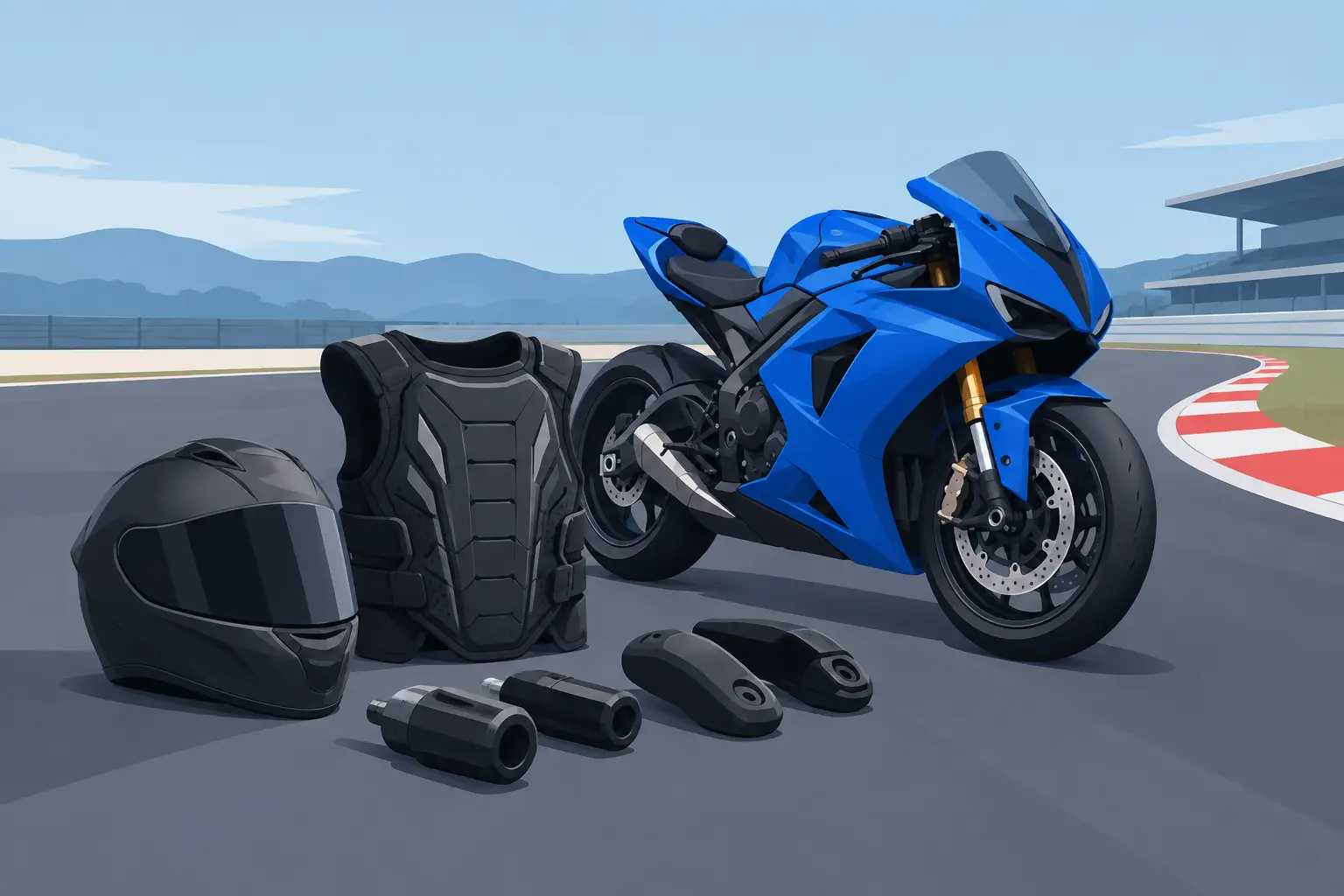
A low-side can end a track day in seconds, but the damage bill is usually decided by a few contact points: engine cases, axle ends, controls, and bodywork. The right top sportbike crash protection does not make a motorcycle indestructible. It gives expensive components a better chance of staying out of the pavement, reduces cleanup between sessions, and can keep a minor slide from becoming a race-ending mechanical failure.
For track riders and racers, protection should be selected like any other performance part: by motorcycle-specific fitment, material quality, intended use, and the compromises it creates. A slider that works well for street parking-lot drops may not be the right answer for a fully faired race bike at speed.
What Top Sportbike Crash Protection Should Protect First
Start with the parts that can turn a simple crash into an oil leak, a bent chassis component, or a lost weekend. Engine case protection sits at the top of the list because alternator, clutch, and ignition covers are commonly exposed in a low-side. Once a cover grinds through, oil reaches the track surface. That ends your session and can create a hazard for everyone behind you.
Purpose-built case covers and secondary engine protectors spread impact over a larger area and provide sacrificial material between the engine and asphalt. Look for products designed around the exact engine cover shape, bolt locations, and clearance requirements of your motorcycle. Universal protection has no place here. A cover that interferes with a fairing, exhaust routing, or shift linkage creates its own problem.
Axle sliders are the next smart investment. Front and rear axle protection helps shield fork bottoms, swingarm ends, axle hardware, brake caliper areas, and wheel spacers when the bike slides. These are relatively simple components, but they can save parts that are far more costly and time-consuming to replace. They are especially valuable on modern sportbikes with lightweight wheels and tightly packaged rear brake assemblies.
After engine and axle protection, focus on controls and bodywork. Lever guards, reinforced bar ends, and durable race fairings can reduce damage to the parts that keep a bike operable after a slide. A broken lever, crushed throttle tube, or damaged clip-on can put an otherwise healthy motorcycle on the trailer.
Frame Sliders: Useful, but Not Automatic
Frame sliders are often the first product riders buy, and for good reason. At low speed, they can keep fairings, engine cases, and frame spars away from the ground. They are also a practical choice for street-oriented sportbikes that face tip-overs, driveway mistakes, and low-speed incidents.
At higher speeds, the decision becomes more nuanced. Long, rigid sliders can catch on curbing, rough asphalt, or soft trackside surfaces. When that happens, the slider may transfer load into the mounting point rather than allowing the bike to slide. Depending on the design and crash angle, this can damage fairing stays, engine mounts, or frame areas that are much harder to repair than bodywork.
That does not mean sliders are wrong for track use. It means slider length, puck material, mounting method, and bike-specific engineering matter. Low-profile race sliders are generally designed to provide controlled sacrificial contact without projecting excessively from the chassis. For some race-prepared motorcycles, riders may prioritize case covers and axle sliders over large frame pucks.
Choose a system developed for your exact model and year. Fairing clearance is critical, particularly with aftermarket race bodywork. A kit that fits an OEM street fairing may require trimming, spacers, or a different mounting solution on a race bike.
Build Protection Around Your Riding Environment
There is no single package that suits every sportbike. A weekend canyon rider, frequent track-day rider, and club racer face different risks and different repair priorities.
For a performance street bike that sees occasional track use, a balanced setup usually includes engine case covers, modest frame sliders, front and rear axle sliders, and lever protection. This combination addresses the most common contact points without turning the motorcycle into a collection of protruding hardware.
For dedicated track bikes, prioritize race-focused case protection, axle sliders, lever guards, and durable fairings. Crash protection should work with quick service access and your paddock spares plan. If you run aftermarket rearsets, clip-ons, race controls, or a quick-turn throttle, confirm that protective components do not obstruct their adjustment range or movement.
For sprint racing and club competition, check the rulebook before buying. Some organizations require lever guards, closed belly pans, or specific containment measures. Others may restrict components that create a snag hazard. Your protection package must satisfy technical inspection as well as your own crash-prevention goals.
Material and Design Details That Matter
Crash protection is not simply a question of whether a part is made from Delrin, aluminum, or carbon fiber. The part’s shape and mounting strategy matter just as much.
Polymer slider pucks are common because they resist abrasion, slide predictably, and can be replaced after a crash. Their downside is that they are consumable. A puck may look acceptable after a slide but have heat damage, deep gouges, or compromised mounting hardware. Inspect it closely instead of assuming it is ready for another impact.
Aluminum components can offer excellent structure and a clean race appearance, but exposed aluminum can grind quickly and may transmit more shock into the assembly. It is often most effective when used as a precisely engineered bracket, base, or mounting structure rather than the primary sacrificial surface.
Carbon and composite protectors can be extremely effective over engine covers and vulnerable chassis areas when the layup, mounting, and fitment are correct. They are not all equal. A poorly fitted composite cover can trap debris, rub through adjacent components, or crack before it has done useful work.
Pay attention to hardware. Correct bolt length, thread engagement, torque specification, and spacer placement are essential. Do not substitute random hardware because it is available in the garage. Many protection systems use fasteners engineered to fail or deform in a controlled way before damaging a more valuable mounting point.
Fitment Is a Performance Requirement
A part labeled for a motorcycle family is not necessarily correct for every year, trim, or market version. Engine cover shapes, axle diameters, fairing mounts, ABS hardware, and exhaust routing can change within the same model name. This is why fitment-based shopping matters as much for crash protection as it does for rearsets or braking components.
Before ordering, verify the motorcycle’s year, exact model, and relevant modifications. Note whether it has OEM or aftermarket fairings, case covers already installed, non-stock exhaust headers, aftermarket rearsets, or a different swingarm setup. If the bike has been converted from street trim to track trim, assume clearances need to be checked rather than guessed.
AXF Race Parts organizes performance components around model-specific fitment, helping riders narrow the field before committing to race-ready hardware. That approach is particularly useful when building a complete protection package from several manufacturers.
Install for Serviceability, Not Just Appearance
Install crash protection before the first track event, not the night before. Test steering lock, suspension movement, brake line routing, clutch actuation, shift travel, and fairing clearance with the bike on stands. On a fully faired machine, remove and reinstall the bodywork after fitting case covers and sliders. If the process is difficult in the workshop, it will be worse in a hot paddock between sessions.
Use the manufacturer’s torque values and any specified threadlocker. After the first ride, inspect fasteners again. Then make protection checks part of your regular track preparation. Look for puck wear, loose hardware, cracked covers, bent brackets, and evidence that a component is rubbing under suspension compression.
Keep replacement pucks, mounting bolts, spare levers, and basic tools in the trailer or paddock box. Crash protection works best when it is treated as a system with service parts, not as a one-time cosmetic upgrade.
Buy Protection Before the First Slide
The best setup is not necessarily the one with the most visible sliders. It is the one that protects the parts most likely to stop your day, fits your exact sportbike, and matches the speed and surface conditions you actually ride. Start with engine cases and axle ends, then build outward based on your fairings, controls, race rules, and budget.
A clean, correctly fitted protection package will not change the fact that crashes happen. It can make the difference between replacing a puck in the paddock and replacing an engine cover, wheel, controls, and a full set of bodywork after the same slide.