

Track Motorcycle Setup Guide for Faster Laps

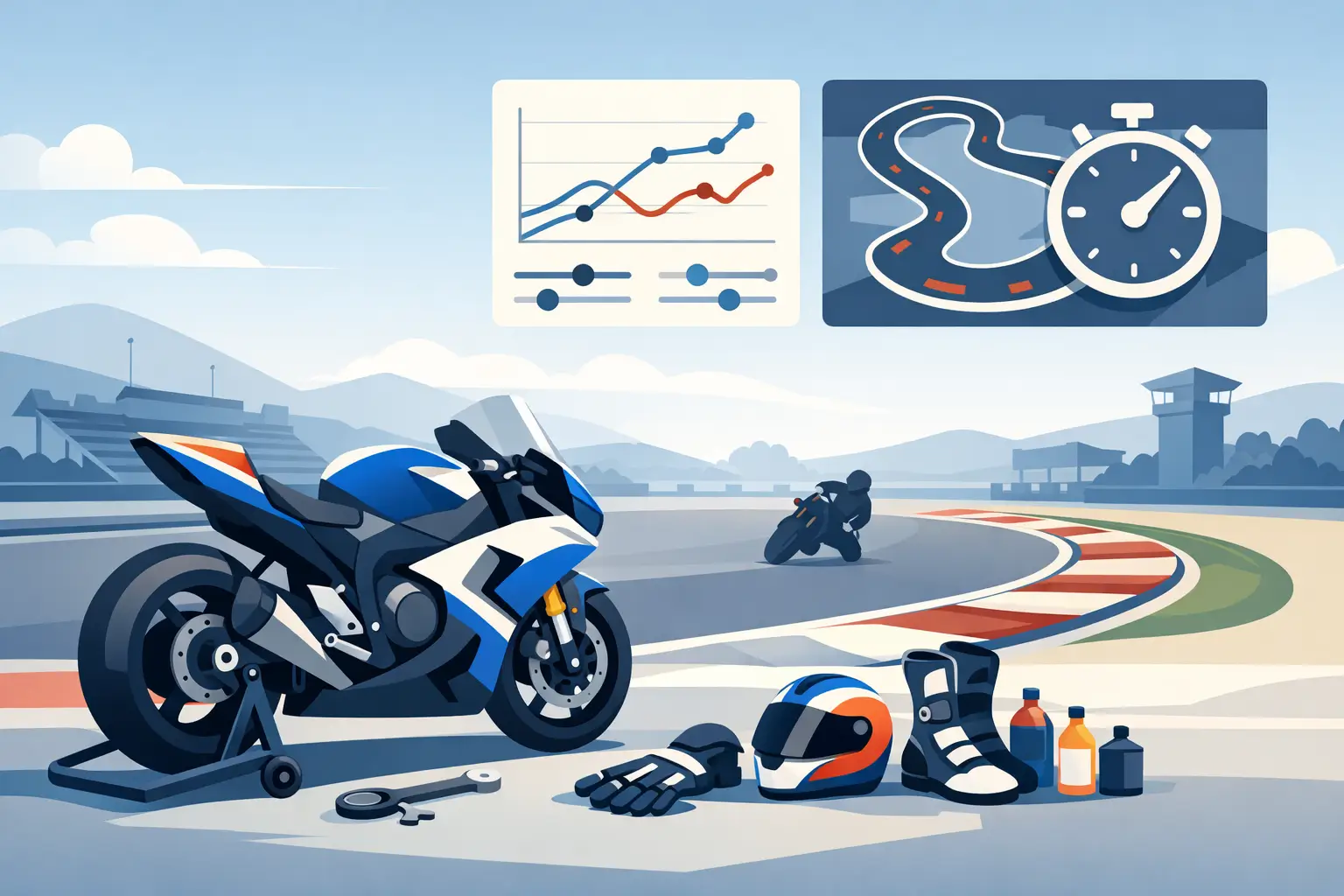
The first bad session of the day usually gets blamed on the rider. Sometimes that is true. Just as often, the bike is telling you it is not ready. A solid track motorcycle setup guide starts with that reality: if the chassis is vague on entry, the controls are poorly positioned, or the tires never get into the right window, you are working around problems instead of building speed.
Track setup is not one magic adjustment. It is a chain of decisions that affect braking stability, mid-corner support, drive grip, and rider confidence. The right setup makes the bike easier to repeat. That matters whether you are chasing lap time, managing race distance, or trying to get through a track day without wasting sessions.
What a track motorcycle setup guide should actually solve
A proper setup process should answer four questions. Is the bike stable under hard braking? Does it hold a line without excessive bar input? Can it finish the corner and drive without spinning or running wide? And are the controls positioned so the rider can do the same thing every lap?
That is why random changes rarely work. If you raise the rear ride height to get faster turn-in but the bike already lacks edge grip on exit, you may trade one problem for a bigger one. If you fit premium components but never baseline sag, lever angle, tire pressure, and geometry, you leave performance on the table.
The fastest bikes at the club and track-day level are not always the most expensive. They are usually the most sorted.
Start with the rider triangle
Before touching clickers, sort the contact points. Rearsets, clip-ons, levers, throttle feel, and seat position shape how the rider loads the chassis. If your foot position is awkward or your brake lever is too high, your body movement gets delayed. That shows up as inconsistent braking markers, poor trail braking, and missed apexes.
Rearsets should give enough ground clearance without folding the rider into a cramped position that creates fatigue. Clip-ons need to support leverage at turn-in but still leave room at full lock and full tuck. Brake and clutch levers should sit where your wrists stay neutral when you are in attack position, not where they felt fine in the garage.
This is also where race-focused hardware earns its keep. A precise throttle assembly, a firm rearset platform, and a clean switch setup reduce slop in rider input. That does not make the bike faster by itself, but it makes the rider more accurate, which is usually the real goal.
Tire pressure and temperature come before suspension
Riders often chase suspension problems that are actually tire problems. If pressures are wrong, the carcass works outside its intended range and the feedback becomes misleading. A bike that feels nervous on entry or greasy on exit may simply be running the wrong hot pressure.
Start with the tire manufacturer’s recommended hot pressures for your pace, tire model, and track conditions. Then measure consistently. Cold pressures in the paddock mean very little if you are not accounting for warmers, ambient temperature, and how hard you are riding in the first laps.
Tire warmers are not just a convenience item. They stabilize your starting point. That lets you evaluate the chassis with less guesswork. If you are serious about track consistency, they belong in the basic setup conversation along with paddock stands and a reliable pressure gauge.
Pay attention to wear, but read it carefully. Tearing can come from pressure, temperature, damping, spring rate, or surface conditions. There is no trophy for diagnosing tire wear in one sentence. When in doubt, change one variable at a time.
Track motorcycle setup guide for suspension basics
Suspension setup should begin with sag and baseline damping, not with aggressive fine-tuning. If the bike rides too low in the stroke, it will feel lazy, unstable, or harsh depending on where the problem sits. If it rides too high, grip and compliance suffer.
Set rider sag front and rear for the bike’s intended use, then confirm the springs are appropriate for rider weight and pace. If springs are wrong, clickers become a bandage. Compression and rebound adjustments only work well when spring support is in the right range.
Fork behavior tells you a lot. Excessive dive under braking can point to spring rate, oil level, geometry, or braking technique. A fork that feels harsh over bumps while still using too much travel may be under-sprung and over-damped. A rear shock that squats hard on exit and makes the bike run wide may need more support, but support can come from spring, preload, geometry, or damping depending on the package.
This is where discipline matters. Make notes after every session. One adjustment, one result. If the bike improves on entry but gets worse at apex, that is useful information. Setup is not about perfection in one pass. It is about moving the balance where the rider needs it.
Common signs and what they usually mean
If the bike resists turning, runs wide at corner exit, or takes too much effort at the bars, the chassis may be too low in the rear, too tall in the front, or simply overloaded by poor rider position. If it turns quickly but feels nervous, you may have gone too far with geometry or reduced trail too much.
If rear grip disappears when you pick up the throttle, do not assume you need softer settings. Sometimes the rear is moving too much and needs more support. Other times the issue is electronics intervention, tire pressure, or a worn tire past its useful heat cycle.
Geometry changes are powerful and easy to misuse
Ride height, fork position, wheelbase, and offset all influence how the bike rotates and how stable it feels at speed. Small changes matter. A few millimeters at the forks or rear shock can completely change corner entry and exit behavior.
Raise the rear or drop the front and the bike will usually turn more aggressively. That can help at tighter tracks or for riders who need more front-end response. The trade-off is reduced stability under braking and on fast exits. Extend wheelbase and the bike may calm down on acceleration, but it can become slower to change direction.
There is no universal fast setup. A high-speed circuit and a stop-and-go track ask for different compromises. So does a 600 versus a superbike. Power delivery, swingarm angle, tire profile, and rider style all shape what works.
Brakes, controls, and driveline matter more than most riders admit
A track bike that cannot brake consistently will never be easy to set up. Brake feel affects how the fork loads, how the rider commits to entry, and how much trail braking is possible. If the lever comes back to the bar, the system overheats, or feedback is inconsistent, fix that before chasing chassis balance.
Quality lines, race-spec fluid, properly matched pads, and dependable calipers create a cleaner signal at the lever. The same goes for a slipper clutch and quick-action throttle. These are not cosmetic upgrades. They directly affect corner entry composure and drive control.
Controls also need to survive repeated hard use. Track riding exposes weaknesses quickly. Flexible stock parts, vague switchgear, and worn pivots add friction where the rider needs precision. Product choice matters because repeatability matters.
The smart order of operations
If you want efficient progress, follow a sequence. Confirm mechanical condition first. That means no worn bearings, leaking seals, dragging brakes, damaged rotors, or tired chain and sprockets. Then set rider ergonomics, establish tire pressure with a reliable routine, and baseline sag and geometry. Only after that should you start refining damping and ride height for the track.
This is where fitment-specific sourcing saves time. Buying race parts by exact bike, model, and year prevents the usual mess of universal solutions that almost fit. For riders building or refining a dedicated track machine, that is one reason shops like AXF Race Parts are useful – the search starts with the motorcycle, not with guesswork.
Keep setup changes tied to a problem
Do not adjust the bike because somebody faster than you runs a certain number of fork lines or a certain rear ride height. Their speed, tires, spring rates, and riding load are different. Setup should solve a clear issue you can describe.
Good examples are specific. The bike chatters at maximum lean in one long corner. It pushes wide when throttle is added aggressively. It feels planted everywhere except during downhill braking. Those are workable observations. “It just feels off” is harder to build from.
When the feedback is vague, simplify. Return to known-good pressures. Remove unnecessary changes. Check that your warmers are actually bringing the tires up correctly. Verify sag did not drift after a preload change. Most setup confusion comes from changing too much at once.
A fast setup is a repeatable setup
The goal is not to build a bike that feels spectacular for one lap and difficult for the next four. The goal is to build a package that keeps working as fuel load changes, track temperature rises, and your pace improves through the day.
That usually means avoiding extremes. Slightly slower steering with strong braking support can be quicker over a race distance than a hyper-agile front end that asks too much from the rider. More rear support that protects tire life may beat a softer feel that gives up drive after a few hard laps. Fast is rarely about one dramatic trait. It is about a stable platform you can trust.
A track bike should give clear answers. When it does, the rider can focus on markers, lines, and throttle timing instead of compensating for hardware. That is where real progress starts – not with more parts for the sake of it, but with the right parts and the discipline to set them up properly.