
When to Replace Motorcycle Brake Lines: 7 Signs

A brake lever that suddenly feels longer at the end of a fast straight is not a setup detail. It is a warning. Knowing when to replace motorcycle brake lines protects lever consistency, braking confidence, and the control you need when speed rises. For sport bikes that see track days, canyon runs, or hard street miles, brake hoses deserve the same attention as pads, fluid, rotors, and tires.
When to Replace Motorcycle Brake Lines
There is no single mileage number that applies to every motorcycle. A lightly used garage-kept bike and a race-prepared machine that sees repeated heat cycles do not age their components at the same rate. The practical answer is to replace brake lines when condition, age, damage, or performance demands it.
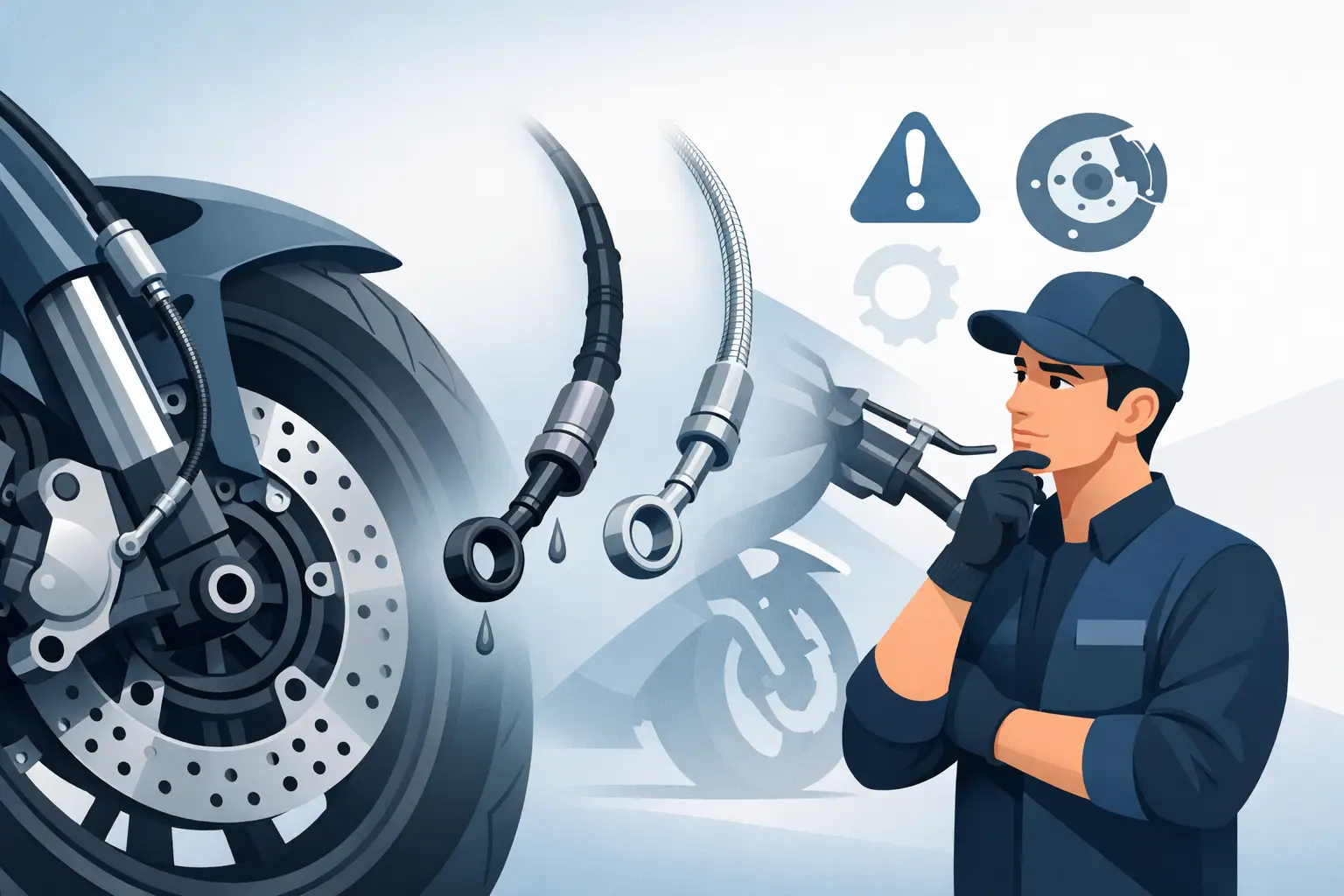
Most OEM rubber brake hoses are built for reliable street service, not unlimited life. Heat, UV exposure, moisture, vibration, road debris, and brake-fluid contamination gradually affect the hose structure. A line can look acceptable from a distance while its internal layers are deteriorating or its outer jacket is beginning to lose strength.
For a high-performance sport bike, replacing original rubber lines after roughly four to six years is a sensible preventive interval, especially if service history is unknown. Riders who push hard on track should inspect them at every major service and consider a braided stainless-steel line upgrade sooner. Age is not the only factor, but old original hoses should never be treated as permanent parts.
Replace them immediately if you see these signs
Do not wait for a scheduled upgrade if inspection reveals a clear defect. Replace the affected line or, preferably, install a complete matched kit if you find:
- Cracking, checking, fading, swelling, abrasion, or cuts in the outer hose jacket
- Dampness, seepage, or dried brake-fluid residue around banjo bolts, fittings, or crimped ends
- A hose that rubs on a fork leg, fairing stay, wheel, tire, radiator, or suspension component through its full travel
- Rusted, damaged, loose, or visibly corroded fittings and banjo hardware
- A lever that remains spongy after correct bleeding with fresh fluid and sound calipers
A soft lever alone does not automatically condemn the brake lines. Air in the system, old fluid, dragging caliper pistons, worn pads, rotor runout, or an issue at the master cylinder can produce similar symptoms. But when bleeding does not restore a firm, repeatable lever, hose expansion becomes a serious possibility.
What Brake Line Expansion Feels Like
Rubber hoses flex under hydraulic pressure. Some flex is normal, but as a hose ages and repeated heat cycles take their toll, expansion can increase. Instead of all the force at the lever being transferred directly to the caliper pistons, a portion is absorbed by the line expanding. The result is a softer feel and less precise braking feedback.
On the street, that may appear as a vague lever during a hard stop. On track, it shows up more clearly: the initial bite feels inconsistent, lever travel changes session to session, or you need more pressure to achieve the same braking force late in the day. That lack of consistency is the problem. A rider should be able to build braking pressure confidently without wondering whether the lever will travel farther on the next lap.
Braided stainless-steel brake lines reduce hose expansion and usually deliver a firmer, more direct lever. They do not create extra caliper clamping force by themselves, and they cannot fix contaminated fluid or poor maintenance. What they provide is more efficient hydraulic feel, particularly under repeated high-temperature braking.
Set a Replacement Schedule Around How You Ride
For a street motorcycle used in normal conditions, inspect brake lines at every fluid change and replace aging OEM rubber hoses before deterioration becomes visible. If the bike is more than five years old and still wears its original hoses, a careful inspection and service-history review should be on the maintenance list.
For track-day riders and club racers, use a tighter standard. Check line routing, fittings, and outer jackets before each event or during pre-event preparation. A line that was safe during a casual road ride may reveal a clearance issue under hard fork compression, heat, and full steering lock in the paddock.
Race bikes deserve a condition-based schedule rather than a guess based only on miles. Replace lines after a crash, after any contact with a sharp edge or moving component, when fittings are damaged, or when the line has been exposed to excessive heat. If a hose must be disconnected during major service, inspect sealing surfaces and hardware closely before reassembly.
Storage matters as well. A motorcycle parked outdoors, left in direct sunlight, or stored through harsh seasonal temperature swings can age rubber components faster than a climate-controlled bike. Low mileage does not always mean low risk.
Choose the Right Upgrade, Not Just Any Line
A brake line is a fitment-specific hydraulic component. Length, routing, fitting angle, banjo size, and the number of lines in the system all matter. A line kit designed for an ABS-equipped street bike may not suit a non-ABS race conversion. A kit for standard clip-on height may not have the correct routing for a bike with raised bars, altered front-end geometry, or superbike-style controls.
For performance applications, choose a quality braided line kit built for the exact motorcycle, model year, brake configuration, and intended use. Look for durable outer protection, correctly oriented fittings, quality crimps, and components engineered to clear the fork, wheel, fairing, and controls through the full range of movement.
Color and finish are secondary. A black-coated line may suit a stealth street build, while a visible stainless braid fits a race-focused look, but neither choice should override proper fitment. The best line is the one that routes cleanly, avoids tension at full steering lock, and gives the rider predictable feel under maximum braking load.
AXF Race Parts makes that selection easier by organizing premium braking upgrades around motorcycle brand, model, year, and component category. For a bike that is already running performance pads, race fluid, or upgraded calipers, a correctly matched brake line kit completes the hydraulic package instead of becoming the weak point in it.
Installation and Bleeding: Where Good Parts Can Go Wrong
Installing brake lines is not a cosmetic bolt-on job. Brake fluid damages paint and finishes, fittings must be tightened to the motorcycle or line manufacturer’s torque specification, and every sealing washer must be correct and new where required. Reusing crushed washers or forcing a fitting into an unnatural angle creates unnecessary risk.
Before filling the system, turn the bars lock to lock and compress the front suspension as practical to confirm clearance. The line must not pull tight, kink, snag, or contact the tire, rotor, or sharp hardware. Pay close attention to aftermarket clip-ons, steering stops, fairing brackets, and front-end swaps, as these modifications often change the intended line path.
Bleed the system with the brake fluid specified for your motorcycle and riding conditions. Fresh high-quality fluid is essential, but do not chase a firm lever with repeated bleeding if a mechanical issue remains. Once the lever feels solid, hold steady pressure and inspect every connection for leaks. Then perform a low-speed function test before returning to normal road or track use.
A professional installation is the right call if you are not fully comfortable with hydraulic brake service. Braking is not the system to learn by trial and error the morning of an event.
Keep Brake Feel on Your Pre-Ride Checklist
A firm lever is not proof that every brake component is perfect, but a changing lever is never something to ignore. Inspect the lines while checking pads, fluid level, rotor condition, and fasteners. When original rubber hoses are aging, damaged, or no longer delivering consistent feedback, replace them before the next hard braking zone asks more from the system than it can reliably give.