

Best Race Brake Fluid for Track Bikes

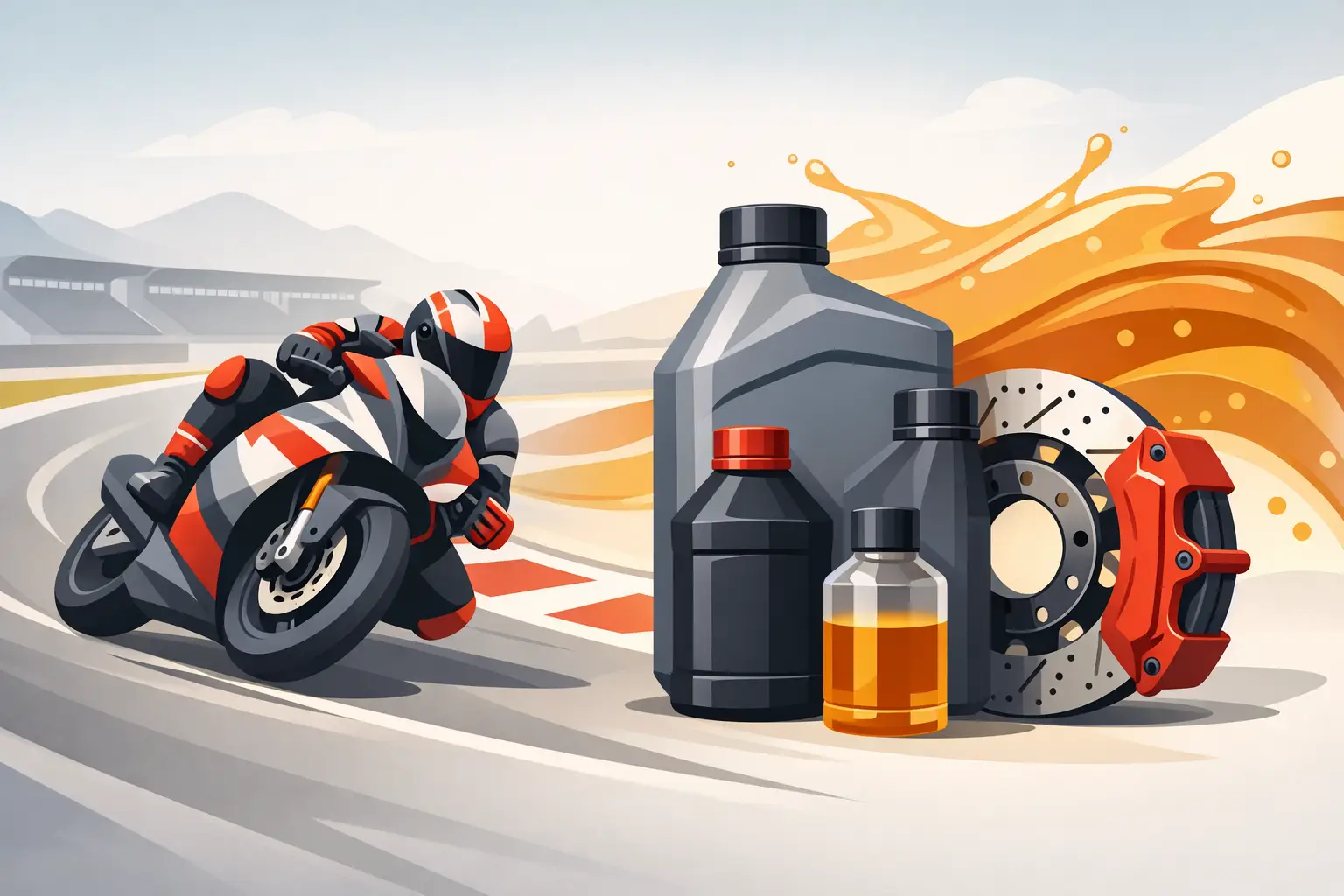
A brake lever that comes back to the bar after a few hot laps usually gets blamed on pads, lines, or caliper heat soak. Sometimes that is true. But just as often, the problem is simpler: the fluid is wrong for the job, old, or holding more moisture than the rider realizes. Choosing the best race brake fluid is less about buying the most expensive bottle and more about matching the fluid to heat load, service intervals, and how the bike is actually used.
For track-day riders and racers, brake fluid is not a background maintenance item. It is part of the braking system’s performance window. Lever feel, consistency, and fade resistance all depend on it. If your bike runs hard braking zones, high rotor temps, and aggressive sessions, fluid choice matters every bit as much as line quality and pad compound.
What makes the best race brake fluid?
At the track, the headline numbers are dry boiling point and wet boiling point. Dry boiling point tells you how the fluid performs fresh from a sealed container. Wet boiling point tells you what happens after the fluid has absorbed moisture over time. Both matter, because race bikes generate enough heat to punish a fluid long before a casual street rider would notice any weakness.
A high dry boiling point is what gets most of the attention, and for good reason. It gives the system more thermal margin when calipers and fluid temperatures spike. But wet boiling point is where the smarter comparison starts. Brake fluid is hygroscopic, which means it absorbs water from the atmosphere. As moisture content rises, boiling resistance drops. That is why a fluid that looks unbeatable on paper can feel average if it is left in the system too long.
The best race brake fluid is usually the one that keeps lever feel stable over repeated heat cycles and still gives predictable performance between service intervals. For a sprint race bike that gets frequent bleeding, a very aggressive fluid with a huge dry boiling point can make sense. For a track-day bike that may go several events between full flushes, a fluid with a stronger balance of dry and wet numbers is often the better call.
DOT 4, DOT 5.1, and what actually matters
Most serious motorcycle race applications center on DOT 4 high-performance fluid. That includes many premium motorsport fluids used in Brembo and other race-oriented brake systems. DOT 5.1 can also offer strong performance, but the label alone does not tell you enough. The real decision still comes down to actual boiling point specs, service expectations, and compatibility with your system.
DOT 5 silicone fluid is the one to avoid in this context. It is not the standard choice for modern sport bike race braking systems, and it is not what riders mean when they are shopping for high-performance race fluid.
The practical point is simple: do not buy by DOT label alone. Buy by intended use, proven heat capacity, and maintenance discipline.
Best race brake fluid means different things for different riders
A novice track-day rider on a middleweight twin does not load the brakes like an expert-level rider on a superbike with deep trail braking and late markers. Bike weight, speed, rotor size, caliper efficiency, ambient temperature, and track layout all change the fluid demand.
If the bike sees occasional track use and limited brake heat, a premium high-temp DOT 4 may be more than enough without stepping into very frequent service territory. If the bike runs expert pace, endurance stints, or repeated heavy braking on fast circuits, it is worth moving up to a more race-focused fluid and bleeding it more often.
That trade-off matters. The highest-performance fluids usually ask for more attention. They reward riders who treat brake fluid like a consumable, not a set-and-forget product.
Why expensive fluid can still feel bad
When riders say a premium fluid “didn’t work,” the issue is often contamination, trapped air, or poor bleeding technique rather than the fluid itself. A fluid with excellent specs cannot overcome a system that still has old fluid in the ABS unit, air at the banjo, or pistons pushing too much heat because the pads are dragging.
Storage matters too. Once a bottle is opened, moisture exposure starts. That does not mean opened fluid instantly becomes useless, but it does mean partly used bottles should not sit around indefinitely waiting for the next event. For race use, fresh sealed fluid is the safer move.
Heat management elsewhere in the system also changes the result. Pad compound, rotor design, caliper condition, and master cylinder setup all influence fluid temperature. If the system is overworking, even the best race brake fluid can only buy so much margin.
How to choose the right fluid for your bike
Start with the brake system and the pace. A stock supersport used for intermediate-level track days has very different needs than a fully prepped race bike running slicks and national-level pace. Riders who bleed often and want maximum resistance to vapor formation can prioritize dry boiling point. Riders who want strong performance with a bit more stability over time should pay close attention to wet boiling point too.
Next, be honest about maintenance habits. If you know the system will be flushed often, you can justify more aggressive race fluid choices. If you tend to service the bike less frequently, pick a fluid that gives you a better real-world buffer after some moisture absorption.
Finally, choose from serious motorsport brands with a proven track record in motorcycle racing. This is not the place to save a few dollars on an unknown bottle with vague claims. Braking consistency is worth more than marketing language.
Service intervals matter as much as fluid choice
Race brake fluid works best when the service routine matches the riding conditions. For hard track use, many riders bleed the front brakes before each event or after any session where the lever starts to feel less consistent. Full fluid replacement should happen regularly, not just when the fluid changes color.
Color can be misleading. Some fluid darkens from heat and contamination, but appearance alone is not a precise performance gauge. A bike can still have compromised fluid before it looks obviously bad. If the brake zone is where you gain confidence and lap time, being proactive is cheaper than rebuilding confidence after a soft-lever moment at the end of a straight.
For endurance use or especially demanding sprint setups, more frequent checks make sense. For lighter track-day duty, intervals may stretch a bit, but race-oriented fluid still deserves close attention.
Common mistakes when buying race brake fluid
The first mistake is chasing the highest number without considering use case. A fluid with a huge dry boiling point looks great in a spec sheet comparison, but if it demands constant replacement and the bike does not get that level of care, the advantage can disappear quickly.
The second mistake is mixing old and new fluid casually. Even if two fluids are technically compatible, topping off a stressed system with whatever is on the shelf is not the same as doing a proper flush. Consistency comes from a clean system with known fluid condition.
The third mistake is ignoring the rest of the brake package. If the lever ratio is wrong, the calipers need service, or the pads are outside their ideal temperature range, fluid alone will not fix the problem.
A track-focused buying mindset
The best race brake fluid is not a trophy purchase. It is a system choice. Riders who understand that usually end up with better brake feel, more confidence at corner entry, and fewer surprises late in a session.
That is why fitment-minded racers and tuners tend to buy braking components the same way they buy rearsets, controls, or electronics – by application, not hype. AXF Race Parts serves that kind of buyer. The goal is not to stock random parts. It is to make serious race-ready choices easier, whether you are building a club race bike, refreshing a track-day machine, or sourcing inventory for customers who expect proven performance.
If you are comparing fluids right now, think beyond the bottle label. Look at heat, pace, maintenance schedule, and how much braking load your bike really sees. The right fluid is the one that still gives you a firm, repeatable lever when the session gets hot and the braking markers keep moving deeper.