
Motorcycle Race Electronics Guide

Miss a shift at corner exit, fight a vague throttle on entry, or lose confidence in wet conditions, and electronics stop being a luxury fast. A strong motorcycle race electronics guide starts with one rule: buy the systems that improve control first, then add data and refinement once the bike is consistent.
For most track-day riders and club racers, electronics are not about chasing a factory-bike dashboard. They are about repeatability. Better starts. Cleaner shifts. More stable throttle input. Fewer distractions when the pace rises. The right package makes the bike easier to ride hard. The wrong package adds cost, wiring complexity, and setup headaches without a real gain.
What race electronics actually do
Race electronics sit at the intersection of rider input, engine response, and chassis behavior. Some parts directly change how the bike performs, like a quickshifter or auto blipper. Others improve rider control, like race switchgear and throttle assemblies. A third group helps you understand what the bike is doing, which is where lap timers, sensors, and data systems come in.
That distinction matters because not every rider needs the same stack. If you are still building pace and consistency, rider-control electronics usually deliver more value than a complex data package. If you already have solid pace and a clear baseline, data starts to pay off because you can identify where the bike or rider is leaving time on the table.
The fastest buying mistake is assuming more electronics always means more speed. In real racing, every added component needs to be installed cleanly, mounted securely, and configured correctly. If it creates confusion on race weekend, it is not helping.
Motorcycle race electronics guide: the upgrades that matter first
If you are building a race-prepped sport bike, start with the parts that affect your connection to the machine. A quality quickshifter is high on that list. It reduces shift interruption, helps maintain drive, and removes one more variable during hard acceleration. On many modern builds, an auto blipper adds the same benefit on downshifts, reducing chassis disturbance when you are braking deep and working through gears quickly.
Next comes switchgear. This is one of the most overlooked upgrades in the paddock because riders often focus on power before controls. Race switch assemblies simplify the cockpit, improve ergonomics, and remove road-bike clutter. The benefit is not cosmetic. It is functional. Fewer controls, cleaner access, and positive feedback matter when you are tucked in at speed or making changes in pit lane.
Throttle assemblies also deserve attention early. A race throttle can sharpen response and reduce wrist movement, which helps especially on high-horsepower bikes where precision at corner exit matters. But there is a trade-off. A more aggressive throttle ratio may feel excellent to an experienced racer and too abrupt for a newer rider or for low-grip conditions. Setup should match skill level, tire choice, and track layout.
Then there is engine management support. On some bikes, the stock ECU strategy is already strong enough for club-level use. On others, especially heavily modified builds, the stock electronics become a bottleneck. Fueling, ignition behavior, throttle translation, and compatibility with add-on systems all affect how useful an electronics package will be. There is no universal answer here. Bike platform matters.
Rider aids versus rider feel
Traction control, engine brake control, wheelie control, and launch support can make a serious difference, but only when they are calibrated to the bike and the rider. Too much intervention and the bike feels muted, slow to drive, or inconsistent from corner to corner. Too little and the system becomes expensive decoration.
This is where many riders get caught. They expect rider aids to fix setup errors, worn tires, or poor throttle habits. They will not. Electronics can support a good setup, but they rarely rescue a bad one. If the rear shock is out of balance, gearing is wrong, or tire condition is inconsistent, the intervention strategy becomes harder to read and tune.
For wet sessions or mixed grip tracks, rider aids earn their keep quickly. In dry conditions on a well-sorted bike, the gains can be smaller than expected unless the rider is already near the limit. That does not make the technology less valuable. It just means the return depends on pace, conditions, and how well the bike is already sorted mechanically.
Data systems: when they help and when they just add noise
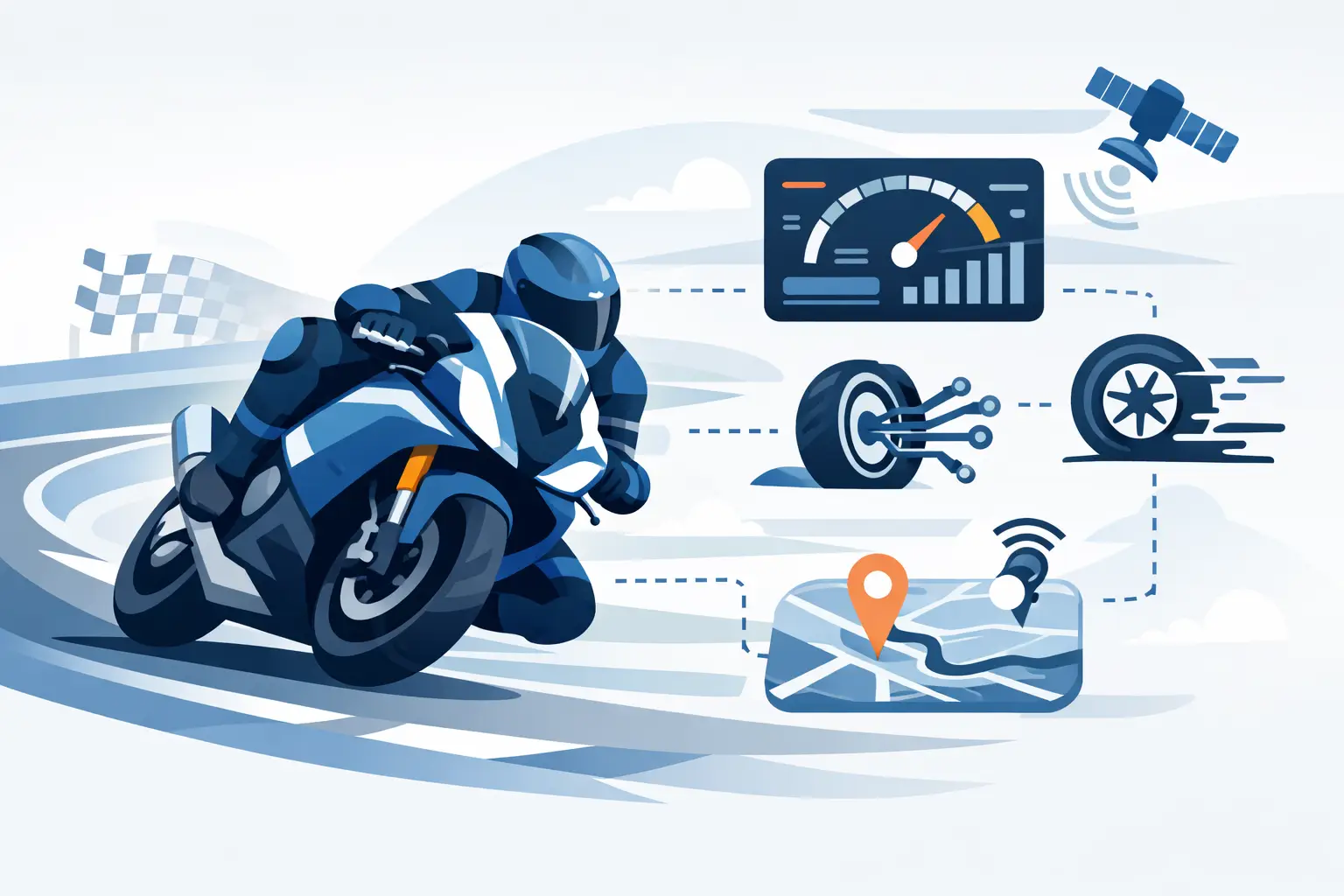
Data logging has real value, but only if someone can interpret it. A lap timer is useful almost immediately because it gives clear feedback. You know whether a gearing change, line adjustment, or suspension tweak helped. Once you move into full data systems with GPS, RPM, throttle position, brake pressure, wheel speed, or suspension travel, the value becomes more specialized.
For a serious racer, data shows where time is gained or lost and whether the rider is using the bike effectively. For a casual track-day rider, too much data can become noise. If you are not reviewing it with purpose, it is easy to spend money collecting information that never changes your setup or riding.
A better approach is staged growth. Start with reliable lap timing. Add key channels when you have a reason. If you are trying to solve corner-entry instability, brake trace and speed data make sense. If starts are the issue, launch and RPM analysis may matter more. Build the system around actual questions, not around what looks impressive on the dash.
Fitment, compatibility, and why brand-specific matters
Electronics are not a generic category. Connectors, ECU architecture, mounting points, and software behavior vary by manufacturer and model year. A Yamaha R1, Ducati Panigale, BMW S 1000 RR, Kawasaki ZX-10R, and Honda CBR1000RR all present different compatibility questions. Even within the same platform, generation changes can affect harness routing, sensor input, and whether a plug-and-play part is truly plug-and-play.
This is why fitment-first buying matters. A premium electronics component is only premium if it works correctly on your exact bike. Clean integration saves time in the shop, reduces troubleshooting at the track, and lowers the chance of intermittent faults caused by adapters or improvised wiring.
It is also worth looking at system logic instead of only the spec sheet. Some components are best used within the same brand ecosystem because communication and installation are simpler. Others pair well across brands if the installer understands the platform. The point is not loyalty to one logo. The point is building a package that behaves predictably.
Choosing electronics for your type of riding
A track-day rider usually benefits most from quickshifter support, race switchgear, and a throttle upgrade before stepping into more advanced control strategies. Those parts improve feel and reduce workload without demanding a major tuning process.
A club racer often needs a broader package. Downshift support, improved engine management, and selective data channels become more valuable because race pace exposes small weaknesses. The rider is also more likely to benefit from testing changes and reviewing outcomes with discipline.
A dealer, tuner, or team member should look beyond individual parts and evaluate serviceability. How easy is the system to diagnose between sessions? Are replacement components available quickly? Does the layout support clean routing on a race fairing stay or custom cockpit? Racing punishes fragile installs.
Motorcycle race electronics guide: how to buy without wasting money
Buy in sequence, not all at once. Start with the electronics that improve direct rider control and reduce missed inputs. Then evaluate whether the bike needs deeper ECU support or rider aids. After that, add data tools to answer specific performance questions.
Choose proven manufacturers with race credibility. In electronics, failure is rarely partial. A weak connector, poor weather sealing, or inconsistent sensor signal can turn into a lost session or a DNF. Competitive pricing matters, but only after reliability and fitment are covered.
This is also where a specialist supplier has an advantage. A catalog built around motorcycle brand, model, year, and race-part category makes it easier to match the right switchgear, throttle, or shifting system to the bike without guesswork. AXF Race Parts serves that need well because the buying path is built around fitment and racing use, not generic accessory browsing.
The smart build is not the one with the most electronics. It is the one that gives the rider cleaner inputs, clearer feedback, and fewer problems on race day. If a component helps you repeat fast laps with more control, it belongs on the bike. If it only adds complexity, save the budget for the next upgrade that actually moves the needle.