

Honda CBR600RR Brake Upgrade Example Explained

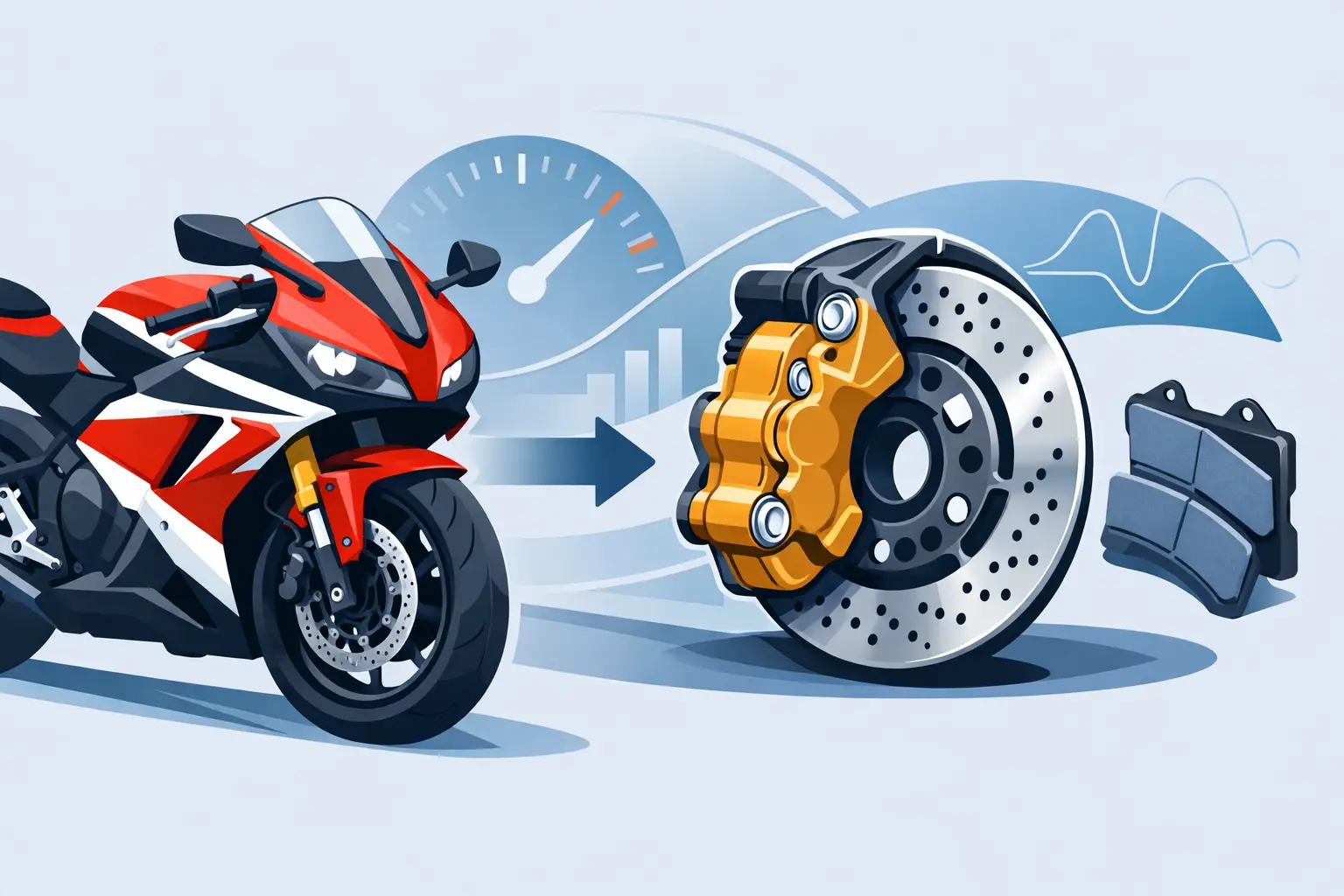
A Honda CBR600RR brake upgrade example should start with the complaint, not a shopping cart. If the lever goes long after several hard laps, the answer is different than it is for a rider who wants more initial bite on the street. The CBR600RR already has a capable chassis and braking platform, but track pace exposes weak points in fluid condition, pad choice, heat management, and lever control quickly.
For a serious track-day rider, the goal is not simply more braking force. The front tire can only accept so much load. The real target is repeatable braking: a firm lever at the end of a session, predictable response as the tire warms, and enough modulation to trail brake without upsetting the chassis.
Honda CBR600RR Brake Upgrade Example for Track Use
Consider a 2013-2024 CBR600RR used for advanced track days and occasional club racing. The bike has healthy stock calipers and rotors, but the rider is experiencing lever fade after 15 to 20 minutes and lacks confidence releasing the brake at corner entry.
A balanced first-stage build would use race-oriented front brake pads, fresh high-temperature brake fluid, stainless braided brake lines, and a properly serviced front brake system. This is the highest-value package for most riders because it addresses the parts of the system most likely to affect feel and consistency without replacing components that are still mechanically sound.
Start with pads matched to track temperature. A street pad is designed to work quietly, last longer, and deliver acceptable performance from cold. A track compound trades some of that convenience for higher heat tolerance and a stronger, more stable friction curve. That matters when braking from triple-digit speed repeatedly, lap after lap.
Next, install fresh fluid with a high dry boiling point and bleed the system carefully. Fluid absorbs moisture over time, lowering its boiling resistance. A soft lever after a few hard laps can be caused by fluid, but it can also point to old pads, trapped air, dragging pistons, or excessive rotor runout. Do not treat fluid as a cure-all when the rest of the system needs attention.
Stainless braided lines improve lever consistency by reducing line expansion under pressure. They will not create extra tire grip, and they do not replace proper bleeding, but they give the rider a more direct connection to the calipers. On a CBR600RR ridden hard at the track, that clearer lever response helps make braking references easier to repeat.
The baseline package
For this type of rider, the core package is race pads, premium fluid, braided lines, and a complete caliper service. Inspect seals, clean the piston surfaces, verify pad-pin movement, and measure rotor thickness against Honda specifications. If the calipers do not release cleanly or the rotors are below service limit, adding premium pads alone is money spent in the wrong order.
This setup retains the OEM master cylinder, calipers, and discs. That is not a compromise when those parts are in good condition. It is a deliberate choice to extract performance from a proven system before moving to more expensive hardware.
When a Master Cylinder Is the Right Next Step
A radial master cylinder is often the next upgrade when the rider wants more controlled lever travel and better feedback near maximum braking. It can be a major improvement, but bore size and lever ratio matter. Bigger is not automatically better.
A master cylinder with too large a piston can create a short, hard lever that requires more hand force. Too small a piston may offer excessive travel. The best setup depends on the CBR600RR generation, front caliper piston area, rider preference, and whether the bike is fitted with stock-diameter rotors or a race-oriented conversion.
For a track-focused build, select a quality radial master cylinder with an appropriate ratio for the installed calipers. Pair it with a remote reservoir, correct banjo fittings, and lines routed for full steering movement without tension or interference. Installation details matter here. A premium master cylinder cannot perform correctly if the line routing traps air or the lever position prevents the rider from maintaining a relaxed wrist under braking.
The gain is not just a firmer lever. A good radial master cylinder gives more information through the lever as the front tire loads. That feedback helps a rider approach threshold braking with less guesswork, especially on a 600cc supersport that carries speed deep into the corner.
Rotor choices and their trade-offs
Replacement rotors make sense when the originals are worn, warped, damaged, or when the bike is being pushed into sustained race use. High-quality floating rotors can improve heat management and maintain a more consistent braking surface under severe use. They can also reduce weight at the wheel, though braking consistency is usually the more meaningful benefit.
Do not replace healthy rotors only because they are visually impressive. A rotor upgrade becomes valuable when it solves a measured problem or supports the rest of a high-level brake package. Check diameter, thickness, carrier offset, button design, and exact model-year fitment before ordering. CBR600RR brake components are not universal across every generation, and ABS-equipped models may introduce additional fitment considerations.
Race rotors can also cost more to replace and may be less forgiving of neglected maintenance. Use pads intended for the disc material, bed them in correctly, and inspect the buttons and hardware as part of normal track preparation.
Build the System Around the Front Tire
The front brake system should match the tire, suspension, and rider pace. Installing aggressive pads and a race master cylinder on a bike with an overworked front fork can make the bike feel worse, not better. Excessive fork dive, poor rebound control, or incorrect spring rate may be mistaken for a brake problem because the rider loses confidence as the front loads.
Before chasing maximum bite, confirm the fundamentals: tire pressure should match the tire manufacturer’s track recommendation, fork settings should support the rider and pace, and steering-head bearings should be smooth with no free play. Brake upgrades work best when the chassis can manage the load they create.
Lever position is another overlooked adjustment. Set the lever so the rider can reach it naturally while fully tucked and while hanging off the bike. A lever that sits too high forces an awkward wrist angle; one that sits too far from the bar can delay initial input. Small ergonomic changes can improve consistency more than riders expect.
Rear Brake: Useful, but Not the Main Event
The rear brake on a CBR600RR has a different job. It can settle the chassis, assist with low-speed control, and help manage attitude in specific corners. It should be reliable and easy to modulate, but it should not be upgraded with the expectation of dramatically shorter stopping distances.
Fresh fluid, clean caliper pistons, a suitable pad compound, and correct pedal free play are usually enough for a track-focused rear system. Avoid an overly aggressive rear pad if it makes lockup too easy. On corner entry, a predictable rear brake is more valuable than a sharp one.
Installation and Bedding Are Part of the Upgrade
Brake work is safety-critical. Follow model-specific service information for torque values, fluid type, rotor limits, and caliper hardware. Use new crush washers where required, safety-wire components when your race organization requires it, and perform a static leak check before the bike ever reaches the paddock.
After installation, bed pads and rotors according to the component manufacturer’s procedure. Then test the system at moderate speed before asking it to manage a full track session. The lever should remain consistent, the wheel should spin freely when released, and there should be no fluid seepage around fittings, calipers, or the master cylinder.
AXF Race Parts makes it easier to source fitment-specific braking components for a CBR600RR build, but fitment should still be confirmed against the exact year, trim, and existing hardware on the motorcycle. A race bike with previous modifications may not match a standard catalog configuration.
The right CBR600RR brake upgrade is the one that lets you brake later only because you can brake with more control. Build the system in stages, measure what the bike is doing, and let consistency decide the next part you buy.