

Aprilia RS660 Race Conversion: What to Upgrade First

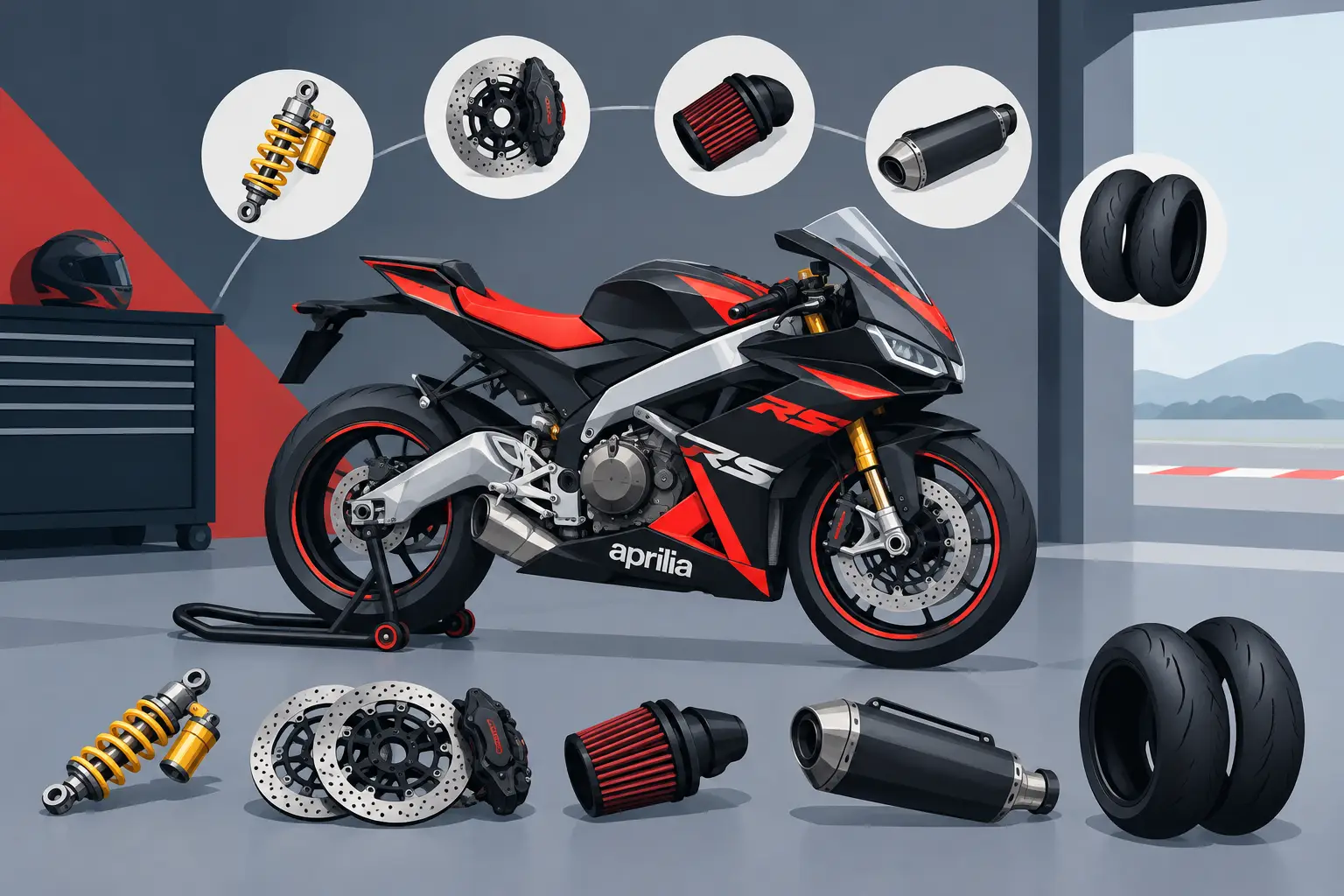
The Aprilia RS660 is already one of the strongest middleweight platforms for serious track use. Its compact chassis, usable parallel-twin torque, and advanced electronics give it a genuine race-bike foundation. A smart Aprilia RS660 race conversion is not about adding every catalog part at once. It is about removing street compromises, improving rider control, and building reliability for repeated hard sessions.
The right order matters. Spend first on the components that protect the bike, make braking and body position repeatable, and let you finish a race weekend without preventable mechanical issues. Power upgrades can come later, after the chassis and rider interface are working.
Start an Aprilia RS660 Race Conversion With the Rulebook
Before ordering bodywork or electronics, identify where the bike will run. A track-day RS660, an AFM or WERA-style club race machine, and a bike prepared for a specific lightweight class can have very different requirements. Safety wire rules, catch-can requirements, belly-pan capacity, number-plate dimensions, noise limits, tire regulations, and permitted engine modifications should all shape the build.
This step prevents expensive rework. A street-oriented fiberglass fairing that looks sharp may not provide the fluid containment required by your organization. A quick-action throttle, flashing strategy, or aftermarket control switch may be excellent equipment, but it must fit the class rules and the rider’s preferred electronics setup.
For most riders, the practical target is a clean, serviceable machine that can pass tech quickly. Keep the conversion focused on access, durability, and predictable performance rather than cosmetic detail.
Bodywork, Protection, and Race Preparation
Race bodywork is usually the first visible change, but its value is more than appearance. Quality race fairings remove headlights, mirrors, street brackets, and unnecessary plastic while making crash repairs simpler. A proper race tail also gives the rider a stable seating area and reduces the cost of replacing damaged OEM panels.
Choose bodywork designed specifically for the RS660 model year. Fitment matters around the radiator, exhaust routing, side covers, and the lower belly pan. The lower section needs enough containment for oil and coolant where required, and it should be easy to remove during routine maintenance.
Crash protection belongs in the same phase. Engine-case covers are a high-value upgrade because a lowside can quickly turn into a destroyed clutch or stator cover and an oil-down. Frame sliders can help in some crashes, but oversized pucks may catch the pavement and create more damage. Use race-focused protection with sensible dimensions rather than treating sliders as a guarantee.
A race conversion should also address the small details that decide whether a bike clears tech inspection. Replace coolant with track-approved water and additive if required, safety-wire the specified fasteners, secure the drain plug and oil filter, and remove or disable street equipment cleanly. Avoid improvised wiring and loose brackets. A tidy bike is easier to inspect, diagnose, and sell later.
Build Braking Consistency Before Chasing Horsepower
The RS660 has capable brakes, but stock street components are designed around broad-road use, weather tolerance, and long service intervals. Race pace asks more from the system. The objective is not merely stronger initial bite. It is a lever that feels the same at the end of a session as it did on lap two.
Start with race brake pads matched to the track, rider pace, and rotor condition. Track compounds need heat to work properly and may feel poor on a cold street ride, which is one reason a dedicated track bike makes sense. Combine pads with fresh high-temperature brake fluid and correctly bled calipers. This baseline alone can transform confidence at corner entry.
Stainless braided brake lines reduce expansion under pressure and improve lever definition. From there, a premium master cylinder can offer better modulation and adjustability, particularly for riders who need a firmer lever or more precise trail-braking feedback. Brake upgrades should be tested as a system. An aggressive pad, large master cylinder piston, and poor lever setup can produce a hard lever without improving control.
Do not overlook the rear brake. It is less about maximum stopping force and more about stability, pit-lane control, and corner-entry management. A protected rear reservoir, quality fluid, and a rearset position that allows natural foot access are practical race investments.
Rearsets and Controls Create a Better Rider Interface
A rider cannot use the RS660’s chassis potential if the controls are in the wrong place. Adjustable rearsets are one of the most valuable parts in an Aprilia RS660 race conversion because they increase cornering clearance and let the rider position their feet consistently. The right setting depends on height, boot size, riding style, and track layout.
Set rearsets high enough to keep hard parts off the pavement, but not so high that the rider is cramped or unable to load the pegs. Confirm brake-pedal and shift-pedal adjustment after every position change. The linkage should move freely, and the shift pattern must be obvious before the bike enters the hot pit.
Race clip-ons can improve ergonomics and make crash repairs less expensive than replacing OEM components. A dedicated throttle assembly and race switchgear can simplify the cockpit by removing unused street functions while providing dependable starter and kill-switch operation. These parts are especially useful when converting to race bodywork or revising the electronics layout.
Prioritize control feel over novelty. A setup that lets you brake, downshift, hang off, and pick up the throttle without changing your body position will make more lap time than a part chosen only for appearance.
Suspension Setup Is the Conversion That Riders Feel Most
The RS660 can be fast with stock suspension settings adjusted correctly, especially for newer track riders. However, springs and damping designed for a general street rider are rarely ideal for a fully equipped racer. As pace rises, the limitations show up under hard braking, quick direction changes, and drive off bumpy corners.
Start with sag, tire pressures, and baseline damping set by a qualified suspension technician. Correct spring rates for the rider’s geared weight are often more valuable than random clicker changes. Once the bike sits in the proper range, damping can control how it transfers load and tracks over pavement imperfections.
A cartridge kit, fork internals, or a race shock can be justified when the rider is consistently outrunning the stock equipment or needs more adjustment range. This is not an automatic first purchase. A rider at an early track-day pace may benefit more from tires, coaching, and a professional setup. For racers, though, suspension is a major confidence upgrade because it supports repeatable braking markers and more stable throttle application.
Document every setup change. Record spring rates, fork height, rear ride height, sag, tire type, pressure, ambient conditions, and clicker settings. That notebook becomes more useful than guesses when a bike feels nervous halfway through a race weekend.
Electronics and Intake: Use What the Platform Does Well
Aprilia gave the RS660 sophisticated electronics from the factory, including traction control, engine-brake management, wheelie control, and selectable engine maps. Keep these systems working for you. A race conversion should make them easier to manage, not disable them blindly.
Learn how each setting affects the bike at your pace. Too much traction control can interrupt drive and create hesitation. Too little can make exits inconsistent and punish tire life. The best setting is track- and tire-dependent, so make one controlled change at a time.
A high-flow race air filter and a properly developed ECU calibration can improve throttle response and support exhaust changes, but fueling should never be an afterthought. An exhaust without correct mapping can create poor response, excessive heat, or unreliable air-fuel ratios. Check series sound limits before committing to a system, especially at tracks with strict noise enforcement.
For riders who want race starts, cleaner cockpit layout, or simplified controls, purpose-built electronics and switch assemblies can reduce clutter and improve reliability. Buy components with confirmed RS660 fitment and a clear plan for installation. AXF Race Parts helps reduce the usual sourcing problem by organizing race-grade components around the bike and the job they need to perform.
Tires, Warmers, and Pit Equipment Complete the Package
Tires are the final connection between every upgrade and the asphalt. Select a track-focused tire that suits the series, temperature range, and your experience level. A slick may offer more outright grip, but it also requires correct warm-up procedure, pressure management, and often tire warmers. For some track-day riders, a high-quality DOT race tire is the more practical choice.
Do not treat tire warmers as a luxury once you are running race compounds. Stable starting temperatures reduce the risk of cold-tire incidents and make the opening laps more predictable. Use a reliable stand package, pressure gauge, and power plan in the paddock. Consistent tire pressure is suspension tuning in real time.
Keep essential spares with the bike: levers, footpeg hardware, clip-on tubes, brake pads, safety wire, fasteners, and a spare set of bodywork mounting hardware. A small crash or simple tip-over should not end an entire weekend.
Build the Bike Around Repeatable Laps
The best RS660 race bike is not necessarily the one with the most expensive parts. It is the one that brakes predictably, holds a line, gives the rider room to move, and can be serviced quickly between sessions. Begin with safety preparation, protection, brakes, controls, and setup. Add power only when the rider can use it.
A disciplined Aprilia RS660 race conversion turns a capable street-based sport bike into a focused track tool. Build it to pass tech, survive use, and give clear feedback every lap. That is the foundation that lets speed follow.