

ITR Tyre Warmers Bi Zone: Track Setup Guide

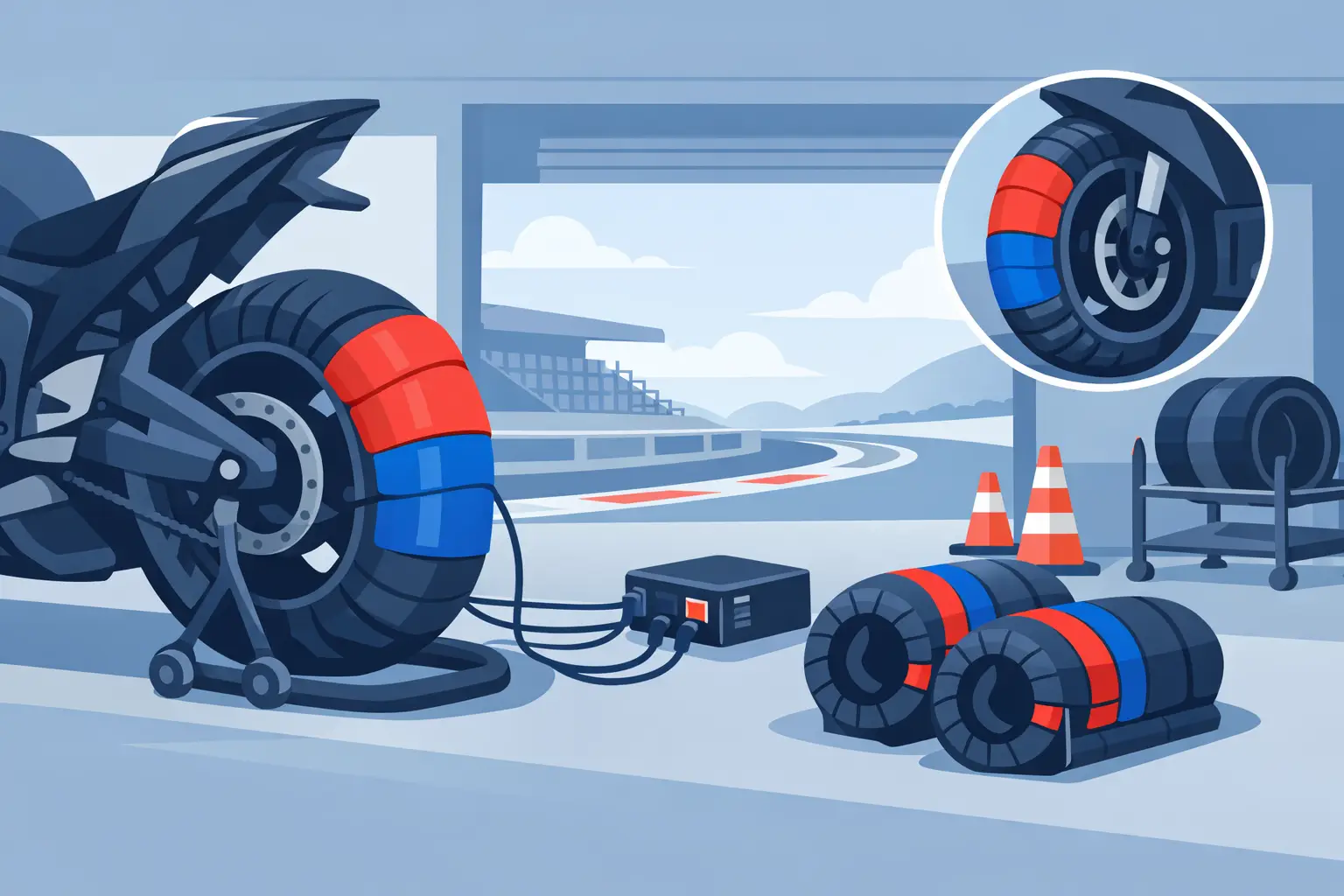
A cold tire can turn an otherwise clean first lap into a cautious, inconsistent one. ITR tyre warmers bi zone are built for riders who want the tire closer to its working window before leaving the paddock, reducing the guesswork between the warm-up stand and pit exit.
For track-day riders, club racers, and teams, warmers are not a cosmetic paddock accessory. They are part of the tire-management system. Correct heat, pressure, timing, and handling work together to give the tire a stable starting point. Get one of those wrong and the benefit of premium rubber, suspension setup, and braking hardware can be diluted before the session begins.
What Bi-Zone Tyre Warmers Change
A bi-zone warmer uses separate heating zones to distribute heat more deliberately across the tire. The exact construction, settings, and control options can vary by ITR model, so the product instructions should always be the authority. The practical goal is consistent heat coverage across the tire assembly rather than simply making the outside surface feel hot.
That distinction matters. Track tires generate and retain heat differently depending on compound, carcass construction, ambient conditions, track surface, and pace. A warmer that heats evenly helps reduce large temperature differences before the tire starts carrying cornering load. It also gives riders and technicians a more repeatable baseline for checking hot pressure.
Bi-zone capability is especially useful when conditions are less forgiving. A cool morning, an overcast race weekend, or a long delay in pit lane can pull heat out of a tire quickly. It will not replace proper riding technique or create grip where the compound is unsuitable, but it can make the first laps more predictable.
Setting Up ITR Tyre Warmers Bi Zone Correctly
Start with the motorcycle secure on front and rear paddock stands. The wheel must rotate freely enough to fit the warmer without dragging it across the tire, brake disc, or caliper. Inspect the tire first. A warmer cannot correct a damaged carcass, a puncture, excessive wear, or a tire that has already exceeded its useful heat-cycle life.
Fit the warmer evenly around the tire, beginning at the lower section and working around the circumference without pulling the material tight. The heating element needs broad, continuous contact. A twisted warmer, a loose section, or a gap around the shoulder can create uneven heating and make pressure readings less reliable.
Make sure the power lead is routed away from the chain, sprocket, brake disc, and areas where another bike or paddock cart can catch it. Treat the leads as race equipment, not extension cords to step over. Before applying power, check the outer material, connectors, and control unit for cuts, crushed sections, or signs of overheating.
Set the temperature according to the tire manufacturer’s recommendation and the conditions. Do not choose a setting simply because another rider in the garage uses it. A slick, a DOT race tire, and a street-oriented track tire can require different preparation. Tire manufacturers may also specify different targets for sprint racing, endurance use, or a particular compound.
Allow enough time for the tire to stabilize. The correct warm-up period depends on the warmer model, tire size, ambient temperature, and starting tire temperature. Plugging in ten minutes before a call to grid may warm the surface, but it may not produce a useful, repeatable hot-pressure baseline. Plan your paddock routine around the session schedule instead of rushing the final few minutes.
Check Pressure While the Tire Is Properly Heated
Once the tire has had adequate time under the warmers, check pressure with a quality gauge. Record the reading, along with the ambient temperature, track condition, compound, warmer setting, and any tire supplier recommendations. That information becomes far more valuable than relying on memory after several sessions.
Do not confuse a warmer pressure with a post-session pressure. The tire will gain or lose pressure as it is loaded on track, and the change depends on pace, suspension behavior, track layout, and compound. Your tire brand’s guidance should determine the final target. The warmer reading is a controlled reference point that helps you start each outing consistently.
For racers working with a tire vendor, use their pressure numbers first. If the bike begins to push, chatter, spin, or wear unusually, do not assume pressure is the only cause. Geometry, damping, compound choice, riding input, and track temperature can all create similar symptoms. Make one measured adjustment at a time.
A Paddock Routine That Holds Up All Day
The strongest warmer setup is simple enough to repeat under pressure. Fit the warmers as soon as the bike is back on stands and the tires can be safely handled. Confirm settings, note the time, and cover the bike if wind or cold air is moving through the paddock. Then check pressure at a consistent point before each session.
If a red flag, weather delay, or mechanical issue keeps the bike parked longer than expected, reassess before heading back out. The appropriate response depends on the warmer instructions and tire supplier guidance. Leaving warmers powered indefinitely without a plan is not the same as managing tire temperature. Heat exposure, electrical safety, and tire condition all deserve attention.
Between sessions, inspect the tread and shoulders before reinstalling or removing the warmers. Look for tearing, cold shear, blueing, pickup, or wear that differs significantly from one side of the tire to the other. Those marks tell a story. Tire temperature and pressure may be part of it, but they can also point to suspension setup or a mismatch between the tire and track conditions.
For a two-bike team or a busy track-day paddock, label warmers and keep a basic setup sheet with the motorcycle. Mixing up front and rear warmers, using a damaged unit, or guessing at yesterday’s pressure setting wastes valuable track time. Organization is speed when the session clock is running.
Avoid These Common Warmer Mistakes
The most frequent mistake is treating warmers as a replacement for a warm-up lap. Even with properly prepared tires, the brakes, engine, suspension, rider, and track surface still need time to come alive. Leave pit lane with purpose, but build load progressively until you confirm the grip level.
Another mistake is setting temperatures without considering the tire. More heat is not automatically better. Excessive or inappropriate heating can accelerate wear or move the tire away from the operating range intended by its manufacturer. Follow the tire supplier’s recommendations and the ITR warmer instructions, especially when switching compounds or moving from a mild track day to a hard race schedule.
Poor fitment is equally costly. If the warmer is not seated evenly, the tire may not heat uniformly. Do not place warmers over debris, allow them to hang off the tire, or force them around hot brake components. Give the equipment a quick inspection every time it goes on the bike.
Finally, do not make pressure decisions from one number alone. A reliable setup comes from a pattern: warmer pressure, immediate track feel, hot off-track pressure, tread condition, and lap pace. That is how a rider moves from random adjustments to a controlled tire program.
Choosing the Right Setup for Your Motorcycle
The correct ITR warmer configuration depends on your wheel sizes, tire profile, tire category, and how you use the bike. A rider doing a few track days each season may prioritize straightforward operation and dependable heat coverage. A club racer may need faster, repeatable paddock workflow and a clear way to manage multiple compounds across changing conditions.
Measure the tire sizes actually fitted to the motorcycle rather than relying only on the original equipment specification. Race wheels, alternate profiles, and tire-brand changes can affect the fit you need. Confirm that the warmer size and intended application match your current setup before ordering.
AXF Race Parts serves riders building serious track and race packages, where tire warmers belong alongside reliable stands, accurate gauges, race-grade braking components, and bike-specific upgrades. The objective is not to add equipment for its own sake. It is to remove variables that cost confidence, tire life, and lap time.
A disciplined warmer routine pays off before the green flag, not after the first slide. Set the tire up correctly, verify the numbers, and use the opening laps to confirm the package rather than rescue it.