

Best Motorcycle Race Stands for Track Use

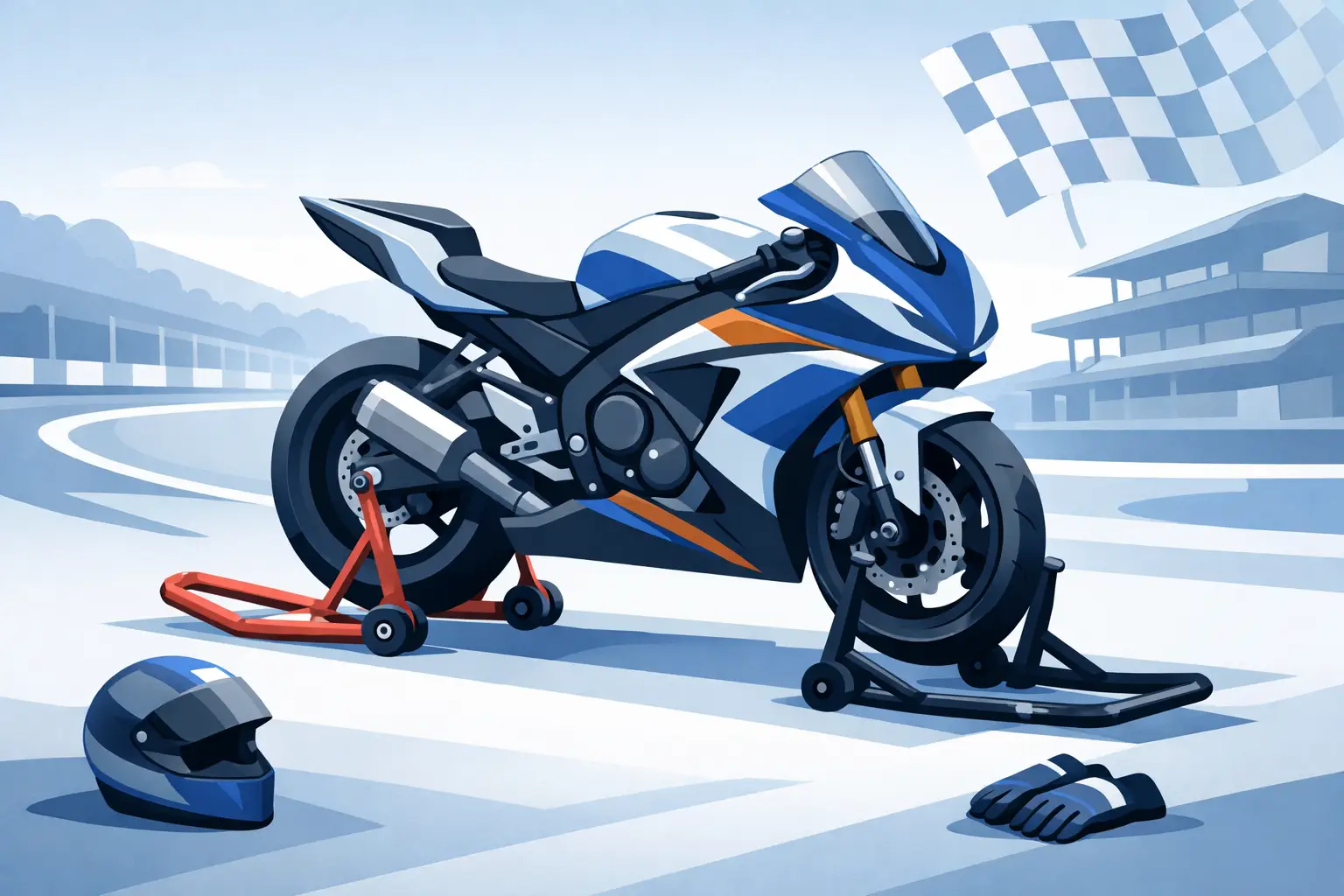
A paddock stand is either a tool you trust without thinking, or one you fight every time the bike comes off warmers. On a 430-pound sport bike with hot tires, tight bodywork, and race bodywork clearances, that difference matters. If you are shopping for the best motorcycle race stands, the real question is not which one looks good in the garage. It is which one keeps the bike stable, fits your setup correctly, and holds up through repeated track use.
What makes the best motorcycle race stands
The best motorcycle race stands are built around three things – stability, fitment, and repeatable use. A cheap stand can lift a bike once in the driveway. A proper race stand needs to do it quickly, squarely, and without drama after a full session when the bike is hot and you are moving fast.
Tube diameter, weld quality, wheel design, and handle geometry all matter more than most riders expect. A stand with thin tubing or flex under load can feel acceptable on a light middleweight, then suddenly feel vague on a heavier liter bike. Wider footprints usually improve stability, but they also need to work around tire warmers, rear wheel changes, and crowded pit space.
Fitment is where many buyers get it wrong. There is no universal stand setup that works equally well across every front-end and rear-end configuration. Fork bottoms, caliper spacing, spool placement, swingarm shape, and ground clearance all change what stand style works best.
Front and rear stands are not interchangeable choices
A rear stand is usually the first purchase, and for good reason. It covers chain service, tire warmer use, cleaning, and general paddock support. For many riders, a rear stand used with swingarm spools is the most stable and practical setup.
A front stand becomes essential when you need the bike fully supported for wheel changes, suspension work, or a more secure warm-up setup. The key point is simple: rear stand first for basic track support, front stand next for full race utility.
Rear stand options
The most common rear stand styles are spool-lift and under-swingarm. For a race-prepped sport bike, spool-lift stands are usually the better choice. They offer more secure engagement, more consistent lift points, and less risk of slipping during use.
Under-swingarm stands still have a place, especially for bikes without spool mounts or for some street applications, but they are less ideal in a serious track environment. If the swingarm profile is uneven or the stand arms are not adjusted correctly, stability drops fast.
Spool size and stand hook shape also need to match. A sloppy hook-to-spool fit can feel loose even if the stand itself is well made. That is not just annoying. It affects confidence every time you lift the bike.
Front stand options
Front stands generally fall into two categories – fork-lift and steering stem. A fork-lift stand supports the bike under the fork bottoms. It is fast and effective for basic paddock use, especially when the rear of the bike is already on a stand.
A steering stem stand lifts from the lower triple area through the steering stem. This style is usually the better choice for riders who want front wheel removal, fork service access, or maximum front-end stability in the paddock. It is also the more technical option because the pin size must match the bike.
If you are running a serious track or race setup, steering stem stands are often the better long-term buy. They cost more, but they add service flexibility that fork-bottom stands do not.
Best motorcycle race stands by use case
Choosing the best motorcycle race stands depends on how you actually use the bike. A track-day rider with one bike and limited garage space may not need the same setup as a club racer doing wheel swaps and regular chassis work.
For track days, a rear spool stand and front fork-lift stand can be a strong value combination. It handles tire warmers, basic maintenance, and stable storage in the paddock without overcomplicating setup.
For racing or aggressive track support, a rear spool stand paired with a steering stem front stand is the more complete package. It gives you better service access and usually a more secure front lift, especially when speed and consistency matter.
For street and track crossover bikes, it depends on how the bike is equipped. If the bike has quality spool mounts and proper clearance, the same race-oriented rear stand still makes sense. If not, you may need a more adaptable rear solution, but adaptability often means giving up some precision.
Build quality is not marketing fluff
In this category, build quality shows up in daily use. Strong welds, thick tubing, quality wheels, and smooth movement under load separate race-capable stands from generic shop equipment.
The best stands roll cleanly as the bike rises. They do not bind halfway through the lift or shift sideways because the casters are weak. Handles should offer enough leverage to lift the bike smoothly without requiring awkward body positioning. That matters more when you are working alone in the paddock.
Powder coating is nice, but it is not the reason to buy a stand. Structural rigidity and accurate hardware matter more than finish. Good wheels matter too. Cheap plastic wheels wear quickly, flat-spot, and make the stand feel unstable on rough paddock surfaces.
Fitment details that riders overlook
A stand can be high quality and still be the wrong choice for your bike. That is common with modern sport bikes where aftermarket rearsets, exhaust routing, shark fins, axle blocks, and bodywork all affect clearance.
Rear stand width adjustment needs to match your spool spacing without forcing the arms inward or outward at odd angles. Front steering stem stands need the correct pin diameter and insertion depth. A close-enough pin is not good enough.
Bike geometry also changes the feel of a stand. A lowered bike, a superbike with raised rear ride height, or a machine with nonstandard suspension setup can alter lift angle and leverage. That does not automatically rule out a stand, but it does mean bike-specific fitment matters.
This is where buying from a specialist parts source has a real advantage. Fitment-based product selection saves time and reduces the chance of ordering a stand that works in theory but not on your exact bike.
Common mistakes when buying race stands
The first mistake is buying on price alone. A stand does not need to be the most expensive option in the paddock, but it does need to be dependable. Saving a little money up front is not worth it if the stand flexes, wears out quickly, or feels sketchy under a hot bike.
The second mistake is assuming all front stands do the same job. They do not. If you need front wheel removal or fork access, buy a steering stem setup from the start.
The third mistake is ignoring future setup changes. A rider may start with occasional track days, then move into tire warmers, upgraded suspension, and regular maintenance. If that is likely, it often makes sense to buy the more capable stand now instead of replacing it later.
What to look for before you buy
Start with your bike and intended use. Confirm whether you have spool mounts, what front-end lifting points are available, and whether you need wheel removal access. Then look at stand construction, width adjustability, wheel quality, and brand reputation in race applications.
Do not underestimate ease of use. A stand that is technically compatible but awkward to position gets old fast. The best equipment supports fast, repeatable work in the paddock and workshop.
For serious sport bike owners, the right setup usually means a rear spool stand and either a fork-lift or steering stem front stand depending on service needs. Riders who value precision, secure engagement, and race-day reliability should lean toward brands and suppliers focused on motorsport equipment rather than generic motorcycle accessories. That is where product quality, fitment accuracy, and purchasing confidence come together.
A good stand does not make the bike faster, but it makes everything around track riding easier, safer, and more professional. Buy for stability first, fitment second, and convenience third. If the stand gets those three right, you will notice it every time the bike goes up – and never have to think about it again.