
Suzuki GSXR Track Parts That Actually Matter

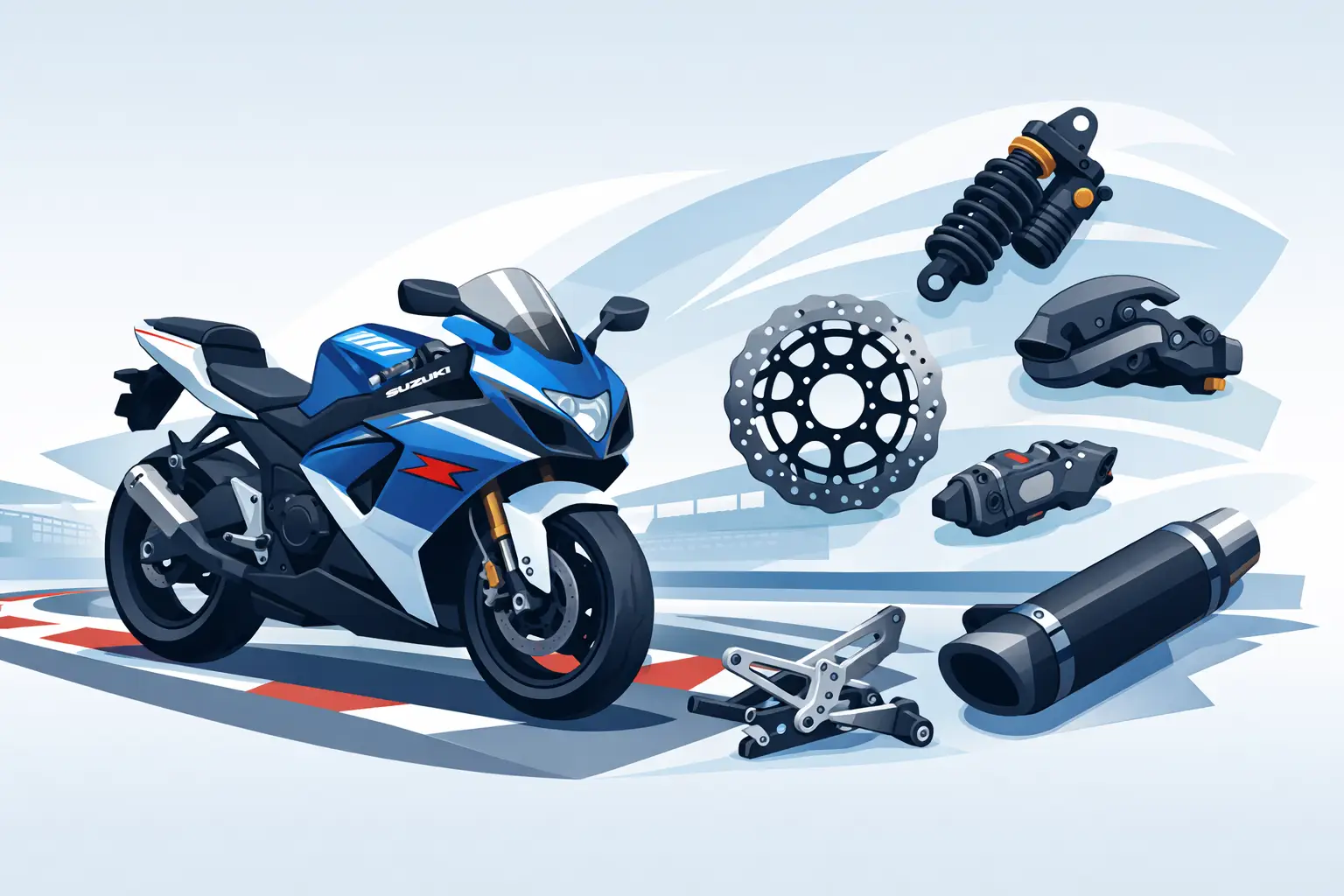
A GSX-R tells on itself the first hard session. If the bike moves under braking, runs hot in traffic, or makes you fight for clean body position, the problem usually is not the platform. It is the setup. The right suzuki gsxr track parts fix that fast, but only if you choose parts that solve real track problems instead of stacking random upgrades.
GSX-Rs respond well to focused changes. They have a huge racing history, strong aftermarket support, and enough model variation across 600, 750, and 1000 platforms that fitment matters more than many riders expect. The goal is not to buy everything. The goal is to build a bike that brakes harder, changes direction cleaner, and survives repeated sessions without creating new weak points.
Suzuki GSXR track parts with the biggest payoff
If you are building in stages, start where lap time and confidence usually move together – braking, controls, rider interface, and crash survivability. These are the categories that change how the bike feels immediately.
Braking upgrades are almost never wasted money on a GSX-R track bike. A quality master cylinder, race brake lines, and track-focused pads improve lever consistency, bite, and feel deep into a session. That matters more than peak stopping power alone. Many riders chase rotor or caliper changes too early, but the master cylinder and pad compound often deliver the cleaner result per dollar. If you are riding a heavier GSX-R1000 or running longer advanced-group sessions, the benefit is even more obvious.
Rearsets are another high-value change because they affect both control and crash resistance. Stock pegs and controls are built around road comfort and broad usability. On track, you want firmer feel, more precise lever action, and foot position options that support corner entry and body movement. Adjustable rearsets let you fine-tune peg height and setback, but there is a trade-off. Go too aggressive and you can make the bike tiring to ride, especially during longer track days. For most riders, the best setting is not the highest and farthest back. It is the one that gives ground clearance without locking up your hips.
Clip-ons, handlebars, and throttle controls also deliver a noticeable return. A damaged OEM setup can be expensive to replace, while race clip-ons make repairs simpler after a tip-over. Quick-action throttles can sharpen response and reduce wrist movement, but they need to match rider preference and engine character. On a GSX-R1000, too abrupt a throttle can make corner exits messy if the rider is not ready for it. On a 600 or 750, the same change may feel exactly right.
Build for reliability before chasing peak spec
A fast GSX-R that cannot finish sessions cleanly is just an expensive distraction. Reliability parts do not always get attention, but they are some of the smartest purchases in a track build.
Engine case covers and protection pieces are a practical first step. They help manage crash damage, reduce the chance of a minor incident becoming a major repair, and keep your season moving. Race bodywork fits into the same logic. It cuts weight compared with stock plastics, simplifies track prep, and is far easier to repair or replace after contact or a low-side.
Cooling and airflow matter too, especially on hotter days or bikes that spend time in pit traffic. Performance filters improve breathing, but they also need to be matched with the rest of the setup. If intake flow changes significantly, fueling should not be ignored. Electronics and engine tuning can sharpen performance, but the rider who skips the basic mechanical foundation usually ends up with a bike that feels impressive in the paddock and inconsistent on track.
For riders using older GSX-R models, this matters even more. Some bikes need maintenance-grade upgrades before they need race-grade ones. A fresh braking system, clean controls, proper switchgear, and dependable protection can transform the bike more than a flashy top-end part ever will.
Rider controls separate a decent build from a serious one
The best track bikes feel predictable. That comes from contact points as much as horsepower.
Switches and button controls are often overlooked until the stock assembly becomes bulky, fragile, or awkward with race bodywork. Compact race switches clean up the cockpit, reduce clutter, and make core functions easier to access. They also help when you want a simpler, more purpose-built front end.
Levers deserve the same attention. Shorter, more precise levers can improve feel and reduce the chance of breakage in a fall. Pair that with a properly matched clutch setup, and the bike becomes easier to manage in heavy braking zones and quick transitions. Slipper clutches are especially relevant on GSX-R builds that see aggressive downshifting. They smooth rear wheel behavior on corner entry and reduce chatter, which helps the rider stay focused on line and brake release instead of managing instability.
This is where premium components earn their keep. Better machining, tighter tolerances, and race-proven design are not marketing extras on rider controls. They are the difference between a part that stays consistent all season and one that develops play when you need precision most.
Choosing Suzuki GSXR track parts by riding level
Not every GSX-R owner needs the same build sheet. A novice track-day rider and a club racer may shop the same categories, but not for the same reasons.
If you are early in your track riding, prioritize braking feel, rearsets, case protection, and bodywork. These parts improve confidence, durability, and control without forcing a steep adaptation curve. They also make the bike easier to live with during repeated events.
If you are moving into advanced groups or racing, electronics, slipper clutch upgrades, high-end brake components, and more refined cockpit controls become more valuable. At that level, small gains in consistency matter. The right parts help you repeat braking markers, improve drive off corners, and reduce fatigue over a full race distance.
Dealers and tuners usually think one step further. They care about fitment accuracy, supplier consistency, and product lines that make sense across multiple GSX-R years. That is why shopping by exact model and year matters so much. A part that fits a K6 or K8 generation may not translate cleanly to a later platform, even when the bikes look similar at a glance.
Where riders overspend and where they should not
The most common mistake in a GSX-R track build is spending too early on prestige items while ignoring the parts that shape rider input. Expensive wheels, exotic carbon pieces, and top-shelf visual upgrades can wait if the bike still has vague brakes or poor foot control.
That does not mean premium parts are optional. It means they need to be purchased in the right order. A Brembo braking upgrade, a quality set of rearsets, race-spec clip-ons, and proven switchgear usually return more usable performance than cosmetic parts or scattered engine mods.
It also pays to avoid fitment gambling. Universal parts can be tempting on price, but race bikes punish compromise. Poor alignment, awkward ergonomics, and unnecessary fabrication costs erase any savings quickly. Model-specific parts shorten install time, reduce guesswork, and give the rider a cleaner final result.
This is where a specialist catalog matters. AXF Race Parts is built around fitment-based shopping, so riders can sort by Suzuki model, year, and category instead of cross-checking generic listings and hoping for the best. For GSX-R owners, that means faster decisions and fewer mistakes.
A smarter way to plan your GSX-R track build
Think in systems, not single parts. Brakes should be chosen as a package. Controls should work together. Protection should support the reality that track bikes sometimes hit the ground. When the build is coherent, the bike feels sharper everywhere instead of strange in one area and unfinished in another.
A GSX-R600 or GSX-R750 often rewards a lightweight, momentum-focused setup with strong brakes, stable rearsets, and clean rider ergonomics. A GSX-R1000 build usually needs the same foundation plus more attention to throttle control, clutch behavior, and braking consistency under higher load. Neither approach is better. They are just different responses to what the bike asks for.
The strongest builds are rarely the loudest ones in the paddock. They are the bikes that start every session, hold up under pressure, and let the rider focus on markers instead of mechanical distractions. That is the standard worth building toward, and the right parts are the fastest way to get there.