

Why Use Motorcycle Tyre Warmers?

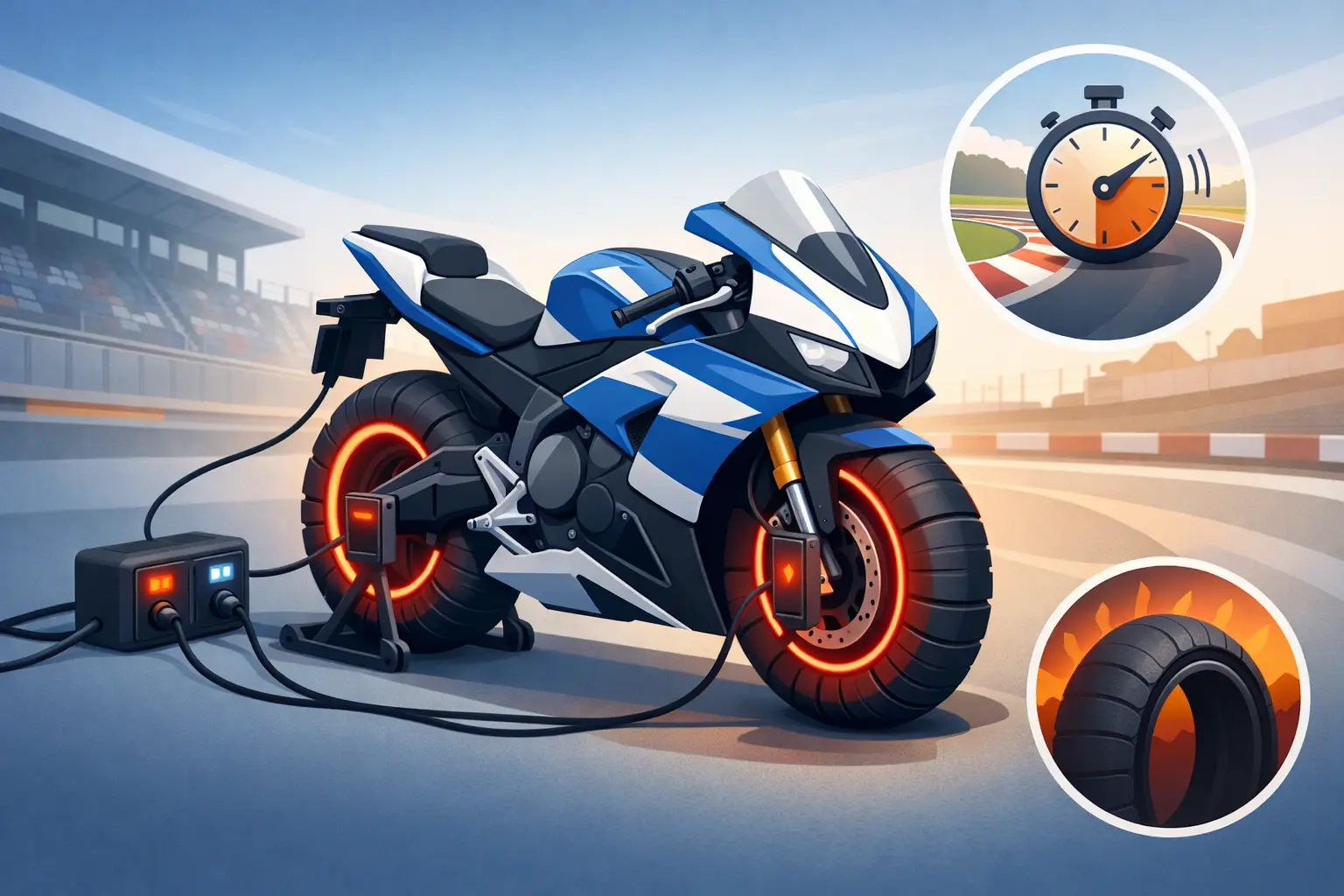
The first lap tells the truth. If the tire is below working temperature, grip is limited, feedback is vague, and your pace has to wait. That is exactly why use motorcycle tyre warmers is such a common question in paddocks, garages, and pit lanes – because heat management directly affects confidence, consistency, and tire performance.
For track-day riders and racers, tire temperature is not a small detail. Modern sportbike tires are built to operate in a specific range. When they are cold, the rubber compound is less compliant, the carcass reacts differently, and the contact patch does not behave the way it should under braking, lean, and drive. Tyre warmers are designed to reduce that gap between leaving the stand and reaching usable grip.
Why use motorcycle tyre warmers on track?
The short answer is control. Warmers bring the tire closer to its intended operating temperature before the bike ever moves. That means the first corners are less about survival and more about riding the line, hitting your markers, and building pace without gambling on cold rubber.
This matters most in environments where pace comes quickly. In a sprint race, you do not get several laps to wait for the tires to come in. In a track-day session, you may only have 15 or 20 minutes of seat time. Losing two or three laps to heat buildup is wasted opportunity. Warmers help you start the session with more predictable grip, which improves both safety and lap-to-lap consistency.
There is also a mental advantage. Riders make better decisions when the bike feels settled from the first turn. If you trust the front under braking and the rear on exit, you ride with purpose instead of hesitation.
What tyre warmers actually do
A quality warmer does more than make the tire feel warm to the touch. It heats the tread and helps bring temperature into the carcass so the tire reaches a more stable state before use. That stability is the real goal.
As the tire comes up to temperature, the rubber becomes more compliant and the carcass flexes in a more predictable way. Pressures also rise as intended. That last part is critical because tire pressures are not static numbers. Cold pressure in the paddock is only a setup starting point. Hot pressure is what the tire sees on track, and warmers help riders and tuners get to that target range more accurately.
Without warmers, a rider may set pressure cold, go out, and spend several laps chasing a tire that is still climbing toward its ideal temperature and pressure. With warmers, the bike leaves the stand closer to where the tire was designed to work.
Grip is only part of the story
Most riders think of warmers as a grip tool, and they are. But they also support braking feel, side grip consistency, and throttle application. The front tire can communicate better when it is already in its operating window. The rear is less likely to feel greasy from uneven heat buildup or vague because it is still too cool.
That does not mean warmers create infinite traction. They do not override poor setup, bad pressures, worn compounds, or rough throttle control. They simply remove one major variable.
Tire life and wear consistency
One of the strongest arguments for using warmers is tire preservation. Repeated heat cycles can age performance rubber, especially race compounds. Every time a tire goes from ambient temperature to full track heat and then cools completely, it goes through a thermal cycle that affects the compound over time.
Warmers can reduce the severity of that process by controlling how the tire is heated before use and by keeping it warm between sessions. Instead of shocking the tire from cold to extreme load in the first hard laps, the temperature rise is more gradual and managed.
Wear pattern matters too. Cold tearing is a familiar problem for riders pushing a tire before it is ready. The surface can shear and degrade because the compound has not reached the right working state. Warmers do not solve every wear issue – suspension setup, track surface, pressure, and pace still matter – but they often help produce a cleaner, more repeatable wear pattern.
For anyone running premium track or race tires, protecting the usable life of the tire is not a minor benefit. It is part of the operating cost.
Why use motorcycle tyre warmers if you’re not racing?
You do not need to be on a national grid to benefit from warmers. Track-day riders often gain as much value as racers because they have limited session time and want the bike ready when pit out opens.
If your day consists of six or seven short sessions, every lap counts. Spending the opening laps cautiously while the tires come in cuts into the reason you are there. Warmers help you use more of the session for actual riding instead of temperature management.
They also add consistency for riders who are working on setup. If you are testing pressures, geometry, suspension changes, or electronics settings, starting each session from a known tire temperature gives you cleaner feedback. That makes your changes easier to evaluate.
For performance-focused street riders, the answer is more situational. Warmers are not a road-riding essential, and they are not practical for most street use. Their value is strongest in controlled track environments where the bike is on stands, power is available, and pace begins immediately.
When warmers make the most sense
Tyre warmers are most useful with race tires, slicks, DOT race tires, and aggressive track compounds that are designed around a narrower operating window. These tires reward proper heat management and often feel significantly better when brought in correctly.
They are still useful with many hypersport track-day tires, but the payoff depends on pace, ambient conditions, and the tire’s intended use. Some modern street-legal performance tires heat up relatively quickly on their own. In that case, warmers may improve the first lap and pressure control more than absolute grip.
Cold weather increases the value of warmers. So do tracks with low-grip surfaces or formats where you need immediate pace. On the other hand, if a rider is in novice group, circulating at a modest speed on street-oriented tires in hot weather, warmers are helpful but not always essential.
It depends on the tire, the pace, and how serious the rider is about consistency.
Common mistakes riders make with tyre warmers
The first mistake is assuming any heat is good enough. Uneven heating, poor coverage, or unreliable temperature control can leave the tire only partially prepared. A proper warmer should fit the tire correctly and maintain a stable target temperature.
The second mistake is not allowing enough time. Throwing warmers on for ten minutes before the session is not the same as fully bringing the tire and carcass up to temperature. Most setups need a meaningful preheat period to do the job properly.
The third mistake is ignoring pressure changes. Once warmers are in the routine, pressure setup has to match that hotter starting point. Riders who keep using their old cold-pressure method can end up chasing confusing results.
The last mistake is treating warmers as a cure-all. If the bike is tearing tires, moving around excessively, or giving poor edge grip, the cause may be suspension, geometry, compound choice, or riding input. Warmers are a tool, not a substitute for proper setup.
Quality matters more than riders think
Cheap warmers can create expensive problems. Inconsistent heating, hot spots, weak insulation, and poor fit can compromise the tire instead of helping it. On a race-prepped bike, there is no value in cutting corners on a component that directly affects grip and tire management.
That is why serious riders tend to choose proven warmers from brands with paddock credibility. The goal is simple: dependable heat, accurate control, durable construction, and repeatable results.
The real benefit is repeatability
The strongest case for tyre warmers is not just faster first laps. It is repeatability. You want the bike to leave the stand in a known state, the tire to respond the same way session after session, and pressure adjustments to mean something.
That is how riders build confidence and how tuners make smarter setup calls. In a racing environment, repeatability wins time. In a track-day environment, it saves laps, improves feel, and reduces avoidable risk.
For riders investing in high-end rubber, suspension, brakes, and electronics, tyre warmers fit the same mindset. They are part of a complete track-prep routine, not an accessory added for appearance. AXF Race Parts serves that rider – the one who wants race-ready components that perform as expected when the pace goes up.
If your bike spends real time on track, tyre warmers are not about looking serious in the paddock. They are about giving your tires the conditions they were built for, so the first lap starts closer to your best one.