
Track Day Gear Guide for Sport Bike Riders

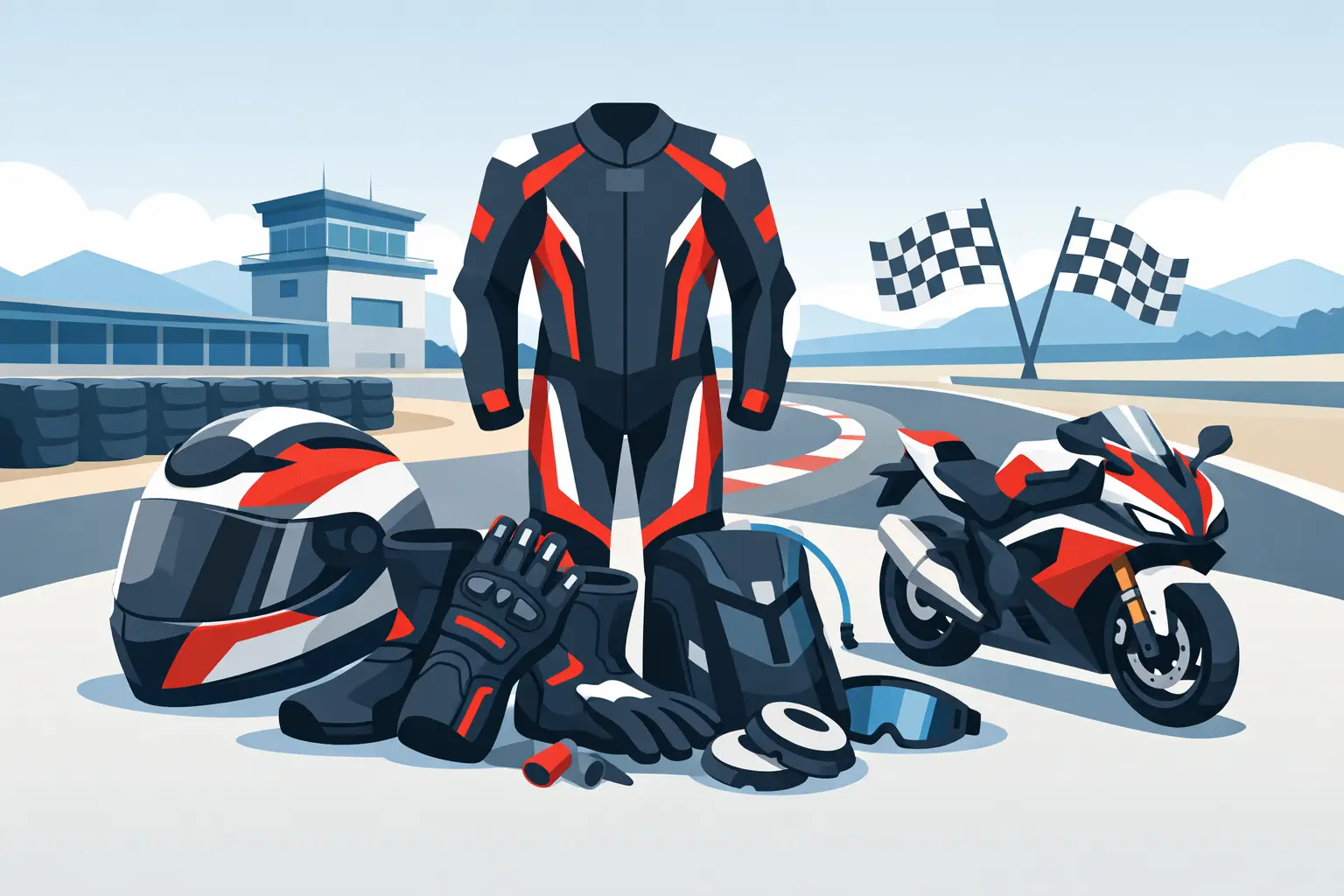
The first bad sign at tech inspection is rarely dramatic. It is usually a visor that will not latch, gloves with worn palms, or a back protector that does not actually cover much of your back. A proper track day gear guide starts there – not with vanity, not with brand hype, but with the equipment that keeps you on track, passes inspection, and lets you ride at speed without distractions.
Track gear is not just about meeting minimum requirements. The right setup improves feel at the controls, reduces fatigue, and gives you the confidence to brake harder, move on the bike, and stay focused when pace goes up. Cheap gear can get you through a novice session. Well-chosen gear keeps working when the day gets hot, your body gets tired, and the bike starts asking more from you.
What matters most in a track day gear guide
For most riders, the buying mistake is focusing on one flagship item and compromising everywhere else. A premium helmet paired with loose gloves, soft boots, and a poor-fitting suit is not a serious track setup. The system matters more than the hero piece.
Start with fit, then protection, then durability. Comfort matters too, but track comfort is different from street comfort. On the street, softer and roomier can feel better in the showroom. On track, extra movement inside the gear becomes a problem. Armor shifts. Gloves bunch up. Boots lift off the pegs at the wrong moment. Gear should feel secure, slightly snug, and stable in a riding position.
It also depends on how often you ride. A rider doing one or two beginner days per season can justify a simpler setup, provided it meets the organizer’s rules and fits correctly. A rider doing monthly events or club racing should think beyond entry price and focus on repairability, ventilation, replaceable sliders, stronger seam construction, and proven impact protection.
Helmet: stability, visibility, and fatigue control
Your helmet does more than protect your head in a crash. At track speeds, it affects noise, neck fatigue, visibility, and concentration. A helmet that moves in the wind, lifts when tucked, or fogs on cool mornings costs you focus every lap.
Look for a full-face helmet with a secure visor mechanism, strong ventilation, and a shell shape that stays stable in clean and turbulent air. Race-oriented helmets typically seal better at speed and offer a larger eye port for corner entry vision. That wider field of view matters when you are looking through the turn instead of staring at the dash.
Fit should be firm without pressure points. If the helmet rotates easily by hand or lifts when you move your head, it is too loose. If it creates a hot spot on your forehead after ten minutes, it is the wrong shape for your head. Both are deal breakers.
A dark visor can help in bright conditions, but bring a clear one if your event runs early or ends late. Track days do not care about your photo setup. They care whether you can see.
Leather suit: one-piece usually wins
For a serious track setup, a one-piece leather suit is still the standard. It offers consistent abrasion resistance, better seam management, and fewer failure points than a two-piece zip-together arrangement. Some organizations allow two-piece suits with a full zip, but allowance is not the same as ideal.
The main issue is mobility in riding position. A suit can feel restrictive while standing and correct once you are tucked on the bike. That is normal. Try it with your back protector in place and your arms extended as if reaching for the bars. If the shoulders bind badly or the crotch pulls hard when you crouch, sizing or pattern is wrong.
Perforation helps in summer, but there is a trade-off. More airflow can mean less versatility in cooler conditions. If you ride across different regions or seasons, think about how often you will need base layers versus maximum ventilation. External sliders at the knees, shoulders, and elbows add crash protection and help the suit last longer through minor offs.
Gloves: feel at the lever matters
A track glove needs to do two things at once – protect your hands in a slide and preserve lever feel when braking hard. Many street gloves fail the second test even before they fail the first.
Look for full gauntlet gloves with strong wrist closure, palm reinforcement, finger bridge protection where applicable, and hard protection over the knuckles and vulnerable impact zones. The glove should lock onto your hand without making the controls feel numb. If the palm bunches or the fingertips are too long, you will notice it immediately during trail braking and throttle pick-up.
This is not the place to save a few dollars. Hands hit first, often, and recovery from hand injuries is slow. Better glove construction is easy to justify.
Boots: support without losing mobility
Track boots need a narrow brief – protect the ankle, shin, heel, and toe while still allowing precise shifting and rear brake input. If the boot is too soft, support suffers. If it is too stiff in the wrong areas, control suffers.
A good track boot should have a secure closure system, bracing around the ankle, replaceable toe sliders, and enough structure that the boot does not twist easily. At the same time, you should still be able to get under the shifter cleanly and modulate the rear brake without feeling disconnected.
Fit around the calf matters more than many riders expect, especially when paired with a race suit. Try the full system together. A great boot that fights the suit at the zipper or bunches under the leg opening becomes a nuisance fast.
Back protector and chest protection are not optional in practice
Some track day organizations clearly require a back protector. Others strongly recommend it. Either way, serious riders should treat a quality back protector as standard equipment. The same goes for chest protection when allowed by your suit and event rules.
The point is simple: built-in foam pads are not a substitute for dedicated impact protection. A real back protector covers the area that matters and stays in place when you move around the bike. Chest protection adds another layer for frontal impact and can make sense for riders pushing pace or racing regularly.
This is one of the least glamorous purchases and one of the easiest to defend. It does its job on the day you hope never comes.
Base layers, socks, and the details riders overlook
Bad underlayers make good gear feel worse. A proper base layer helps the suit slide on and off, manages sweat, and reduces hot spots. Once temperatures rise, that matters more than riders expect.
Compression is not mandatory. Moisture management is. Avoid heavy cotton. Use thin, technical layers that let the suit move over your body instead of dragging against damp skin. The same logic applies to socks. Thin track socks improve feel inside the boot and reduce pressure points.
Ear protection is another overlooked piece. Wind noise and exhaust noise create fatigue over a full day. If you come off track mentally cooked after three sessions, noise is often part of the problem.
Rain, heat, and the reality of changing conditions
A smart track day gear guide has to account for weather because conditions change faster than your packing list. Heat stresses the body and exposes poor ventilation. Cold mornings punish stiff tires and stiff riders. Rain turns visibility and glove control into bigger issues than outright pace.
In hot weather, prioritize hydration and airflow without compromising protection. In cooler weather, use base layers rather than oversized gear. In wet conditions, visor clarity becomes critical, and glove choice gets tricky. Some riders keep a backup pair specifically for rain because soaked gloves ruin feel and comfort for the rest of the day.
There is no universal perfect setup. There is only the setup that matches your climate, pace, and frequency of use.
Buying strategy: where to spend and where not to cut corners
If budget is tight, protect the core first. Helmet, suit, gloves, boots, and back protector should all meet track standards before you think about cosmetic upgrades. The expensive mistake is buying twice – once for price, then again when the first setup proves uncomfortable, non-compliant, or worn out too quickly.
The smarter move is to buy gear with proven track use, clear sizing information, and replacement support for high-wear pieces like sliders and visors. Fitment logic matters in apparel just as it does in hard parts. Serious riders value equipment that works together as a system and stands up to repeated use.
That is where a specialist source makes a difference. AXF Race Parts is built around performance-focused riders who care about race-ready equipment, not generic accessories, and that mindset matters when you are choosing gear for actual track use.
Final check before your next event
Before your next track day, lay everything out and inspect it like tech will. Check visor operation, suit zippers, armor placement, glove wear, boot fasteners, and protector fit. The right gear should disappear once the session starts. When it does, you can put your attention where it belongs – on braking markers, body position, and building speed the right way.