

Motorcycle Paddock Stand Guide

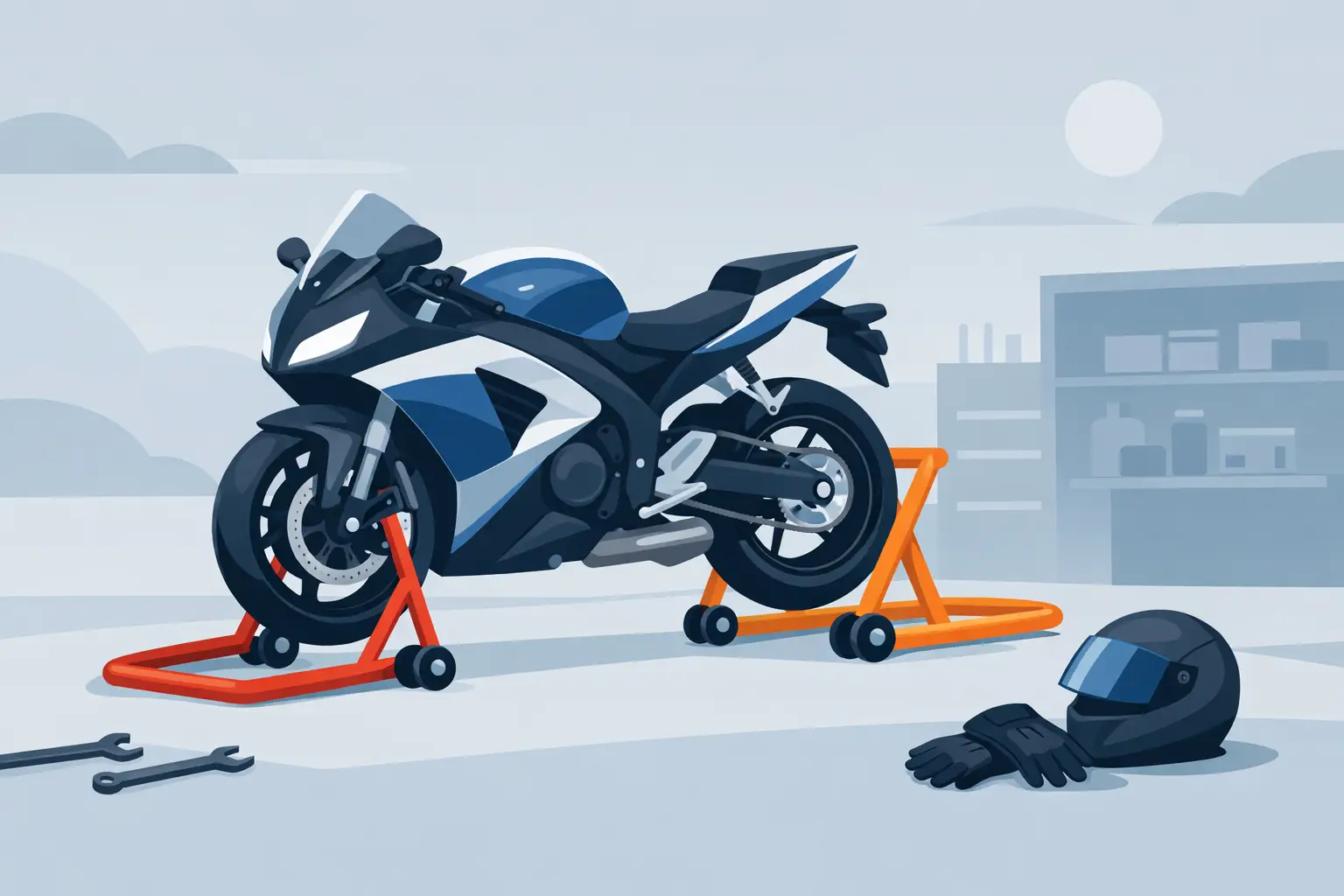
A paddock stand looks simple until the first time a bike feels unstable halfway up. That usually happens for one of two reasons – the wrong stand style for the job, or the wrong pickup points for the bike. This motorcycle paddock stand guide is built for riders who care about fitment, stability, and clean workshop routine, not just getting the rear wheel off the ground.
For sport bikes, track bikes, and race-prepped machines, paddock stands do more than make storage easier. They support chain service, wheel removal, suspension setup, tire warmer use, brake work, and transport prep. The right stand saves time and reduces risk. The wrong one becomes one more problem in the garage.
What a motorcycle paddock stand actually needs to do
A good stand has one job – lift the bike in a controlled way and hold it securely without flex, twist, or awkward leverage. That sounds basic, but it separates race-grade equipment from generic hardware.
On a high-performance motorcycle, stability matters more than convenience. A stand that rolls smoothly, keeps a predictable lift arc, and matches the bike’s mounting points will feel planted from the first movement. Cheap stands often fail in the small details. The tubing flexes, the wheels bind, or the hooks and pads sit at the wrong angle. You can still get the bike up, but it never feels right.
That matters even more if you are working alone. Chain adjustment, rear wheel cleaning, sprocket swaps, or fitting tire warmers all go faster when the stand behaves the same way every time.
Rear stand first, front stand second
If you are buying one stand first, make it a rear stand. For most riders, that is the workhorse. It covers chain cleaning and lubrication, sprocket access, rear wheel rotation, tire warmer use, and stable parking in the garage or paddock.
Front stands are usually the second purchase, and for good reason. Many front-end service jobs depend on the rear of the bike already being secure. A front stand is essential for brake work, fork service, front wheel removal, and some suspension setup tasks, but it is not usually the first tool a rider needs.
This is where a motorcycle paddock stand guide should stay practical. Buying both at once makes sense for a dedicated track bike or race program. For a streetbike that sees occasional service and weekend rides, the rear stand usually delivers the most immediate value.
Rear stand options – spool or swingarm
Spool stands
For most modern sport bikes, a rear stand that lifts from spools is the better setup. Spools bolt to the swingarm and give the stand a fixed, repeatable pickup point. That means quicker engagement, better side-to-side stability, and less chance of the stand slipping during the lift.
If your bike accepts spool mounts, use them. It is a cleaner and more secure setup, especially for track use. The bike centers more consistently, and the stand tends to feel more locked in once the weight comes onto it.
Swingarm pad stands
A pad-style rear stand lifts under the swingarm itself instead of using spools. This can work well on bikes without spool mounts or on some custom setups, but it is less precise. Placement matters more, and the stand can shift if the pads are not contacting squarely.
That does not make swingarm stands bad. It just means they demand more attention. For occasional garage use, they can be perfectly serviceable. For repeated wheel work, race prep, or busy paddock use, spool pickup is usually the stronger choice.
Front stand options – fork lift or head lift
Fork-bottom front stands
A fork-bottom stand lifts under the fork feet or lower fork area. It is common, straightforward, and useful for light front-end support. If your goal is basic stability in the garage or supporting the bike while the rear is on a stand, this style works well.
The limitation is access. Because the stand contacts the lower fork area, it can interfere with full front-end service or front wheel removal on some bikes.
Head-lift front stands
A head-lift stand raises the bike from the steering stem using a pin-sized to the bike. For serious maintenance, this is usually the better tool. It leaves the fork bottoms and front wheel area more accessible, which matters for fork removal, front brake service, and wheel changes.
The trade-off is fitment. Stem-lift systems require the correct pin diameter and enough access through the lower triple clamp. Not every bike works with the same hardware, and not every rider needs that level of service access. But for track riders and racers, a head-lift stand is often the more versatile front option.
Fitment is where most mistakes happen
Not all stands fit all bikes the same way, even when they look universal. Swingarm shape, spool location, fork-bottom design, steering stem diameter, fairing clearance, and ride height all affect compatibility.
That is why stand selection should be treated like any other performance part. Brand, model, year, and hardware setup matter. If the bike has aftermarket rearsets, non-standard spools, oversized axle blocks, or unusual bodywork clearance, those details can change what works cleanly.
For a race bike, the margin for guesswork gets even smaller. Tire warmer clearance, quick wheel change routine, and pit workflow all benefit from a stand that matches the bike correctly. A proper fitment-based buying process saves more time than forcing a universal solution to work.
What separates a race-grade stand from a cheap one
Material and weld quality matter, but geometry matters just as much. A well-built stand has a stable footprint, smooth wheel movement, and enough leverage to lift the bike without excessive force. It should feel controlled on the way up and planted once loaded.
Look closely at the contact hardware too. Hooks, pads, and pins take the actual load, so they need to be machined well and sized correctly. Sloppy tolerances create movement where you do not want it.
Wheel quality is another detail riders underestimate. Better wheels track straighter and roll more predictably on concrete, coated shop floors, and paddock surfaces. That sounds minor until you are trying to lift a superbike alone with warmers, bodywork, and gear already in the way.
Safe lifting technique matters as much as the stand
Even the right stand can feel wrong if the lifting routine is rushed. On the rear, place the bike on level ground, center the stand carefully, confirm both sides are engaged, and apply steady downward pressure to the stand handle. Do not jerk the bike up. The motion should be smooth and controlled.
On the front, get the rear supported first unless the stand system specifically allows otherwise. Front-end lifting without a stable rear setup increases the chance of the bike pitching or shifting.
Keep one hand on the bike where needed, but do not try to fight the stand into place under load. If alignment feels off, reset and start again. A 30-second correction beats picking up a dropped bike.
Garage use and track use are not exactly the same
In a home garage, storage footprint and occasional maintenance may drive the decision. A rider may prioritize a compact rear stand that is easy to move and quick to deploy.
At the track, repeatability matters more. Stands get used more often, on less predictable surfaces, and sometimes in a hurry. That shifts the priority toward stiffness, wheel quality, secure pickup, and fast engagement. What works fine in the garage can feel marginal in the paddock.
That is why racers and track-day riders tend to be more selective. A stand is not just storage equipment. It is part of the service setup.
The best buying approach for most sport bike owners
If the bike supports rear spools, start with a spool-type rear stand. Add a front head-lift stand if you handle your own front-end service or regular wheel work. If your maintenance is lighter, a fork-bottom front stand may be enough.
Buy for the bike you actually own and the work you actually do. That sounds obvious, but many riders either overbuy with hardware they never use or underbuy with a stand that limits basic service. The smart move is matching the stand to your machine, your maintenance routine, and your riding level.
For riders shopping performance parts the same way they shop braking, controls, or chassis upgrades, that logic already makes sense. Precision matters. A stand is no different.
AXF Race Parts serves riders who expect fitment accuracy and race-ready hardware, and paddock stands belong in that same conversation. They are not flashy, but they are part of a serious setup.
If your current stand feels vague, awkward, or unstable, trust that instinct. The right one should feel boring in the best possible way – easy to place, easy to lift, and solid every time you put the bike in the air.