
Radial Versus Axial Calipers: Which Fits?

A brake caliper upgrade can transform confidence at the end of a fast straight, but radial versus axial calipers is not a simple old-versus-new argument. The mounting style affects fitment, setup range, stiffness, service access, and the parts required to make the system work correctly. Choose the wrong path and a premium caliper can become an expensive adapter problem. Choose the right one and your front end gains the consistency a hard-ridden sport bike needs.
Radial Versus Axial Calipers: The Core Difference
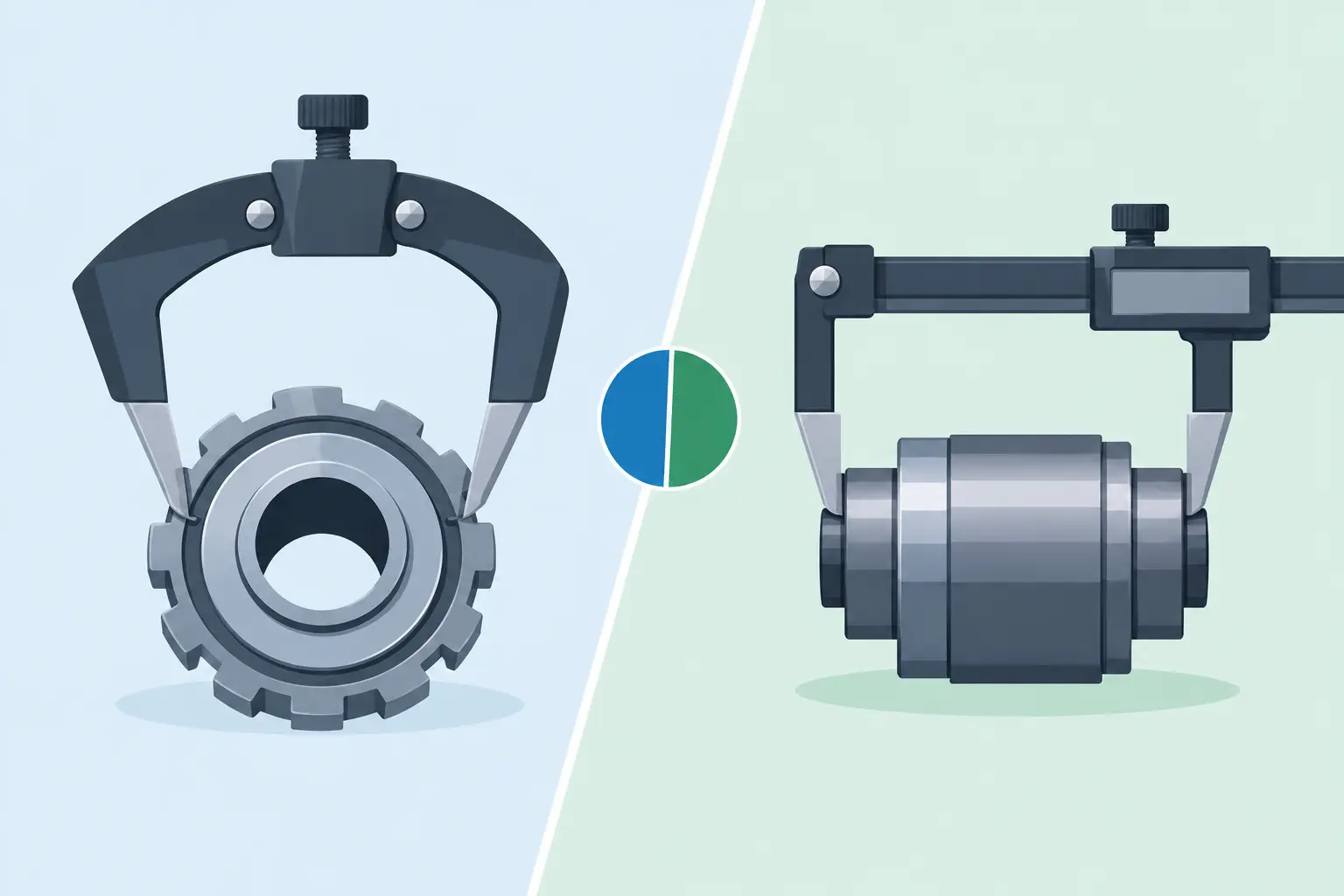
The difference begins at the fork leg. An axial-mount caliper attaches with bolts that run parallel to the front axle. The mounting points are positioned fore and aft on the fork lug, and the caliper sits in a largely fixed location relative to the rotor.
A radial-mount caliper attaches with bolts that run perpendicular to the axle, in the same general direction as the rotor radius. The bolts pass through the caliper body into threaded fork mounts. This layout lets the caliper be positioned radially with shims or spacers, making rotor-diameter changes and precise centering more straightforward when the fork and hardware are designed for it.
Neither design automatically creates more stopping power. Braking force comes from the complete system: lever ratio, master cylinder piston size, caliper piston area, pad compound, rotor diameter and thickness, tire grip, suspension control, and rider input. Mounting style matters because it supports how accurately and consistently that system performs under load.
Why Radial-Mount Calipers Dominate Modern Sport Bikes
Radial mounting became the performance standard because it gives manufacturers and race teams greater control over caliper location and structural design. On a modern superbike fork, the radial mount is engineered as part of a rigid front-end package. It suits large floating rotors, high-speed braking loads, and the repeatable setup demands of track use.
More useful adjustment for race setups
With radial mounting, a change in rotor diameter can often be accommodated by changing the correct spacers or mounting hardware. That is valuable for racers moving between rotor specifications or building a front end around a particular brake package. It does not mean every radial caliper fits every radial fork. Bolt spacing, bolt diameter, caliper offset, rotor thickness, wheel position, and fork design still have to match.
Common radial spacing standards include 100 mm and 108 mm, but spacing alone is not a fitment guarantee. A 100 mm caliper may physically bolt to a 100 mm fork, yet still sit incorrectly over the rotor if the offset is wrong. Measure and verify the complete stack-up before ordering.
A stiffer mounting platform, when engineered as a system
Radial mounting can reduce unwanted movement at the caliper mount under severe braking. That helps preserve pad-to-rotor alignment and gives the rider a more defined lever response. On track, where braking loads repeat lap after lap, that consistency matters more than a headline specification.
Still, radial is not magic. A high-quality axial caliper on a properly designed fork can outperform a low-grade radial setup with poor brackets, mismatched rotors, or an incorrect master cylinder. Caliper body construction, bridge stiffness, piston sealing, pad support, and machining quality remain critical.
Better compatibility with current race hardware
Most late-model performance forks, race fork bottoms, and premium brake systems are built around radial mounting. If your motorcycle already has radial fork lugs, staying with that architecture usually provides the cleanest route to Brembo-style monobloc calipers, race rotors, and matched master cylinders.
For a track-focused build, this creates a stronger upgrade path. Replacement pads are easy to source in race compounds, rotor options are broader, and the mounting arrangement aligns with the components commonly used in modern paddocks.
Where Axial Calipers Still Make Sense
Axial calipers are not obsolete. They remain the correct solution for many motorcycles, especially older sport bikes, middleweights, and street machines with axial fork lugs. If the bike was designed around an axial mount, a quality direct-fit axial caliper can be the most sensible performance upgrade.
The advantage is simplicity. A direct-fit caliper keeps the original mounting geometry, avoids unnecessary conversion brackets, and reduces the risk of poor rotor alignment. For a street rider or occasional track-day rider, that can be more valuable than chasing radial hardware for appearance alone.
Many axial systems also offer excellent stopping power when paired with fresh rotors, high-quality pads, braided brake lines, and a correctly sized master cylinder. If your lever feels vague or braking fades, the issue may be old fluid, worn seals, glazed pads, contaminated rotors, or an unsuitable master cylinder ratio – not the axial mount itself.
An axial-to-radial conversion can be done on some bikes with precision-engineered brackets. Treat those brackets as a critical structural component, not a cosmetic accessory. They must be designed for the exact fork, caliper, rotor diameter, rotor offset, and hardware specification. A generic bracket with unknown engineering is not a race-ready answer.
Fitment Checks Before Buying a Caliper
The caliper is only one part of the decision. Before selecting radial or axial hardware, confirm the dimensions that determine whether the parts will work safely together.
First, identify the fork mounting style and measure the bolt-center spacing. Then confirm the rotor diameter, thickness, and offset. Rotor offset is especially important because the caliper must sit centered over the braking surface, with both pads engaging the rotor evenly.
Next, check wheel and rotor clearance. A larger, bulkier caliper may contact the wheel spokes, rotor buttons, fork leg, or fender hardware even when the bolt pattern appears correct. Also verify the banjo fitting orientation and brake-line routing at full fork compression and full steering lock.
Finally, match the caliper to the master cylinder. A caliper with different piston sizes changes the hydraulic ratio. Too large a master cylinder can create a short, hard lever with less control. Too small a master cylinder can produce excessive lever travel. The goal is not simply maximum pressure. It is strong braking with clear feedback and enough modulation to release pressure precisely at turn-in.
Caliper Design Matters More Than Mounting Alone
When comparing options, look past radial and axial labels. A forged or CNC-machined monobloc caliper generally provides greater stiffness than a basic multi-piece cast unit, but the specific engineering matters. Monobloc construction reduces the number of joints in the body, while quality machining maintains piston-bore accuracy and pad alignment.
Piston count is also not a shortcut to performance. Four-piston calipers are common on serious sport bikes because they balance clamping force, pad shape, weight, and heat management effectively. More pistons do not automatically mean better braking. Piston diameters, total hydraulic area, and pad design determine how the caliper works with the master cylinder.
Pad selection can produce a more noticeable change than switching mounts. A track compound may deliver stronger initial bite and higher-temperature stability, but it can wear rotors faster, work poorly when cold, or feel too aggressive on the street. Select the compound for your riding, not just your lap-time ambitions.
Build the Brake System Around Your Use
For a dedicated track bike with radial forks, radial calipers are usually the right foundation. Use known-fit hardware, correct spacers, quality fasteners torqued to specification, and a master cylinder sized for the caliper piston area. Add race-grade fluid, braided lines, and pads suited to your tire and pace. That is a system upgrade, not a collection of premium parts.
For an older sport bike with axial forks, start with the best direct-fit solution. Rebuild or replace aging calipers, inspect rotor runout and thickness, fit fresh pads, flush the fluid, and assess the master cylinder. If the bike is being converted into a serious race machine, weigh the cost of brackets and calipers against a fork conversion that provides a properly engineered radial platform from the start.
Performance street riders should be even more selective. A caliper that needs heat to work properly or a lever setup that feels too abrupt can reduce confidence on public roads. Strong, predictable braking over a wide temperature range is usually the faster choice outside a closed course.
AXF Race Parts focuses on fitment-driven braking components because compatibility is where a brake upgrade succeeds or fails. Select by your exact motorcycle, then confirm the details of the intended brake package before committing to a caliper.
The right choice is the one that puts the rotor exactly where it belongs, gives the lever the feedback you can trust, and stays consistent when braking gets serious. Start with your forks and riding goals, then build outward from there.