
Wheel Chocks for Motorcycles: Secure Every Stop

A motorcycle should not be relying on its side stand when the trailer hits a pothole, the paddock surface slopes away, or the garage gets crowded. Wheel chocks give the front tire a fixed, repeatable position so the bike can be strapped, stored, serviced, and transported with far more control. For track riders and race teams, that control protects expensive bodywork, brakes, levers, and suspension components before the bike ever reaches pit lane.
A quality chock is not a replacement for proper tie-down technique. It is the stable foundation that makes the rest of the setup work as intended. Choosing the right design, mounting it correctly, and matching it to your tire dimensions matters whether you haul one sport bike in an enclosed trailer or line up a full paddock fleet.
What Wheel Chocks Actually Do
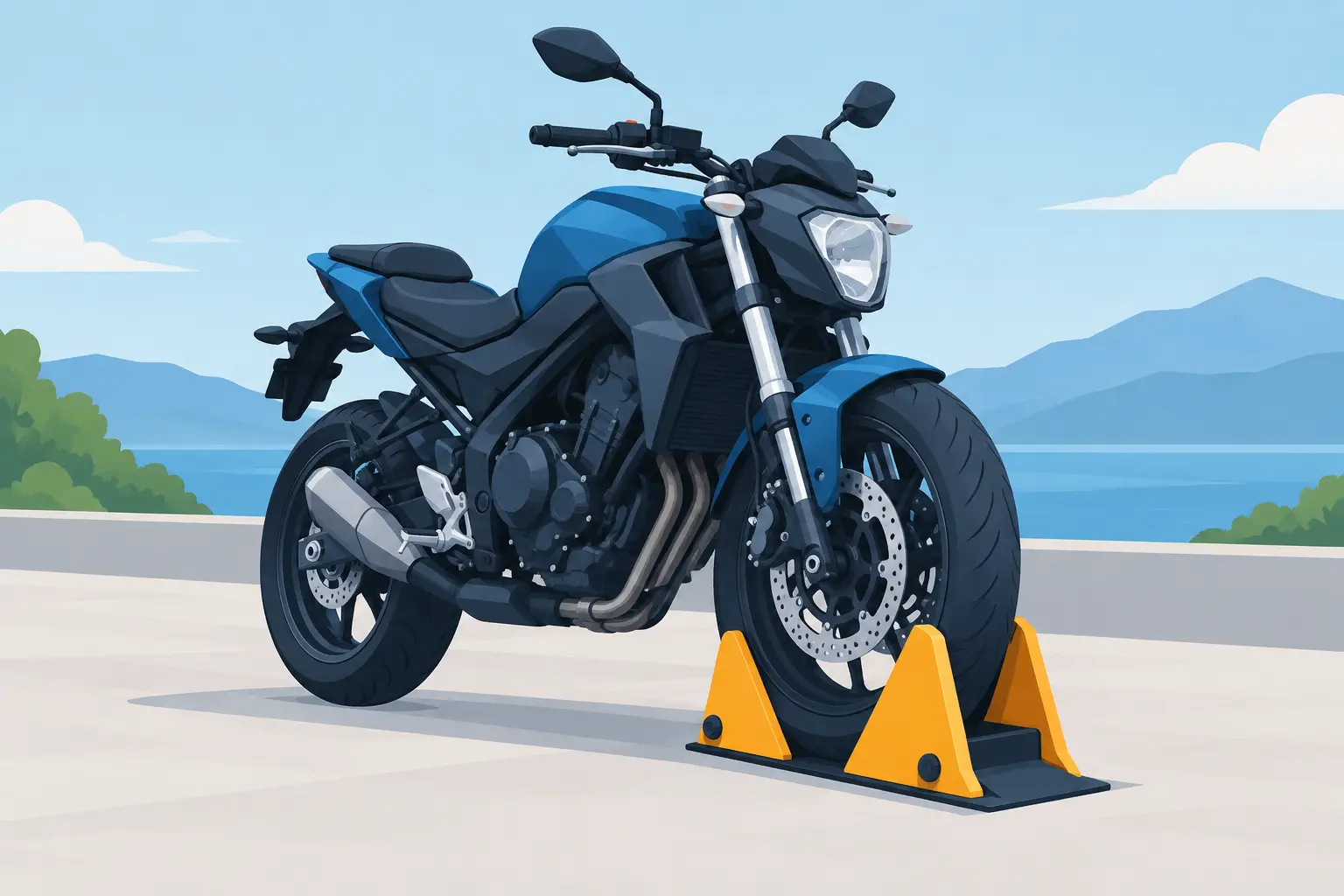
Motorcycle wheel chocks cradle the front tire and restrict fore-and-aft movement. Most designs use a formed steel or aluminum channel, a pivoting cradle, or a combination of both. As the front wheel rolls into position, the tire settles against the chock’s support points, holding the bike near vertical while you attach tie-downs.
That near-vertical position is the real advantage. A rider loading alone does not need to balance a 400-plus-pound motorcycle while reaching for straps. A crew member can work around the bike more efficiently, and the front wheel is less likely to move when the suspension compresses during transport.
The chock also reduces the chance of loading damage. Without a positive front-wheel stop, a bike can creep forward or sideways as straps are tensioned. That movement can pull a hook loose, twist the bars, scuff a fairing against a wall, or put the bike into another machine in the trailer.
Choosing Wheel Chocks for a Sport Bike
Not every chock suits every motorcycle or every job. A lightweight portable unit may be ideal in a paddock space but insufficient as a permanently mounted trailer solution. A wide cruiser-oriented cradle may not position a 120/70 sport-bike front tire as securely as a chock designed around narrower performance tires.
Start with tire compatibility. Check the manufacturer’s supported tire-width range and consider the actual tire fitted to the bike, not only the original equipment specification. Race tires, slicks, rain tires, and certain 17-inch front profiles can sit differently in a cradle than a street tire. The chock should support the tire without pinching the sidewall, loading the brake rotors, or allowing excessive side-to-side play.
Material and construction are next. Powder-coated steel chocks are common because they are durable, stable, and cost-effective. Aluminum versions can reduce weight for mobile race setups, but they need enough section strength and a properly engineered mounting system. Look for clean welds, smooth tire-contact surfaces, corrosion-resistant hardware, and a broad base or mounting plate that resists flex.
A self-locking or pivoting chock is useful when you routinely load alone. These designs capture the wheel as it rolls forward, giving the bike temporary stability before straps are fitted. They are convenient, but convenience does not eliminate the need for tie-downs. For transit, always secure the motorcycle independently at appropriate structural points.
Fixed chocks are often the best choice for dedicated trailer bays. They have fewer moving parts and establish a precise loading position every time. If the trailer carries several bikes, fixed chocks also make it easier to plan handlebar clearance, tie-down angles, and staggered wheel placement.
Trailer Mounting Is Where Safety Starts
A premium chock mounted to weak trailer flooring is still a weak system. The load path must run through the chock, its mounting hardware, and into material capable of handling the forces created by braking, cornering, road vibration, and compressed suspension.
On a trailer with a wood deck, use through-bolts with large backing plates or substantial washers beneath the floor. Screws driven only into plywood can pull out under load. On aluminum trailers, verify the deck structure and use the mounting method recommended for that construction. If possible, position the chock so its fasteners engage crossmembers or reinforced sections rather than unsupported sheet material.
Before drilling, place the motorcycle in the intended location and check the full setup. Turn the bars from lock to lock, confirm fairing and lever clearance, and make sure tie-down straps can run at useful angles without rubbing tires, sharp edges, or bodywork. A chock mounted slightly off-center can create a frustrating loading routine every time you travel.
Use this four-point check before committing to a trailer installation:
- Confirm the front tire sits fully in the chock without contacting the fender or brake rotors.
- Verify the bike has enough clearance from trailer walls and neighboring motorcycles.
- Check that tie-down anchors sit forward and outward of the motorcycle where possible.
- Inspect the underside of the trailer for wiring, fuel lines, frame members, and obstructions before drilling.
Removable chocks can be a smart alternative for multipurpose trailers. A recessed mounting plate or quick-release system leaves a flatter floor when the trailer is used for equipment, tools, or another vehicle. The trade-off is that removable hardware must be inspected regularly for wear, latch engagement, and bolt tightness.
Secure the Bike Without Fighting the Suspension
Once the wheel is in the chock, attach the tie-downs to sound locations on the motorcycle. For many sport bikes, the lower triple clamp is a preferred front attachment point because it is structurally strong and avoids loading the handlebars. Soft loops can protect finished surfaces and provide a secure connection point. Avoid attaching straps to clip-ons, brake lines, steering dampers, or fragile fairing brackets.
The goal is controlled suspension compression, not maximum compression. Pull the bike forward into the chock and apply even tension from both sides. Compressing the front end moderately helps maintain strap tension as the trailer moves, but over-compressing it for extended periods can place unnecessary stress on fork seals and springs. The correct amount depends on the bike, strap geometry, and the chock design, so check stability rather than chasing a single compression number.
Rear straps can add stability, especially on long trips or rough roads. Use appropriate rear attachment points such as passenger-peg brackets, rearset mounting areas, or a dedicated rear-wheel restraint system when compatible with the motorcycle. Keep straps away from chain runs, hot exhaust components, sharp edges, and painted bodywork.
After the first few miles, stop and inspect the load. Straps can settle into their hooks, tires can shift slightly into a new position, and suspension movement can reveal a poor angle that was not obvious in the driveway. Recheck tension at fuel stops and whenever road conditions have been especially rough.
Garage and Paddock Use Has Different Priorities
In a garage, a wheel chock is often about space and service access. It keeps the bike upright without relying on a paddock stand, leaves the rear wheel available for chain work, and can make storage tighter and cleaner. A fixed garage chock should be mounted to concrete with suitable anchors or to a reinforced platform. Do not assume a light-duty portable stand will stay put on a smooth floor when you roll a motorcycle into it.
At the track, portability becomes more valuable. A compact chock can stabilize the bike in the paddock while warmers are fitted, tire pressures are checked, or gear is unloaded. Still, wind, uneven asphalt, and busy pit areas change the risk profile. If the bike will be left unattended, use additional support and avoid treating a portable chock as a permanent parking solution.
For race-prepared motorcycles with low front fenders, large brake packages, or unusual tire setups, test fitment before event day. The chock must clear the lower fairing and fender through the full loading motion. A part that technically holds the tire but contacts race bodywork is not the right part for the job.
Common Mistakes That Put Bikes at Risk
The most common mistake is assuming the chock alone secures the motorcycle. It does not. A chock controls wheel position; tie-downs manage the forces of transport. The second is using a chock that is too wide, too narrow, or too shallow for the front tire. A poor fit creates movement exactly where you need consistency.
Another frequent issue is poor strap geometry. Straps that pull nearly straight down may hold the bike vertically but offer limited resistance to forward movement. Straps that pull too far forward can overwork the fork and create awkward unloading tension. Aim for balanced, outward angles that hold the bike into the chock without forcing it sideways.
Finally, do not ignore the small hardware. Bent hooks, frayed webbing, loose bolts, cracked welds, and worn quick-release latches are warnings, not cosmetic issues. Racing equipment earns its value by performing under pressure, and transport hardware deserves the same standard.
A properly selected wheel chock turns loading from a balancing act into a controlled routine. Match it to the bike, mount it to a structure that can take the load, and pair it with disciplined tie-down practice. Then the motorcycle arrives ready for setup, not repair.