

Motorcycle Lap Timer Review for Track Riders

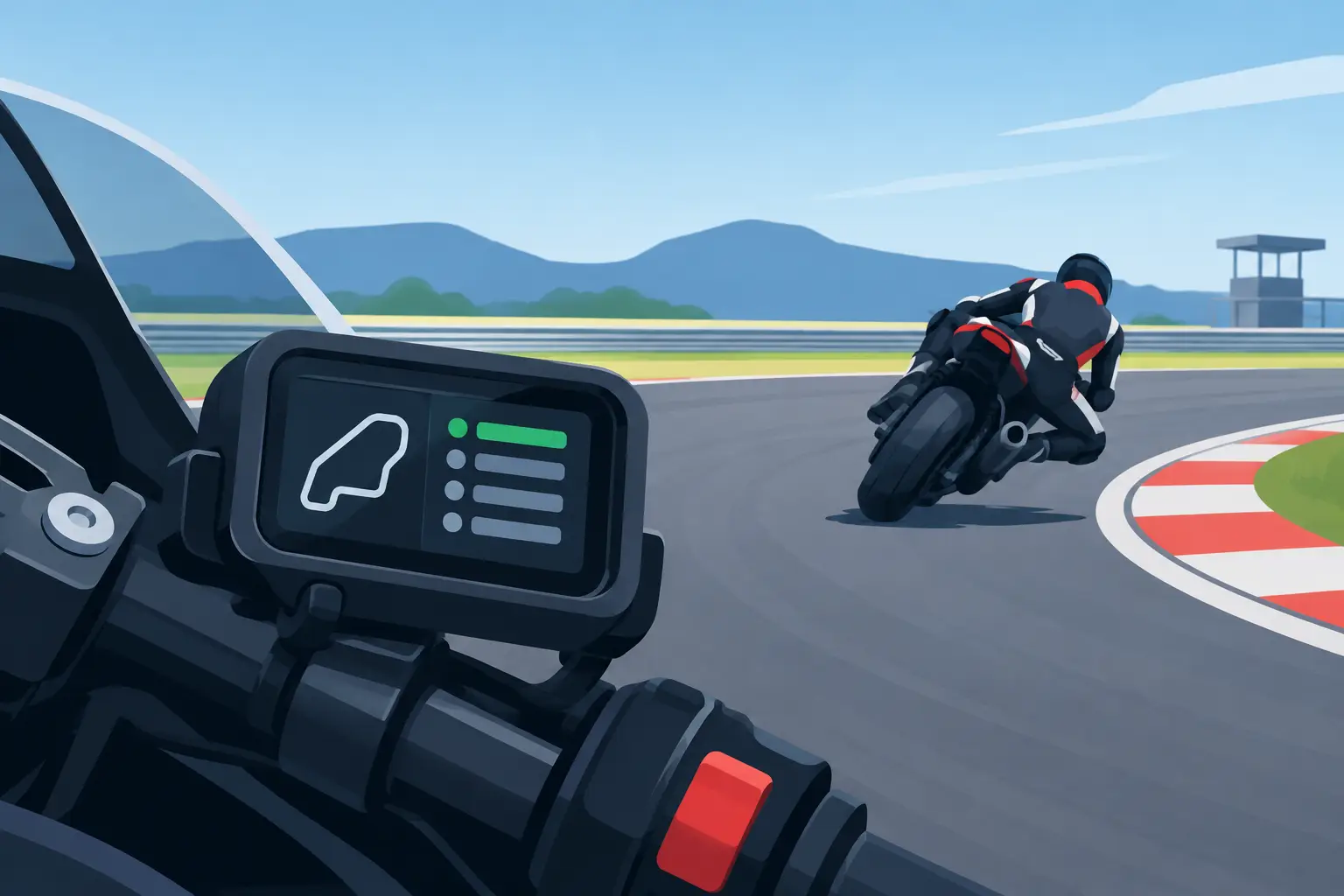
A lap timer does not make a bike faster. It tells you whether your braking marker, throttle pickup, line choice, and setup change actually made you faster. That distinction is why a serious motorcycle lap timer review should look beyond a large display and a low price. For track-day riders and racers, the right unit becomes a repeatable source of data between sessions – not another distraction mounted to the cockpit.
The best choice depends on how you ride. A rider chasing consistent laps at local track days needs a simple, reliable timer with readable session results. A club racer developing suspension settings or comparing gearing needs cleaner GPS data, predictive timing, and a way to review laps after the bike is back on the stand. Buy for the decisions you need to make, not for a feature list you will never use.
What a Motorcycle Lap Timer Must Do Well
At the most basic level, a lap timer needs to recognize the start-finish line accurately and record each lap without missed triggers. Older systems may use an infrared beacon placed beside the circuit. That method remains dependable when the track supports it, but it requires a transmitter and a clear line of sight. GPS systems are more convenient because they identify track layouts from satellite location data and often work without trackside hardware.
GPS quality is the first performance separator. A low-resolution GPS sample can make every lap look close while hiding meaningful changes in braking and corner exit. Higher-frequency GPS logging captures more location points per second, giving the timer a clearer view of where time was gained or lost. For a rider working in tenths, that extra detail matters. For a first-time track rider focused on learning the circuit, basic lap consistency is usually enough.
The unit should also lock onto satellites quickly and stay stable through the session. A timer that takes too long to acquire position data can cost the first laps of a short practice session. One that drops its signal on a cloudy morning or after vibration exposure is not race equipment, regardless of its display quality.
Display Visibility and Predictive Timing
A display needs to be readable at a glance, not studied down the front straight. Brightness, digit size, contrast, and mounting angle all affect real-world use. If you run tinted visors, ride in strong sun, or sit low behind a race screen, check whether the screen remains legible from your normal riding position.
Predictive timing is one of the most useful upgrades over a basic lap counter. Instead of waiting for the lap to end, the timer shows whether you are ahead of or behind a reference lap in real time. Used correctly, it helps confirm whether a new line or later brake release is working. Used poorly, it can pull attention away from the next corner. Newer riders should treat predictive data as a post-session tool until their riding is consistent enough to glance at it safely.
Motorcycle Lap Timer Review: Features That Matter
A worthwhile motorcycle lap timer review should separate essential features from expensive extras. The core requirements are accurate timing, dependable operation, a secure mount, and data that is easy to retrieve. After that, the value of additional functions depends on your program.
Data logging is the major dividing line. Timers that record speed, position, elevation, and lap splits allow riders to examine more than the final lap number. You can see whether a faster lap came from carrying more corner speed, getting on the throttle earlier, or simply taking a cleaner run through traffic. Some systems support external inputs such as RPM, throttle position, gear position, brake pressure, lean angle, or suspension travel. These channels can be highly useful, but only if the bike integration is correct and you know how to interpret the result.
For most track-day riders, GPS speed traces and sector comparisons provide enough actionable information. A racer or team working with suspension, electronics, and engine calibration can justify a more advanced logger. The cost rises quickly once sensors, wiring looms, adapters, and analysis software enter the package. That investment makes sense when each test session has a clear objective.
Track database coverage also deserves attention. Many GPS timers include preloaded circuits and allow custom start-finish lines. Verify that your regular tracks are supported and that custom track setup is straightforward. A timer is only convenient if you can arrive, mount it, select the correct layout, and ride.
Wiring, Power, and Bike Fitment
Battery-powered timers are simple to move between motorcycles and convenient for riders who do not want to modify a street-legal bike. The trade-off is charging discipline. Forget to charge the unit before a full day at the track and the data disappears with it.
Hardwired systems draw power from the bike and are typically the better option for dedicated track machines. They reduce one more pre-session task and can support direct connection to compatible ECU or CAN data. Installation quality matters. Route wiring away from steering movement, heat, sharp fairing edges, and high-vibration areas. Use connectors and brackets designed for motorsport conditions rather than improvised hardware.
Fitment is not only about electrical compatibility. A timer must sit where you can see it without blocking the stock dash, warning lights, brake reservoir, or steering sweep. Clip-on position, upper fairing shape, and race dash layout vary widely between Ducati, Yamaha, BMW, Kawasaki, Honda, KTM, Aprilia, Suzuki, Triumph, and MV Agusta platforms. Confirm the mounting solution before committing to a unit.
How to Compare Lap Timers Before You Buy
Start with the level of data you will use after each session. If your routine is checking lap times, identifying your best lap, and aiming for repeatability, prioritize GPS reliability, screen visibility, and simple controls. Spending more on channels you cannot review properly will not lower your lap time.
If you already make setup changes with purpose, look for sector analysis, downloadable sessions, and compatibility with the bike’s electronics. For riders using a quickshifter, aftermarket ECU, or race dash, integration can make the timer part of a more complete data system. This is where checking manufacturer compatibility and model-year fitment becomes critical.
Then compare the practical details. Can the unit withstand rain, heat, and vibration? Does it save data automatically? Is the mount secure at race pace? Can you operate it with gloves? Is session review clear enough that you will actually use it between outings? A polished app is useful, but it should not compensate for weak on-bike reliability.
Price should be viewed as part of the total installation cost. Include mounts, power cables, bike-specific harnesses, sensors, and any software or subscription requirements. A lower-priced timer can become the more expensive option once the necessary accessories are added. Conversely, an integrated system may cost more upfront but eliminate duplicate displays, wiring, and future upgrades.
Turning Lap Data Into Faster Riding
The mistake many riders make is chasing a personal best every session. Lap timing is more valuable when it measures one controlled change at a time. Set a baseline, choose one area to improve, and review the result. That might mean concentrating on a cleaner exit from one slow corner rather than trying to attack the entire circuit.
Use lap consistency as your first benchmark. A string of laps within a tight range tells you more about your pace than one outlier helped by open track and a perfect tow. Once consistency improves, compare sector times. If one sector is slower, review the corners inside it and identify whether the issue is entry speed, mid-corner patience, or exit drive.
Do not let the display dictate your riding. Your eyes should stay up, your braking references should remain clear, and your inputs should stay controlled. The timer records the evidence after the fact. It should support better technique, not replace it.
AXF Race Parts supports performance riders who build their bikes around measurable track results. When selecting a lap timer, treat it like any race-ready component: choose the level of capability that matches the motorcycle, the rider, and the goals for the season.
The next time you make a change to tire pressure, gearing, suspension, or riding line, let the lap timer answer the only question that matters: did it make the bike and rider faster in a repeatable way?