
Yamaha R1 Track Build Parts That Earn Lap Time

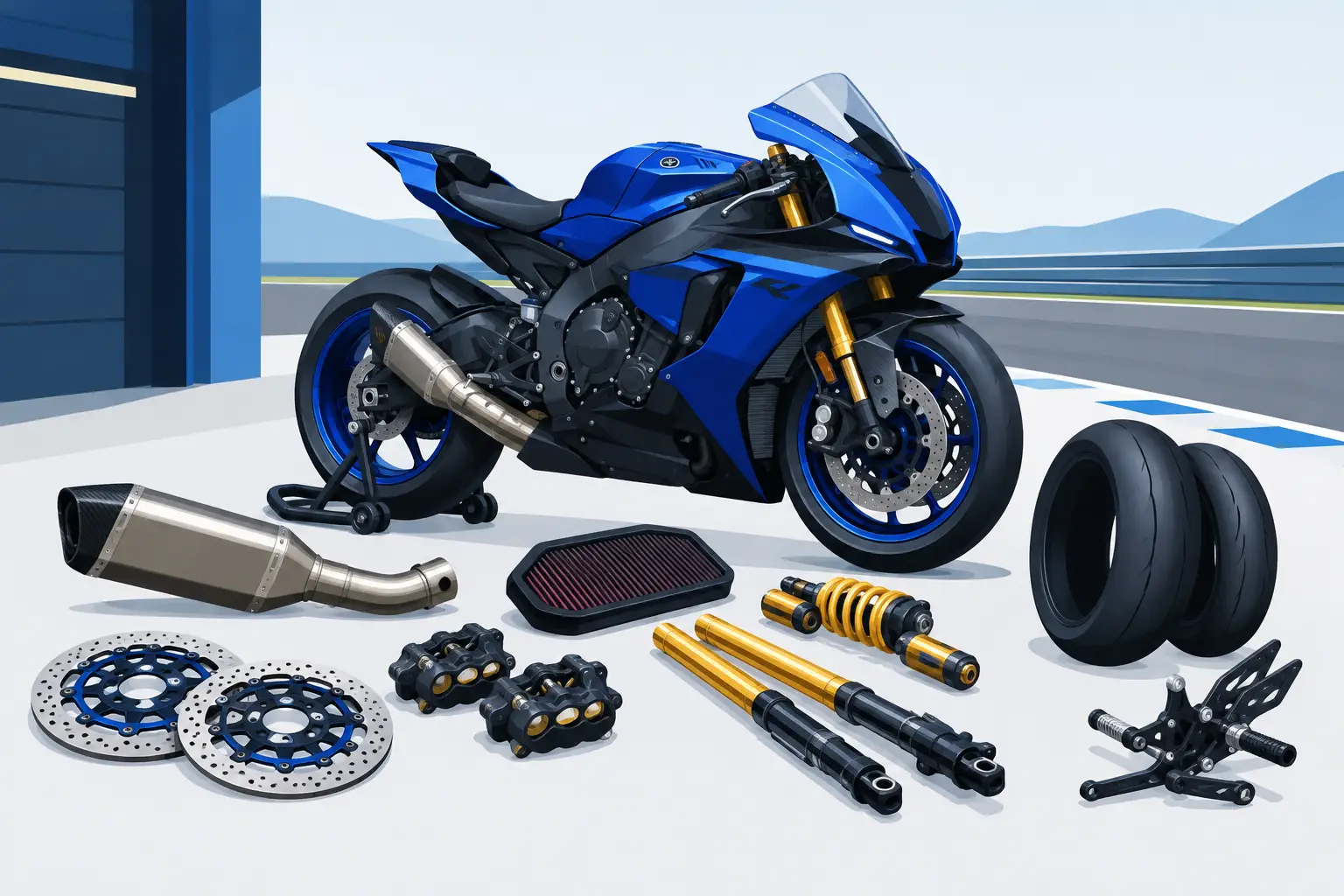
A fast Yamaha R1 can still feel like the wrong motorcycle when the braking marker arrives, the rear starts moving on corner exit, or the stock controls leave you searching for a clean shift. A proper yamaha r1 track build is not a shopping cart full of billet parts. It is a fitment-correct package that gives the rider more braking confidence, clearer chassis feedback, and fewer mechanical distractions throughout a hard day at the circuit.
The R1 is an outstanding foundation, especially for riders who value its crossplane engine character and race-focused electronics. But track preparation should follow the order that matters on lap time and reliability: safety, control, braking, chassis behavior, then power. Start with the parts that let you ride consistently. Add horsepower only after the motorcycle can deliver it cleanly.
Start Your Yamaha R1 Track Build With the Right Baseline
Before ordering components, identify the exact model year, current equipment, class rules, and intended use. An occasional track-day R1 needs a different balance than a club-race machine chasing every tenth. Fitment is particularly critical across R1 generations. Fairing stays, rearsets, exhaust routing, ABS systems, electronics connectors, and engine covers can vary significantly by year.
Set the bike up around three questions: Where is it losing rider confidence? What is most likely to end a track day? Which changes are allowed by your organization or race class? Those answers usually point toward brakes, protection, controls, and suspension setup well before engine modifications.
A stock R1 may be capable, but stock components are designed to cover street use, emissions requirements, passenger provisions, and broad rider expectations. Track equipment has a narrower job. It should withstand heat, simplify service, reduce crash damage, and give direct, repeatable feedback.
Braking Comes Before Bigger Power
The braking system is one of the highest-value areas of any R1 track build. If the lever feels inconsistent at the end of a session, the problem is not just confidence. It changes how deep you brake, how quickly you release pressure, and how accurately you carry entry speed.
Start with fresh high-performance brake fluid, properly serviced calipers, and race-oriented pads matched to your pace and rotor condition. A quality brake line upgrade can improve lever consistency by reducing expansion under pressure. For riders pushing harder, a Brembo master cylinder offers more precise feel and a stronger connection between lever input and front-tire load.
Do not select a master cylinder based only on the biggest name or the most aggressive specification. Piston size affects lever travel and hydraulic force. The right choice depends on caliper configuration, rider preference, and whether the goal is a firmer lever or more modulation. An overly aggressive setup can make trail braking harder for some riders.
Brake cooling, rotor condition, and pad bedding matter as much as premium hardware. The best components cannot compensate for contaminated fluid, dragging pistons, or pads that never reach their operating range.
Controls Must Work Under Pressure
Track riding exposes every weak point in stock controls. Rearsets, clip-ons, levers, and throttle assemblies are not cosmetic upgrades when they improve body position, ground clearance, shift accuracy, and crash repairability.
Adjustable rearsets let the rider set peg height and rearward position for proper knee contact and cornering clearance. They also replace vulnerable stock mounting points with more purposeful hardware. Prioritize solid lever feel, reliable shift linkage, and replacement part availability. A rearset that looks sharp but flexes, binds, or leaves no room for adjustment is not race equipment.
A race throttle and switch assembly can remove unnecessary street controls, clean up the cockpit, and provide a more direct operating layout. Jetprime-style racing electronics and switchgear are especially useful for riders who want a simplified bar setup without improvised wiring. Confirm compatibility with the R1’s model-year electronics before buying. Plug-and-play components reduce installation time and avoid wiring issues that can ruin a race weekend.
A quick-action throttle can sharpen response, but it is not automatically better. For a rider still refining corner exits, a more aggressive throttle ratio may make the bike harder to manage. Choose it when throttle control is already disciplined, not as a substitute for it.
Protect the Engine, Then Prepare for Service
A crash is expensive. A low-side can become much more expensive when an unprotected engine cover, case, radiator, or bar-end is the first point of contact. Engine case covers, frame sliders selected for track use, axle protection, and durable lever guards should be part of the initial build, not an afterthought.
For race organizations, safety wiring requirements may also dictate drain plugs, oil filters, and filler caps. Plan this before the first event. A safety-wire-ready oil plug or filter retainer is easier to install in the workshop than to improvise in the paddock.
Race bodywork is another practical upgrade. Proper fiberglass or race fairings reduce the cost and complexity of repairing street panels, remove unnecessary lights, and make number-board preparation easier. Choose a set designed around your exact R1 generation and intended exhaust configuration. Poor fitment creates rattles, trapped heat, awkward fastener access, and wasted prep time.
Use quality quick-release fasteners where repeated bodywork removal is expected. The goal is not simply speed. It is being able to inspect the bike, access wiring, or change consumables without turning every task into a fight with broken plastic tabs.
Build Chassis Confidence Through Setup
Suspension is where many riders either find real speed or spend money without solving anything. The R1’s chassis responds strongly to correct spring rates, ride height, sag, damping, and tire setup. Before replacing major components, establish a baseline with properly serviced forks and shock, rider-specific springs, and measured sag.
If the bike runs wide on exit, chatters at lean, squats excessively, or feels vague during braking, do not assume one clicker adjustment will fix it. Tire wear, geometry, fork height, rear ride height, spring rate, and damping can all contribute. Make one measured change at a time and record the result.
For serious track use, cartridge kits, a race shock, and steering damper upgrades can deliver a major improvement in support and feedback. But suspension parts need setup. Installing premium internals without the right springs or baseline settings is an expensive way to create a new problem.
Tires belong in this conversation. Select a compound and construction appropriate for ambient temperatures, pace, tire warmer use, and session length. Tyre warmers help deliver a more predictable first lap and reduce heat-cycle inconsistency, but they must be used correctly. Set pressures based on the tire manufacturer’s hot-pressure guidance, not generic numbers copied from another rider’s bike.
Electronics and Intake: Add Control Before Output
The R1’s electronic rider aids are a major asset, but track preparation can make them more useful and easier to manage. A clean race switch setup, reliable quickshifter function, and thoughtfully configured traction control allow the rider to focus on lines and braking references instead of fighting the interface.
If adding an ECU tune, exhaust, or high-flow Sprint Filter, treat the package as a system. Intake changes, exhaust flow, fueling, engine-brake strategy, and quickshifter settings interact. A tune should be matched to the actual hardware installed, preferably with data or dyno verification. Chasing peak horsepower while neglecting throttle response and engine braking often produces a bike that is faster on paper but slower through a session.
For many track-day riders, the first electronic priority is reliability. Secure connectors, protect wiring from heat and abrasion, and make sure every control works with gloves on. A missed shift or intermittent kill switch is more damaging to a lap than a small power deficit.
A Practical Parts Order for an R1 Track Bike
A focused build prevents budget from disappearing into low-impact upgrades. For most riders, this order produces the strongest return:
- Race tires, correct pressures, and dependable tyre warmers
- Brake fluid, pads, lines, and master-cylinder upgrades where needed
- Engine protection, lever guards, and race-required safety wiring
- Rearsets, clip-ons, and controls adjusted to the rider
- Suspension service, springs, and setup before major chassis hardware
- Race bodywork and paddock equipment for easier maintenance
- Intake, exhaust, ECU calibration, and advanced electronics
This order can change for a bike with known weaknesses. If your current R1 already has race suspension but stock bodywork is damaged, fairings may move up the list. If you are racing under a specific rulebook, required safety equipment takes priority over every performance part.
Buy for Fitment, Serviceability, and the Next Session
The best Yamaha R1 track build is not necessarily the one with the longest parts list. It is the one that starts every session with predictable brakes, stable chassis behavior, clean controls, and no unanswered reliability questions. Premium components from proven racing manufacturers are valuable because they are engineered for heat, load, adjustment, and repeated service.
AXF Race Parts helps simplify that process with model-specific performance components for riders who need race-ready hardware without guessing at compatibility. Build deliberately, confirm fitment by year and configuration, and spend each upgrade where it gives you more control at speed. The next faster lap usually begins with a motorcycle you trust enough to ride at the limit.