
Forged Calipers vs Cast Calipers: What Wins?

Hard braking at the end of a straight exposes every weak point in a motorcycle brake system. Lever travel changes, pads overheat, fluid temperature climbs, and a caliper that felt fine on the street can start to feel vague. In the forged calipers vs cast calipers decision, the real question is not which process sounds more exotic. It is which caliper delivers the control, thermal stability, fitment, and value your bike needs.
For track-day riders and racers, caliper construction matters because the caliper is the rigid structure that converts hydraulic pressure into clamp force at the pads. Better construction can improve feel and consistency, but it cannot compensate for worn rotors, incorrect pad compound, old fluid, poor setup, or an incompatible master cylinder. Choose the complete braking package, not a marketing label.
Forged Calipers vs Cast Calipers: The Core Difference
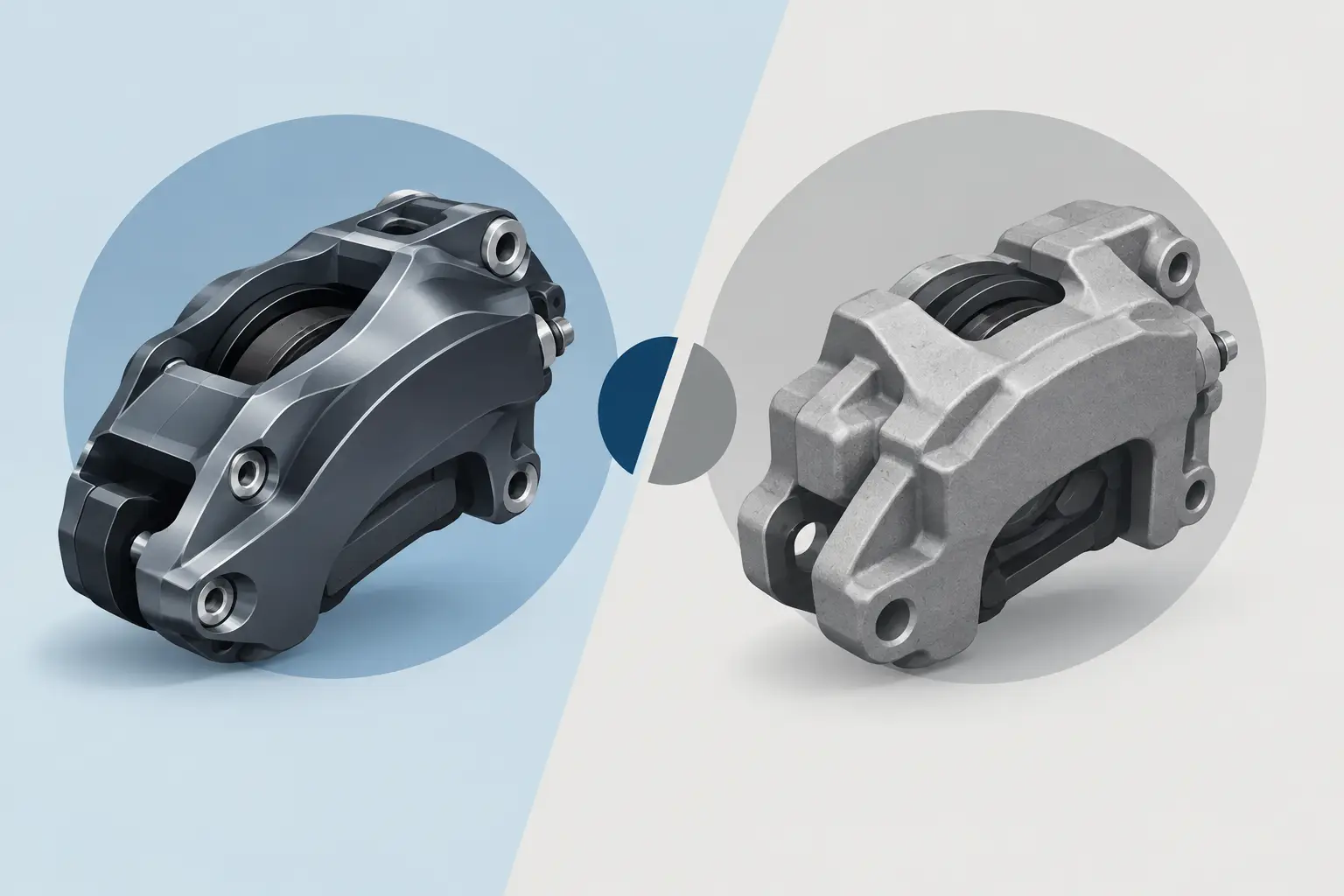
A cast caliper begins as molten aluminum alloy poured into a mold. Once cooled, it is machined to create the piston bores, fluid passages, pad cavity, mounting points, and finishing details. Casting is efficient for producing complex shapes at scale, which is why it remains common on OEM sport bikes and many high-quality aftermarket systems.
A forged caliper starts with an aluminum billet or preform that is compressed under very high pressure into its basic shape. The forging process refines and aligns the metal grain structure. It is then extensively machined into the finished component. In practical terms, this can allow a manufacturer to produce a caliper with excellent strength and stiffness for its weight.
The key word is can. Manufacturing process alone does not guarantee a better brake caliper. Alloy selection, design around the piston bores and bridge, wall thickness, machining accuracy, piston design, seals, pad retention, and quality control all affect the final result. A well-engineered cast monoblock can outperform a poorly designed forged caliper.
Why Forged Calipers Are a Race-Focused Upgrade
Forged calipers are valued in racing because stiffness supports a more direct lever feel. Under heavy hydraulic pressure, every brake component deflects slightly. If the caliper body flexes, a portion of lever movement is spent bending the caliper rather than pushing the pads into the rotors. A stiffer body can reduce that lost motion and give the rider a firmer, more repeatable response.
That precision becomes more meaningful when braking from high speed, trail braking into a corner, or managing front-end load on a tire near its limit. Riders often describe the benefit as better feedback rather than simply more stopping power. The tire still determines the available grip. What improves is the ability to apply braking force with confidence and make smaller adjustments at the lever.
Forging can also help manufacturers remove material strategically without sacrificing the structure around high-stress areas. This creates potential weight savings, and reducing unsprung mass is always valuable on a performance motorcycle. The difference between calipers may not transform handling by itself, but it contributes to a sharper package when paired with lightweight rotors, wheels, and properly set suspension.
Premium forged calipers are also commonly built around tight machining tolerances and race-serviceable hardware. That matters to riders who inspect seals, replace pads frequently, bleed brakes often, and expect consistent performance across repeated heat cycles.
Forged Does Not Automatically Mean More Powerful
A forged caliper does not create hydraulic pressure. Brake torque is driven by factors such as master cylinder ratio, piston area, pad friction, rotor diameter, and effective radius. If two calipers use similar piston sizing and pad area, the forged unit may feel firmer because it flexes less, but it will not magically double braking force.
An overly aggressive change in piston area or master cylinder size can make a brake feel wooden, overly sensitive, or difficult to modulate. This is why race brake upgrades should be selected as matched systems, with attention to the specific motorcycle and intended use.
Where Cast Calipers Make Sense
Cast calipers are not a compromise by default. They are the sensible choice for many street riders, track-day riders, and budget-conscious builds because they can deliver dependable braking performance at a lower cost. Casting allows manufacturers to produce intricate caliper shapes efficiently, which helps keep pricing accessible while maintaining proper engineering.
A quality cast caliper can offer strong stopping performance, reliable sealing, good heat management, and a major improvement over an older or basic OEM unit. On a modern sport bike, the bigger gains may come from fresh high-temperature fluid, race-grade pads, braided lines, correctly serviced calipers, and rotors that are within specification. Spending the full budget on forged calipers while ignoring those fundamentals is a poor performance decision.
Cast calipers also make sense when the motorcycle sees mixed street and track use. Street bikes typically do not sustain the same braking temperatures or repeated maximum-pressure stops seen in competition. A well-maintained cast system can deliver excellent control without pushing the build cost into race-bike territory.
The limitation is that a cast design may need more material to achieve comparable stiffness, depending on the manufacturer and geometry. Some cast calipers may also show more lever variation as temperatures and loads rise. That does not make them unsafe. It defines the point where a rider may benefit from stepping up to a more specialized forged system.
Stiffness, Heat, and Weight: What You Feel at the Lever
Stiffness is the most noticeable difference for experienced riders. A rigid caliper body generally gives a more immediate response at initial lever application and more consistency during deep braking. This can make it easier to carry brake pressure farther into the corner without guessing where the bite point will be.
Heat management is more complex. The caliper’s construction influences how it handles heat, but pads, rotor mass, airflow, brake fluid, piston material, and the amount of insulation between pad and piston matter just as much. A forged caliper is not immune to fade if the fluid is old or the pad compound is wrong for track temperatures.
Weight matters, but it should be viewed honestly. Caliper weight is unsprung weight, so every reduction helps suspension respond more cleanly. Still, the difference between two front caliper sets is usually less important than correct spring rates, damping, tire condition, and brake setup. Buy lighter components because they support the complete build, not because a spec-sheet number promises a shortcut to lap time.
Fitment Is More Important Than the Manufacturing Method
Before choosing a caliper, confirm mounting style, bolt spacing, rotor diameter, rotor offset, wheel clearance, hose routing, and master cylinder compatibility. Radial-mount and axial-mount calipers are not interchangeable without the correct brackets, and brackets must be engineered for the exact fork, rotor, and caliper combination.
Piston count is not a shortcut either. Four-piston and six-piston designs can both work exceptionally well. Larger total piston area changes hydraulic ratio and lever travel. Pad shape affects heat capacity and bite. Caliper body design affects stiffness. The correct setup is the one that provides controlled braking with proper clearance and a predictable lever for your machine.
For ABS-equipped motorcycles, additional care is required. Changes to caliper piston area, master cylinder size, or rotor configuration can affect how the system behaves. Riders building a dedicated race bike may have different priorities than riders retaining full street equipment.
Which Caliper Should You Buy?
Choose forged calipers when you are building a serious track or race package, repeatedly braking hard from high speed, and want the firmer lever feel and reduced weight associated with premium race hardware. They are especially worthwhile when the rest of the system is ready: quality rotors, correct pads, fresh racing fluid, braided lines, and a matched master cylinder.
Choose cast calipers when you want a proven, cost-effective upgrade for spirited street riding, occasional track days, or a performance build with a defined budget. A reputable cast caliper combined with the right pads and maintenance can be a highly capable system.
Do not choose either based on appearance alone. A premium caliper with the wrong offset or piston area is a downgrade, regardless of how it was made. AXF Race Parts focuses on fitment-specific performance components because braking confidence starts with parts that work together on the actual motorcycle in your garage.
If your current brakes fade, pull unevenly, or deliver inconsistent lever feel, inspect the entire system before ordering hardware. Service the basics, identify the limiting component, then select the caliper construction that supports your riding pace. The best brake upgrade is the one that lets you brake later, release cleaner, and hit the apex with the same confidence every lap.