
How to Choose Clip Ons for Your Sportbike

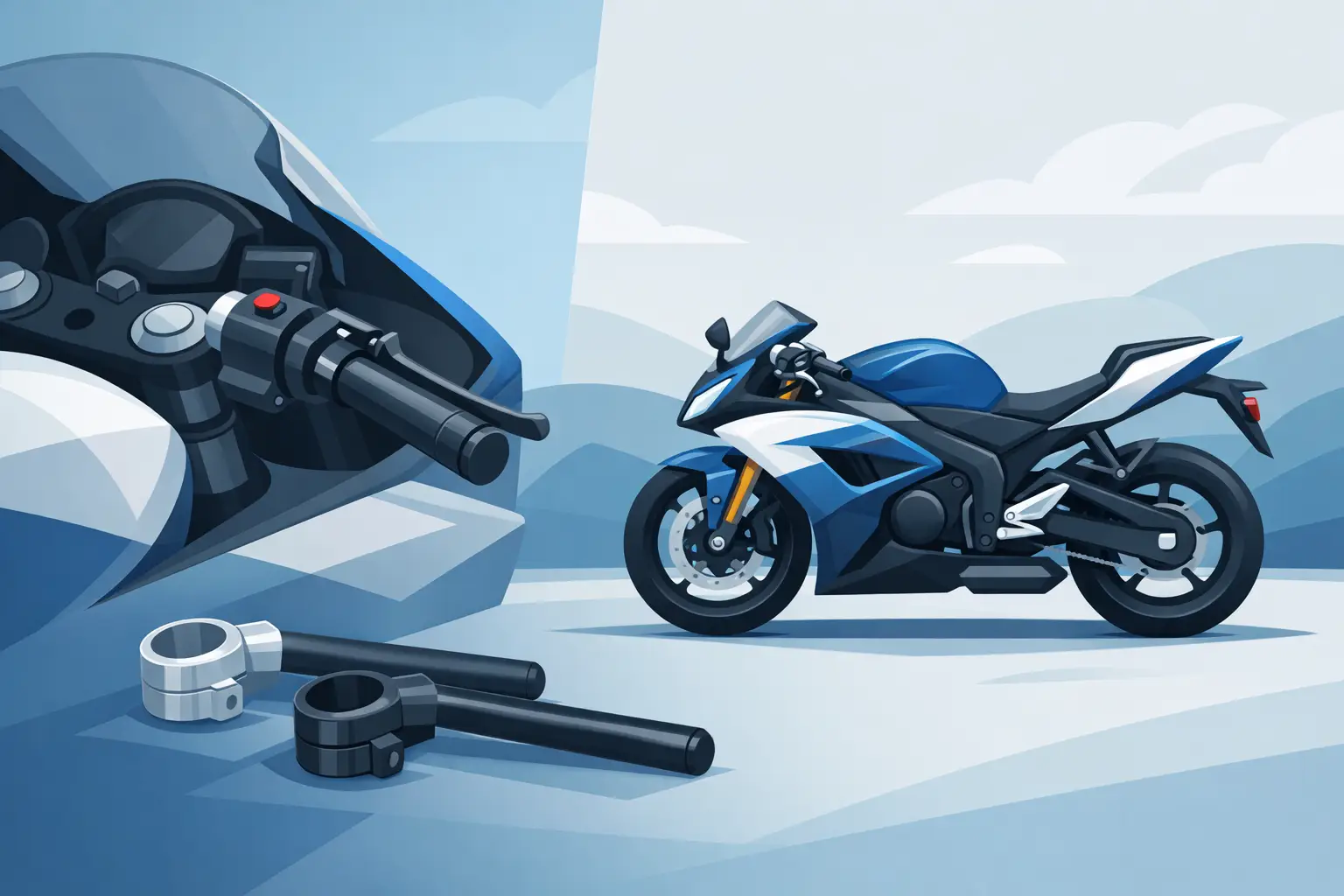
A bad clip-on choice shows up fast. You feel it at turn-in, under hard braking, and halfway through a long session when your wrists start taking a beating. If you are figuring out how to choose clip ons, the right answer is not just what fits your fork tube. It is what matches your bike, your riding position, your controls, and the way you actually use the motorcycle.
Clip-ons are not a cosmetic part on a performance bike. They directly affect leverage, body position, steering input, front-end feel, and cockpit clearance. On a track bike, that matters every lap. On a performance street build, it matters every ride. The right set can sharpen control and clean up your riding position. The wrong set can create interference issues, awkward ergonomics, and wasted money.
How to choose clip ons starts with fitment
The first filter is simple: fork tube diameter. Clip-ons clamp to the fork tubes, so the inside diameter of the clamp must match your bike exactly. Common sizes include 50mm, 51mm, 52mm, 53mm, 54mm, and larger diameters on certain models, but this is never a part to guess on. Even bikes from the same manufacturer can vary by model and year.
That is why fitment-first shopping matters. If your bike is a 2020 Yamaha R6, a Ducati Panigale V4, or a BMW S1000RR, you need to verify the exact fork size and the usable mounting area on the fork tube. Some front ends leave limited room because of the upper triple clamp, fork cap design, dash brackets, or fairing stay layout.
The next fitment check is control compatibility. Some clip-ons are sold as complete assemblies with bars and clamps. Others use replaceable handlebar tubes. That can be a real advantage on a race bike because a crash may only require a tube replacement instead of a full assembly. But you still need enough straight tube length for your throttle, switchgear, lever perches, and bar-end hardware.
What matters most when comparing clip-ons
Once diameter is confirmed, the real decision comes down to geometry and construction. This is where riders either improve the cockpit or create new problems.
Rise changes more than comfort
Rise is the vertical offset of the handlebar tube relative to the clamp. A low-rise clip-on usually gives a more aggressive position, with more weight biased forward and a flatter torso angle. That can feel precise on track, especially in fast direction changes, but it also puts more load on wrists and shoulders.
A higher-rise clip-on can reduce strain and make the bike easier to manage for longer sessions or mixed street use. It may also help riders who feel too folded up on compact supersports. The trade-off is clearance. More rise can bring the bars closer to the fairing, tank, dash, or windscreen at full lock.
There is no universal best rise. A dedicated race bike with bodywork, steering stops, and a stripped cockpit can often run a different setup than a street bike with stock plastics and ignition components still in place.
Sweep affects wrist angle and leverage
Sweep refers to the angle of the bars relative to straight ahead. More sweep angles the grips inward and can feel more natural for some riders, especially if they want to reduce wrist strain. Less sweep creates a straighter bar position that many racers prefer for direct input and consistent feel on corner entry.
This is one of the most personal setup variables on the bike. What feels planted and neutral to one rider may feel cramped or awkward to another. If you are chasing lap times, small changes in sweep can make a big difference in how naturally you load the front tire and pick up the bike at exit.
Tube length and offset affect packaging
Bar length matters because modern sportbike cockpits get crowded quickly. You need room for a quick-turn throttle, front brake master cylinder, clutch perch, switches, and often brake lever guards. If the tubes are too short, setup becomes a compromise. If they are too long, you may end up with clearance issues or unnecessary flex at the ends.
Some clip-ons also use offset clamp designs that move the tube position relative to the fork centerline. That can help with tank clearance or rider reach, but again, there is a balance. More room in one area can create interference somewhere else.
Material and design choices
Most quality clip-ons use aluminum construction for low weight and solid strength. What separates better systems is machining quality, clamp precision, hardware quality, and whether the design supports easy service.
For track riders and racers, replaceable tubes are usually the smarter choice. Crashes happen. A system that lets you replace a bent tube without scrapping the entire assembly saves money and gets the bike turned around faster. That is a practical performance advantage, not just a parts catalog feature.
Clamp design matters too. A properly machined clamp gives secure hold without forcing you to over-torque the hardware. Cheap clip-ons can slip, mark fork tubes, or create alignment frustration during installation. On a race-prepped bike, that is not acceptable.
How to choose clip ons for street, track day, or racing
Your intended use should drive the final decision.
For a street-focused sportbike, comfort and clearance usually matter more than the most aggressive possible position. You still want sharp control, but full-lock usability, switchgear integration, and reduced fatigue should be part of the equation.
For track days, most riders benefit from a setup that is aggressive enough to support body position and front-end feedback without going so extreme that it wears them out after two sessions. This is where moderate rise and well-balanced sweep often make the most sense.
For racing, the priority shifts toward control precision, repeatability, crash serviceability, and cockpit packaging around premium controls. Racers often know exactly how much leverage they want and what body position works with their rearsets, seat setup, and tank shape. If you are building at this level, clip-ons should be chosen as part of a full rider triangle, not as a standalone upgrade.
Installation details that get overlooked
A lot of riders buy clip-ons based on diameter and appearance, then run into problems during install. Before you order, check for enough fork tube above or below the top triple clamp, depending on mounting position. Check fairing clearance at full steering lock. Check tank clearance with levers and reservoirs installed. Check that your brake lines, clutch line, and wiring have enough length for the new angle and position.
Also consider whether your bike uses locating pins on the switchgear. If it does, you may need to drill the new bars for factory controls unless you are using race switches or custom components. That is a small detail, but it can determine whether the install is straightforward or a hassle.
Torque accuracy matters as well. Clip-ons are a control component. Over-tightening can damage parts. Under-tightening can lead to movement under load. Follow the hardware specs from the manufacturer and make final adjustments with the bike on the ground, in your normal riding position, not just on a stand in the shop.
Common mistakes riders make
The most common mistake is buying purely by brand or looks. Premium brands matter, but geometry and fitment matter more. A well-made clip-on that does not suit your bike or riding position is still the wrong part.
The second mistake is copying another rider’s setup exactly. What works for a 160-pound racer with a tucked-in race bike and custom rearsets may not work for a street rider or a taller track-day rider on stock bodywork.
The third mistake is ignoring the rest of the cockpit. Clip-ons work with rearsets, seat height, tank shape, controls, and suspension setup. If the front feels wrong, the answer is not always just a different bar angle. Sometimes the issue is the overall rider triangle.
Buying with confidence
The best way to choose clip-ons is to narrow the decision in this order: exact fitment, intended use, preferred riding position, control compatibility, then serviceability. That keeps you focused on performance instead of guesswork.
If you are shopping from a fitment-driven motorsport supplier like AXF Race Parts, that process gets faster because you can sort by bike, model, year, and category instead of trying to force a generic solution onto a specific front end. For riders who care about track readiness and proven parts, that matters.
Good clip-ons do not just change where your hands go. They change how the whole bike communicates. Choose the set that matches your chassis, your controls, and your pace, and the result is a cockpit that works with you every time you tip into the next corner.