
How to Replace Clip Ons the Right Way

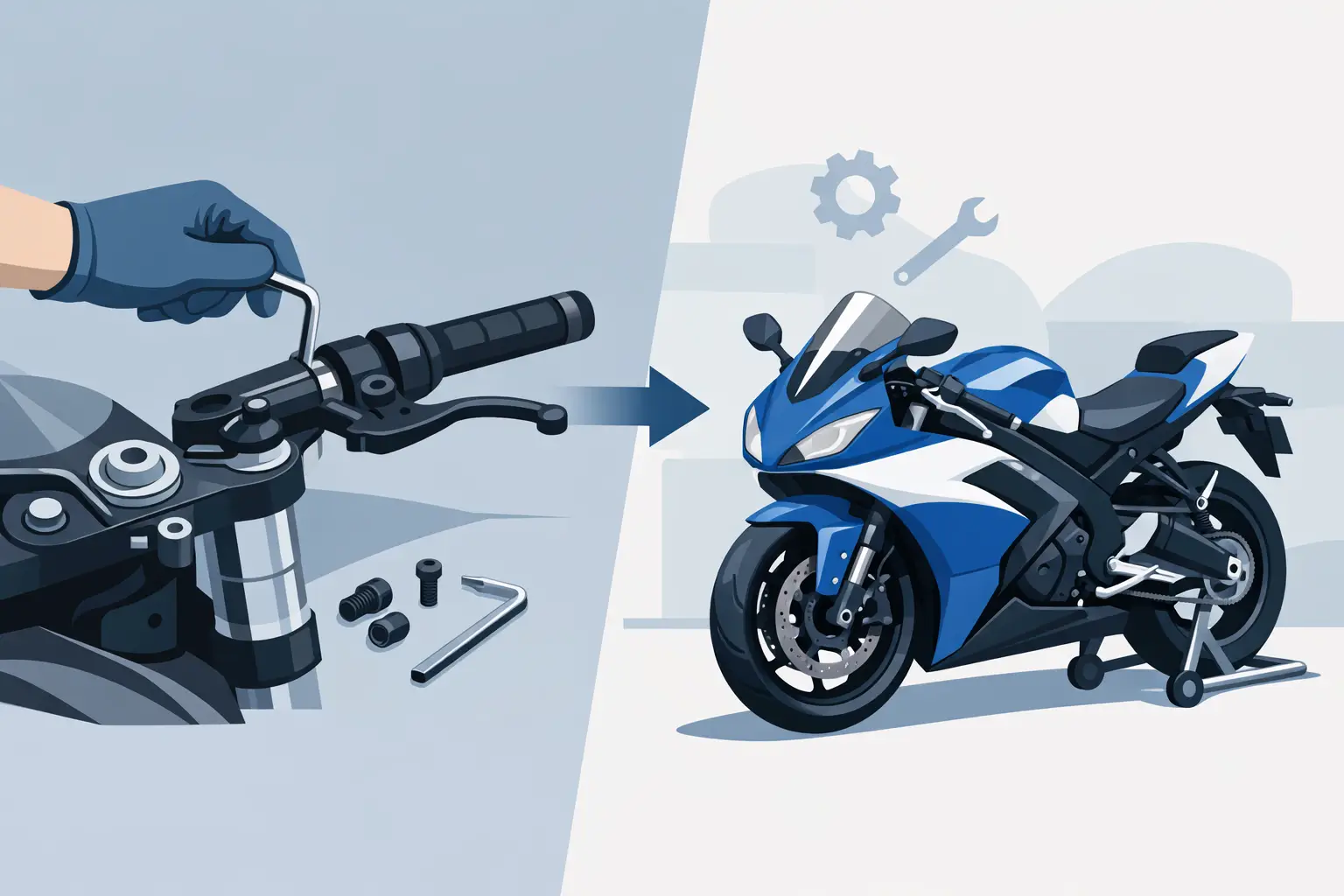
A bent clip-on usually shows up after the kind of mistake you remember corner by corner. Sometimes it is a low-side. Sometimes it is a garage tip-over that should have been harmless but still tweaked the bar enough to throw off your wrist angle, steering feel, or lever position. If you are figuring out how to replace clip ons, the job is straightforward if you approach it like any other control setup change – verify fitment first, work methodically, and do not rush the final positioning.
On a sport bike, clip-ons are not just handlebars. They affect rider input, front-end feedback, body position, and confidence on entry. Get the replacement wrong and the bike can feel awkward even if everything is technically bolted down. Get it right and you restore a clean, precise connection to the chassis.
Before you replace clip ons, confirm what actually needs changing
A lot of riders assume the tube is the only damaged part. That is not always the case. On many aftermarket systems, the clip-on assembly includes a clamp and a replaceable handlebar tube. In a minor crash, you may only need the tube. In a harder hit, the clamp can distort, the fork tube can get marked, and the controls may have taken damage too.
Start by checking the obvious points. Look for a visibly bent tube, scraped bar ends, cracked switch housings, and damage to the throttle tube, master cylinder perch, clutch perch, or lever mounts. Then check the less obvious areas. If the fork tube is rotated in the triple clamps, if the steering stops took a hit, or if the upper fairing stay shifted, replacing the clip-on alone will not solve the problem.
That is the first trade-off to understand. If your current setup uses a premium race clip-on with replaceable tubes, a partial repair is often the fastest and most cost-effective route. If the assembly is a stock cast unit or the clamp is damaged, a full replacement makes more sense.
How to replace clip ons without creating new problems
The cleanest way to handle this job is to remove the controls, remove the damaged assembly, compare parts side by side, then reinstall and align everything from the fork tube outward. The sequence matters because clip-ons live in a crowded area. Fairing clearance, steering lock, lever angle, and cable routing all interact.
You will typically need basic hand tools, the correct hex or socket sizes for your bike and bar hardware, a torque wrench, and in some cases a way to support the front end if fork position or upper clamp access is involved. A service manual is the right call for torque specs and model-specific details.
Before loosening anything, take reference photos. That sounds basic, but it saves time. Snap the angle of the lever perch, switchgear position, throttle housing orientation, and the location of the bar relative to the top triple clamp. If your old setup felt right before the damage, those photos give you a strong baseline.
Remove the controls carefully
Start with the bar-end weight or protector, then loosen and slide off the switchgear, throttle assembly, brake master cylinder, clutch perch, and any accessories mounted to the clip-on. Support the components as you remove them. Do not leave a master cylinder hanging by the line if you can avoid it.
Pay attention to locating pins on OEM switch housings. Many stock housings use a small pin that indexes into a hole in the handlebar. If your replacement clip-on tube is undrilled, you may need to drill the bar for the pin or modify the setup if the product is designed for race use. This is where riders get caught by fitment assumptions. Race clip-ons often prioritize adjustability and crash serviceability over stock-style convenience.
Remove the old clip-on and inspect the fork tube
Once the controls are off, loosen the clip-on clamp and slide the assembly off the fork tube. If it does not slide freely, stop forcing it. Check for crash distortion or burrs. Forcing a bent clamp off can mark the fork tube surface.
With the bar removed, inspect the fork tube where the clamp sat. You are looking for scoring, gouges, or witness marks that suggest the clamp moved under impact. Light cosmetic marks may be acceptable, but anything serious deserves closer attention. If the fork tube is damaged, address that first.
Match the replacement part exactly
Before installing the new piece, confirm clamp diameter, tube length, rise, offset, and left versus right orientation if applicable. This is especially important on modern sport bikes where fairing, tank, and top triple clamp clearance can be tight. A generic fit is not good enough.
If you are replacing stock clip-ons with aftermarket race units, understand what changes. Some systems alter riding position slightly. Some use different bar tube lengths. Some are meant for bikes with race fairings or revised steering stops. That does not make them wrong. It means setup matters.
Installing the new clip-on
Slide the new clamp or assembly onto the fork tube and position it close to the original height. If your bike uses a clip-on mounted above or below the top triple clamp, stay with the intended configuration unless you are deliberately changing ergonomics and know the clearance impact.
Do not fully torque the clamp yet. Leave enough movement to fine-tune the angle. Reinstall the controls one by one and loosely position them. This is the stage where everything should be adjustable.
Set the basic bar angle first. On a track-focused bike, many riders want a neutral wrist position with enough leverage to transition quickly without putting awkward load into the palms under braking. On a street setup, you may favor a slightly less aggressive angle for comfort. There is no single perfect number. It depends on rider size, rearset position, fork height, and intended use.
Once the clip-on angle is close, set the brake and clutch perch angle to match your natural wrist line when you are in your riding posture. Then check throttle free play, cable routing, and steering sweep from lock to lock. Nothing should bind, stretch, pinch, or contact the fairing unexpectedly.
That lock-to-lock check matters. A clip-on that clears on the stand can still cause trouble once bodywork flex, steering stop differences, or control repositioning come into play.
Fitment issues that show up after installation
Most problems after replacing clip-ons come from one of three areas: incorrect diameter, poor control alignment, or clearance issues. Incorrect diameter is simple – the clamp must match the fork tube exactly. Control alignment is more subtle. A lever angle that is off by a small amount can make the front brake feel worse than it is because your hand position is wrong under load.
Clearance issues are the ones that waste the most time. A longer bar tube may contact the fairing at full lock. A different bend or drop can move the master cylinder reservoir into the windscreen stay. An aftermarket throttle housing or switch assembly can take up more space than stock. None of these are unusual. They just need to be checked before the bike goes back on track.
If you are replacing only one side, compare symmetry carefully. Measure from a fixed point on the top triple clamp to the bar end or control perch if needed. Eyeballing it is not enough on a bike where rider feedback is this sensitive.
Torque, final checks, and first ride setup
Once bar position and controls are correct, torque all hardware to spec. That includes the clip-on clamp, control perches, bar-end hardware, and anything else you loosened. If the manufacturer specifies a sequence, follow it.
After torquing, repeat the steering sweep check. Then sit on the bike in full riding posture. Your wrists should not be cocked at an awkward angle, and the levers should fall naturally under your fingers. On the brake side, make sure the throttle snaps closed cleanly in every steering position.
Your first ride or first session back should be treated as a systems check, not a pace lap. Focus on steering feel, braking posture, wrist comfort, and whether the bike tracks naturally with equal input on both sides. If one side feels slightly off, do not ignore it. Small setup errors at the clip-ons show up immediately in rider confidence.
For riders using race-prepped equipment, this is also a good time to think about future crash serviceability. Replaceable tube clip-ons are popular for a reason. They reduce downtime, simplify repairs, and let you carry spare tubes instead of a full assembly. For track-day riders and racers, that practicality matters just as much as price.
If you are buying new parts rather than just swapping in a spare, prioritize fitment accuracy and known race hardware over generic options. A clip-on is a control part. It is not where you want guesswork.
Done properly, replacing clip-ons is not just repair work. It is a chance to restore precise rider input and make sure the front of the bike feels exactly the way it should when the pace picks up.